
Mark Gurman's Sunday Power On newsletter dropped today, and it's a good snapshot of where Apple's head is at right now, subscriptions, supply chain pain, and a health pitch for hardware that hasn't even shipped yet.
Smart glasses are getting a health angle, eventually
Gurman reports Apple is planning health and fitness features for its upcoming non-AR smart glasses, but not in the first generation. This is a rerun of an idea Apple already tried and shelved. It built a version of Fitness+ for Vision Pro that used body tracking to analyze your workout form, and killed it because the headset was too heavy to wear through a workout. Glasses solve the weight problem, so Apple's taking another swing.
The Vision Products Group is actively hiring to "define the future of health, well-being and fitness" across Apple's vision hardware, and the ideas floating around include tying into the Apple Watch's Workout Buddy feature, adding a heart-rate sensor similar to what's already in AirPods Pro 3, and using the on-glasses camera to read your form and give feedback. First-gen glasses are expected within the year. The health stuff sounds like it's a few years out past that.
The MacBook Air is stuck in an AI-caused traffic jam
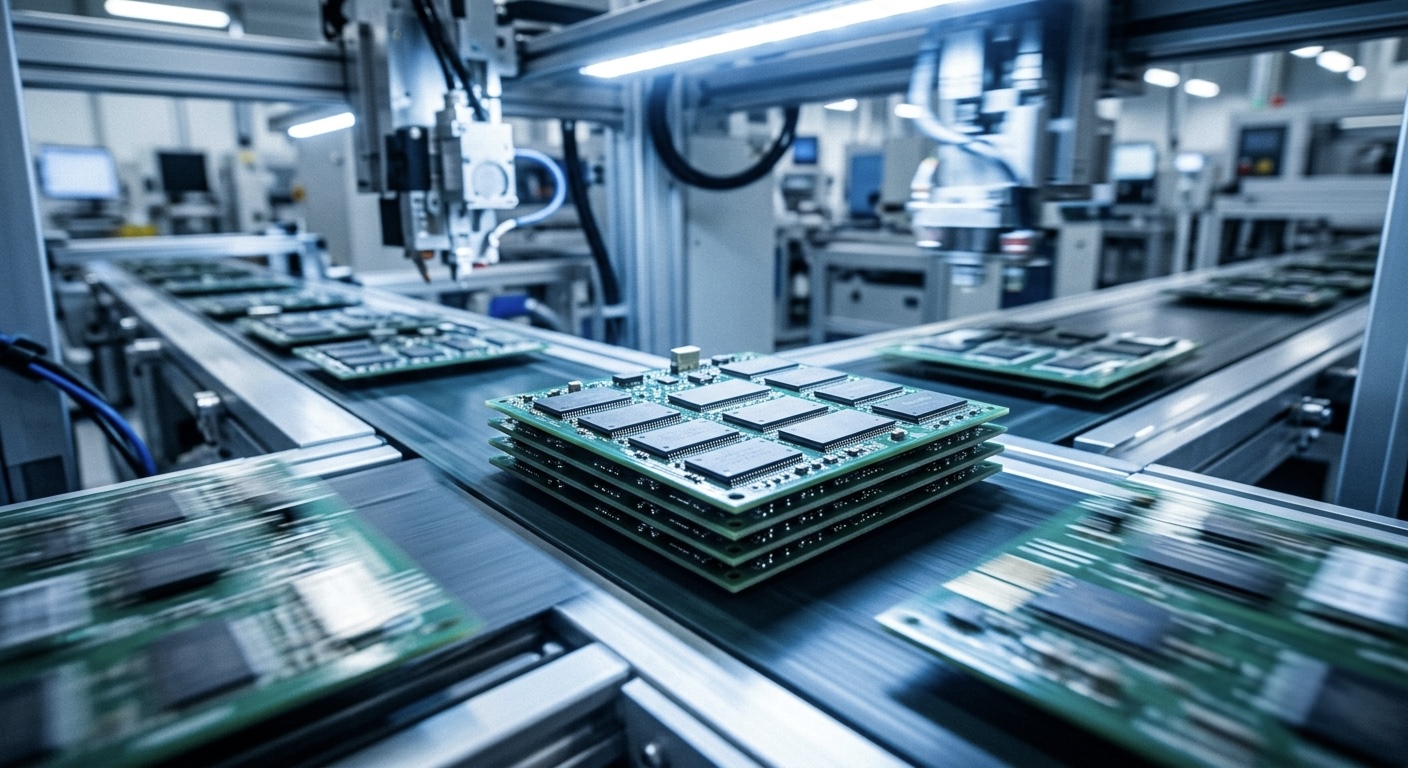
This is the more immediate story, and it's worth slowing down on because the cause is bigger than one product line. Data centers are on pace to consume roughly 70 percent of all memory chips produced worldwide in 2026, up from the usual 20 to 30 percent. Meta, Google, Microsoft, and Amazon have locked up years of production capacity through long-term supply deals, and Samsung, SK Hynix, and Micron, the three companies that make basically all the world's DRAM, have every incentive to feed that demand first.
The reason is margins, not loyalty. High-bandwidth memory, the stuff that goes into AI accelerators like Nvidia's chips, sells for three to five times what ordinary consumer DDR5 goes for on the same wafer. A single Nvidia B300 GPU alone needs 96 DRAM dies just for its HBM stack. So when a fab has to choose between running a batch for a laptop maker or running a batch for Nvidia, the math isn't close. Industry analysts have started calling it the "3-to-1 rule," every AI chip produced effectively crowds out the capacity for about three ordinary PC chips. That's the traffic jam. It's not a shortage of factories, it's a shortage of factories willing to build what consumers need instead of what AI companies will pay triple for.
The MacBook Air is catching the worst of it because it's Apple's cheapest, highest-volume laptop, the one with the least room to absorb a cost spike. Apple already raised the price twice this year, from $999 to $1,099 when the M5 model launched in March, then again to $1,299 in June, and it still can't keep the thing in stock. Order one today and Apple's telling people they won't see it until the end of the month. Retailers are calling the shortage worse than anything they can remember. Apple's also reportedly prioritizing the base 14-inch MacBook Pro right now to clear out inventory ahead of an M6 refresh this fall, which squeezes Air supply even further in the meantime.
And this isn't a this-quarter problem. Intel's CEO has said there's no real relief expected before 2028. SK Hynix's CEO has gone further, warning the shortage could persist past 2030, because new fab capacity coming online in 2027 won't change the incentive to prioritize AI memory over consumer memory. If you've been holding off on a MacBook Air purchase, this is not the year that gets easier.
Where the subscription push fits in, and why Android is about to feel the same pressure
The newsletter also touched on Apple's subscription strategy, which lines up with something that's been rumored for a while, a possible Health+ tier that could fold into Apple One down the line. Put next to the smart glasses health features, it starts to look like a pattern rather than a coincidence. Apple's building hardware, software, and a subscription on the same axis, your health data, tracked across watch, glasses, and phone, wrapped in a service you pay for monthly. Worth watching whether Fitness+ survives as its own thing or gets absorbed into whatever Health+ becomes.
Here's my take, and I think it plays out fast. Samsung and Google are going to feel real pressure to answer this in the US, and Samsung already tipped its hand. It launched the Galaxy Card in July, a direct answer to Apple Card seven years after Apple shipped one, and it undercut Apple on cash back to make the point loudly. It also pushed the Galaxy Z Fold8 and Fold8 Ultra out the door on July 22, weeks ahead of Apple's own first foldable iPhone, which is exactly the kind of move you make when you want to own the "we got there first" headline before the other guy even ships. That's not a coincidence, that's a company that watches Apple's roadmap closely and races to plant a flag first.
So I'd bet on Samsung being the one to move first on a health-and-hardware subscription bundle too, something that ties Galaxy Watch, Galaxy Ring, and whatever Samsung's answer to smart glasses ends up being into one paid tier, the same way it answered the card and the foldable. Google's harder to call because its hardware lineup is thinner, but Fitbit Premium already exists and Google has every incentive to fold Pixel Watch and Gemini health coaching into something bigger if Apple proves people will pay for it. Neither company wants to be the one explaining to shareholders why Apple owns the "your devices watch your health" subscription lane alone.
The short version
Apple's near-term problem is a chip shortage it didn't cause, driven by AI datacenter demand that isn't going away for years, and it's driving laptop prices up in the meantime. Its long-term bet is that health tracking becomes the reason you buy into the next category of Apple hardware, glasses this time, the way fitness tracking helped sell the Watch. And if that bet pays off even a little, expect Samsung and Google to come chasing it in the US the same way Samsung chased the card and the fold. None of that plays out this week, but all of it is worth watching through the fall.
Verified August 2, 2026 (Source). For an app built the old-fashioned way, on-device and out of the subscription arms race, the studio's lineup is at jcmobileappstudio.com/apps.
Comments
Be kind and stay on topic. Comments are reviewed before they appear.