First, the part that is true
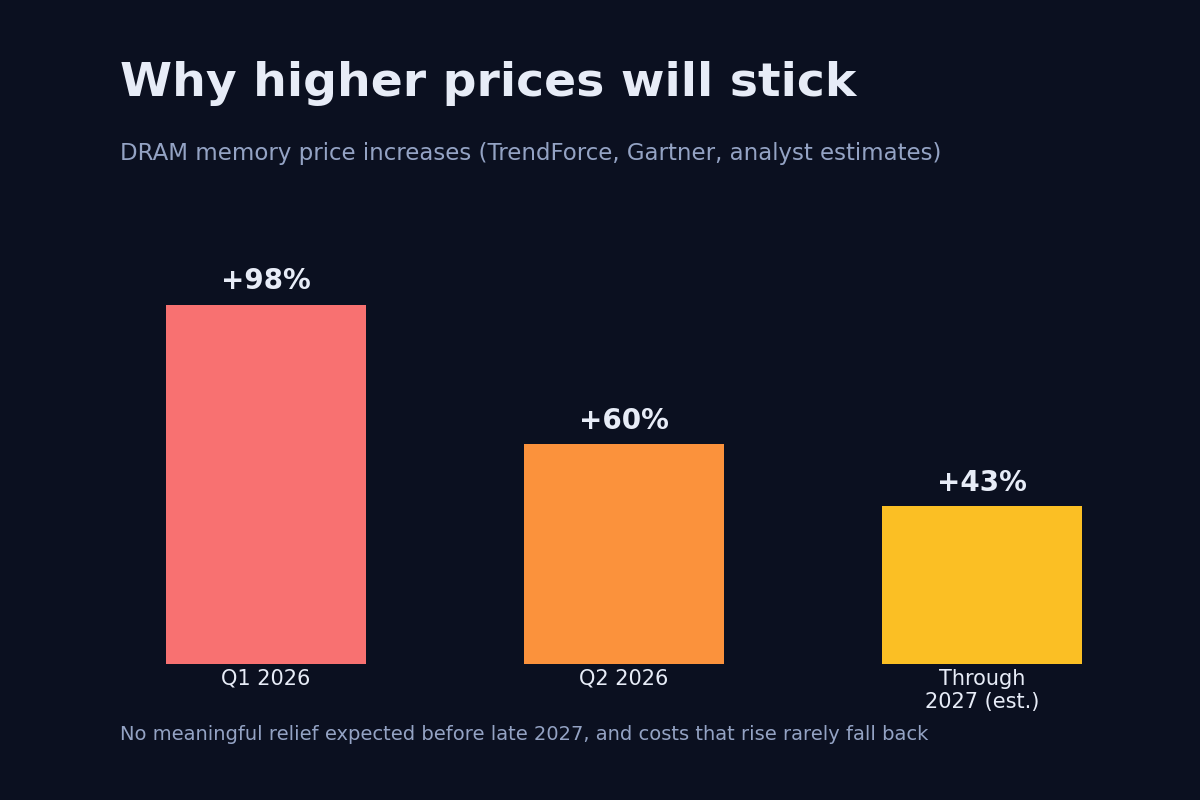
The cost pressure is real. DRAM prices rose as much as 98 percent in the first quarter of 2026 and are tracking up roughly another 60 percent in the second, according to industry tracker TrendForce, with AI data centers buying up an enormous share of the supply. Tim Cook called the price increases unavoidable, and on a quarter-by-quarter basis he is not wrong. Apple genuinely cannot eat a doubling of a core component cost forever without gutting its margins.
Now, the part nobody wants to say
Prices are sticky on the way down. This is one of the most reliable patterns in how companies behave: when costs rise, prices go up quickly, and when those costs later fall, prices come down slowly, if at all. Economists have a clunky name for it, downward price rigidity, but you already know it from the grocery store. Once a number sits on a shelf long enough, it stops feeling like a hike and starts feeling like the price.
Three forces make that especially likely here. First, timing. Analysts do not expect meaningful relief in the memory market before late 2027, and some say 2028. By the time chips get cheaper, the higher Apple price will have been normal for two years. Second, anchoring. The new sticker quietly becomes the reference point customers judge the next model against, so Apple can hold it and look generous for not raising it again. Third, margins. No public company volunteers to give back margin it has already taught customers to pay. Cutting prices when your costs drop is how you hand that windfall to shoppers instead of shareholders, and that is simply not how this usually goes.
This is structural, not a blip
There is a deeper reason to doubt a rollback. The memory shortage is not a passing mismatch that corrects when one factory catches up. Production capacity is being committed to AI customers years in advance, which means the supply that used to flow to laptops and tablets has a new, higher-paying home. When a cost finds a new floor rather than spiking and falling, the prices built on top of it tend to settle at a new floor too.
And others are thinking the same way
This is not just my read. On the same week as Apple, Microsoft raised Xbox prices, again citing memory, and said it expects memory costs to roughly double again by fall 2027. Sony has already raised console prices and is widely expected to do it again. Commentators across the tech and business press have made the same point I am making here: the reallocation of memory toward AI looks structural, so the conditions behind these increases are unlikely to simply reverse. When an entire industry raises prices together and blames the same cause, that is not a temporary promotion. That is a reset.
The honest counterargument
To be fair, there is a case for the other side. Apple does sometimes effectively cut prices, just not in an obvious way. It tends to hold a price point and add more memory or a better chip for the same money, which is a real-terms discount even when the sticker does not move. Hard competition from cheaper Windows laptops and Android tablets can force its hand. And if memory prices genuinely crater rather than merely easing, the pressure to pass some of that along, at least through better specs, would grow. So "prices never fall" is too strong. The honest claim is narrower: do not expect these specific 2026 sticker prices to drop back to their old numbers just because the shortage eventually clears.
What it means for you
If you are a buyer, the practical takeaway is to stop waiting for the price to fall back. It probably will not, at least not as a lower sticker. Buy when you actually need the thing, look for pre-hike stock at third-party retailers while it lasts, and weigh refurbished, which looks better than ever against the new list prices. If you are a long-term investor, the sticker is a sideshow. What matters is whether Apple protects its margins, and history says a company that raises prices in a shortage and keeps them after is doing exactly that.
Figures here were verified on June 26, 2026, and forecasts about memory prices are estimates that will change. This is analysis and opinion, general information rather than financial, investment, or purchasing advice. For the plain news version of Apple's hikes, see today's Apple roundup.
Comments
Be kind and stay on topic. Comments are reviewed before they appear.