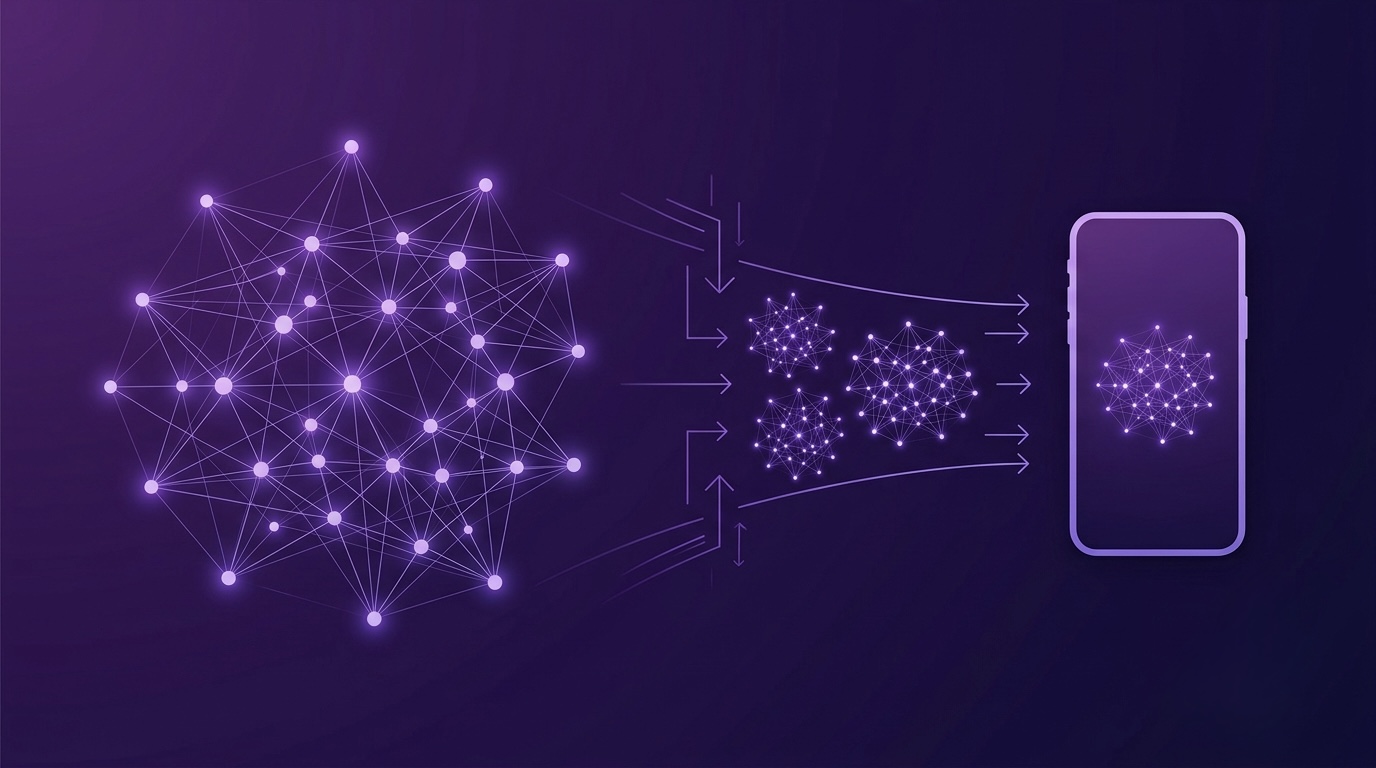
Apple is in exploratory talks with PrismML, a compression startup spun out of Caltech, about whether its technology can bring meaningfully larger AI models onto the iPhone without needing the cloud. Nothing is signed and there is no deployment timeline, but the demo behind the talks is the interesting part. (CNBC)
54GB down to under 4GB
PrismML took Alibaba's Qwen 3.6, a 27 billion parameter model that normally takes up around 54GB of storage, and compressed it down to less than 4GB. The shrunken version ran, fully functional, on an iPhone 17 Pro. That is roughly a 93 percent reduction in size, which is a much bigger jump than the compression tricks that are already common in the industry. (Quartz)
The method is not exotic in concept. Most AI models store each internal value, or weight, using 16 bits of precision. PrismML's approach cuts that down to just one or three possible values per weight, a technique sometimes called extreme quantization. Do that carefully enough across billions of weights, and the model gets dramatically smaller while supposedly keeping most of its reasoning ability intact. (Crypto Briefing)
Why this matters more than a chatbot upgrade
On-device AI has been stuck in an awkward spot for a couple of years now. Phones have enough processing power to run small models locally, but the models capable of real reasoning, the kind that can plan multi-step tasks or handle nuanced writing, have generally been too large to fit in a phone's memory without cloud help. That gap is why Apple, Google, and everyone else still route the hard requests to a server, even on flagship phones.
A working method that shrinks a 27 billion parameter model down to phone-sized without gutting it would narrow that gap fast. It would not eliminate the need for cloud AI entirely, but it would move a lot more of what currently requires a network call onto the device itself. That is a privacy win as much as a performance one, since a request that never leaves your phone cannot be logged, retained, or exposed in a server breach.
Still early, and worth some skepticism
A few things are worth holding onto here. These are exploratory talks, not a signed deal, and Apple evaluates outside technology constantly without shipping most of it. Compression this aggressive also tends to come with tradeoffs that a single demo does not fully reveal, things like slower inference, occasional accuracy loss on edge cases, or higher battery drain during use. PrismML has said it plans to open-source its compressed model on July 14, which should let independent researchers actually test those tradeoffs instead of taking the demo at face value. (Crypto Briefing)
Still, the direction lines up with everything Apple has said about its AI strategy this year. Its own third-generation Foundation Models already lean hard on keeping inference on the device where possible, and a compression breakthrough like this is exactly the kind of thing that would let Apple push more of that work locally without waiting on a new chip generation.
The part I actually care about
I build small, privacy-first iOS apps, and the honest truth is that the biggest limit on what I can do on-device has always been model size, not intent. Every time a model this capable gets meaningfully smaller, it becomes realistic for an app that does not phone home to do more than it could last year. That is the trend worth watching here, not whether this one partnership happens, but whether compression like this becomes a normal part of how AI ships on phones going forward.
Reporting on an early-stage partnership discussion, not a confirmed Apple product. For the studio's privacy-first, on-device apps, the full lineup is at jcmobileappstudio.com/apps.
Comments
Be kind and stay on topic. Comments are reviewed before they appear.