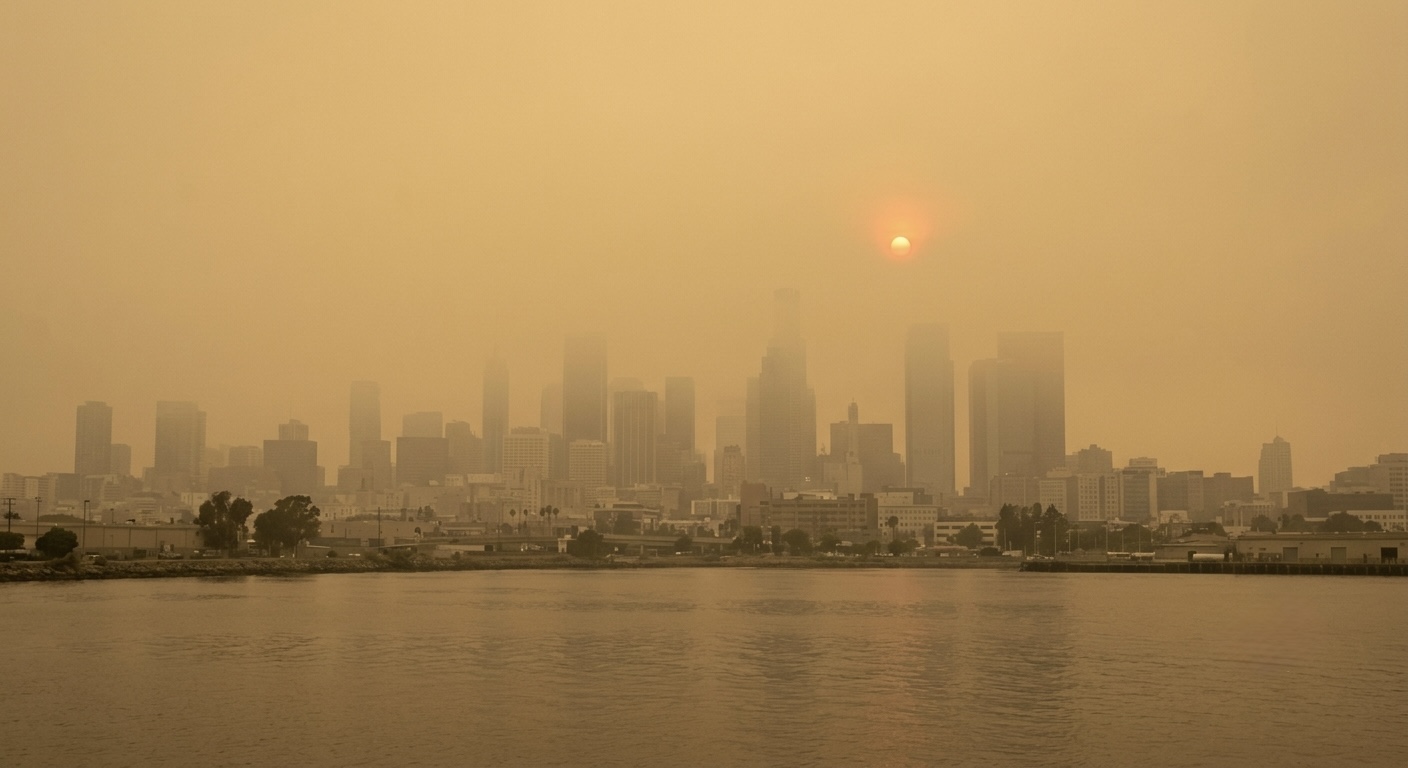
Where this smoke actually came from
The smoke tracing across the Midwest and Northeast this week is coming from two sources at once, large wildfires burning in Canada and a serious wildfire in northeastern Minnesota near Two Harbors and Grand Portage, severe enough that evacuation orders went out for some Lake County residents. A cold front moving south out of Canada is what actually pushed all of that smoke down into the U.S. rather than letting it drift harmlessly out to sea. (CBS News)
Why the East Coast, of all places
The worst of it stayed concentrated near the source, parts of Michigan and Minnesota saw air quality indexes fall into the unhealthy "orange" and "red" zones, with the area right around the Minnesota fires hitting a "dangerous maroon" reading. But the same cold front that drove the smoke south kept pushing it along the I-95 corridor, Pittsburgh, Philadelphia, New York City, Baltimore, and Washington, D.C. all picked up secondary smoke impact as the week went on. Boston and parts of Maine saw yellow-brown skies days before that, an early preview of the same plume arriving from a different angle. (Fox Weather)
What the alert levels actually mean
Wildfire smoke is measured mainly by fine particulate matter, particles small enough to get into your lungs and bloodstream. The health risk is real even at levels well below the "hazardous" tier hitting areas closest to the fires, fine particle exposure can cause shortness of breath, coughing, dizziness, or fatigue, and it is a bigger deal for children, older adults, and anyone with an existing heart or lung condition. The East Coast corridor's secondary exposure is meaningfully less severe than what northern Minnesota is dealing with directly, but "less severe than hazardous" is not the same as "nothing to worry about." (CBS News)
What to actually do about it
On a day your area is under an active air quality alert, the practical moves are the same wherever you are on the affected corridor, keep windows closed, run an air purifier indoors if you have one, and skip strenuous outdoor activity, sensitive groups especially. If you do need to be outside for a while on a bad-air day, an N95 mask actually filters out the fine particles a cloth mask does not. Check your local index before you plan an outdoor workout or send kids out to play, not after you're already coughing.
Not medical advice, just a plain summary of what's being reported. Check your local air quality index before planning outdoor activity. You can see what this studio builds at jcmobileappstudio.com/apps.
Comments
Be kind and stay on topic. Comments are reviewed before they appear.