Free is a distribution strategy, not a gift
The logic is old and it works. If you are behind the leader, you do not win by charging more, you win by making the leader's price look absurd. Give the model away, get it embedded in tools, tutorials, startups, university labs, and internal company stacks, and now you are the default that everything is built on top of. Monetization comes later, at the hosting and cloud layer, once removing you from production would be expensive.
One analysis of the strategy puts it well: the goal is a stack that makes capable intelligence cheap to adopt, easy to route, and difficult to remove from production. That last clause is the whole game. It is not about this quarter's revenue. (Analysis)
There is also a supply-side reason. Export controls limited access to the best training hardware, so efficiency stopped being a nice-to-have and became the constraint everyone had to design around. Mixture-of-experts architectures, where only part of the model activates per request, and attention tricks that cut memory overhead came out of that pressure. DeepSeek-V3's widely cited final training run figure was roughly $5.6 million in rented GPU hours, an order of magnitude below the numbers whispered about frontier US runs. Treat that number carefully, it covers a final run and not the research, failed runs, and infrastructure behind it, but the direction is real.
Cheaper on the sticker, not always cheaper in total
This is where a lot of writeups go wrong. Token price is not total cost. If you self-host open weights, you are now paying for GPUs or cloud instances, someone's time to run the stack, monitoring, evaluation, and the human review that catches bad output. Self-hosting makes sense when your usage is high and steady and you have someone who can operate infrastructure. It makes very little sense for occasional use, where a hosted API at a few dollars a month wins easily.
The genuine advantage of open weights is not price, it is control. Nobody can deprecate your model out from under you, change its behavior overnight, raise the price, or cut off your access. If you are building something that has to behave the same way in three years, that is worth real money.
Are they safe to use
You have to split this question in two, because the honest answer is completely different depending on which one you mean.
Using the app or the hosted API. This is the one that deserves caution, and not because of the model. It is because of where your data goes. Consumer chat apps from these companies typically route your prompts to servers in China under Chinese data law, with retention and training-use terms that are often broad. That is not a conspiracy theory, it is just what the terms say, and American consumer AI apps have their own version of the same problem. Do not paste anything into any consumer chat app that you would not be comfortable having stored.
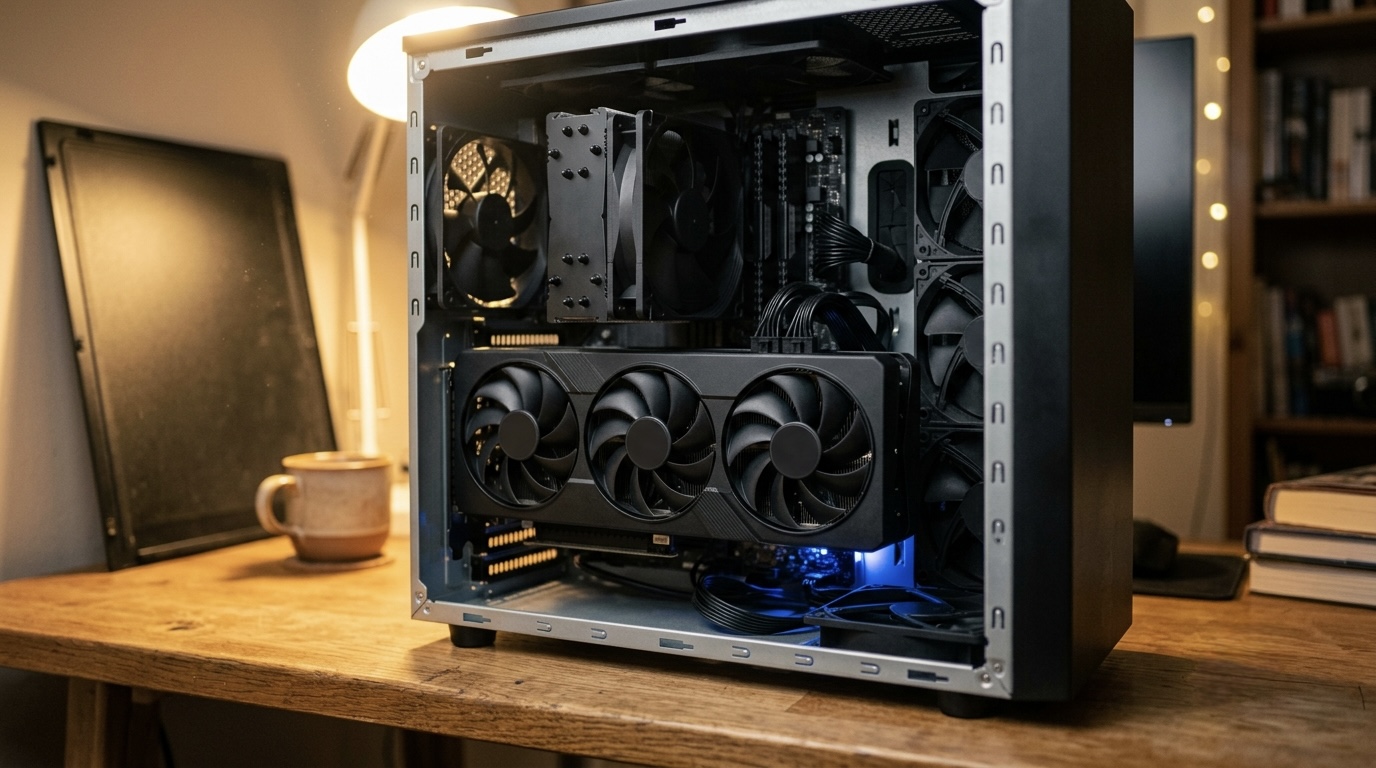
Running the weights yourself. This is a different animal. A downloaded model running on your own machine or your own server has no phone home. It cannot send your data anywhere because it is not connected to anything. Running Qwen locally on a laptop is, in a narrow privacy sense, more private than using an American cloud API, because the data never leaves the room. The safety questions that remain are model behavior questions, not data exfiltration questions.
The rule I would use: judge the deployment route and the contract, not the flag on the headquarters. A Chinese model running on your own hardware and a US model running in a vendor's cloud have very different privacy profiles, and the intuitive ranking is often backwards.
What these models are actually not good for
Two real limitations, stated plainly. First, models trained in China are aligned to Chinese content rules, and they will deflect or give a party-line answer on politically sensitive subjects, most obviously modern Chinese political history. That is a genuine limitation for research, journalism, and history work, and it is silly to pretend otherwise. It matters approximately zero if you are refactoring a function or summarizing a PDF.
Second, open weights does not mean open source. Licenses vary a lot. Some are permissive, some restrict commercial use, redistribution, or modification. If you are shipping a product, read the actual license before you build on it, not the marketing page.
A practical split of what to use for what
Sensitive personal or work data. Run something locally, or use nothing. This is the category where the on-device answer wins outright and the nationality of the model is irrelevant. Health notes, financial details, anything with a coworker's name in it, HR material, none of that belongs in a consumer chat box of any origin.
Code, drafting, summarizing, translation, general reasoning. Open Chinese models are strong here and often the best value in the industry. Nothing you paste is sensitive, so the calculation is just capability per dollar.
Anything you will publish, or that carries legal or medical weight. Use the frontier US models and verify the output yourself regardless. Every model in this list makes things up. The verification step is not optional at any price point.
Anything touching modern Chinese politics or human rights. Do not use a Chinese model. Not a moral stance, just a practical one, you will get an incomplete answer.
Anything you want to still work identically in three years. Open weights, downloaded and pinned to a version. This is the strongest argument for them and it has nothing to do with price.
Where I land
I build apps where the AI runs on the phone, so I am biased toward the model that never sends your data anywhere. What China's open-weight push has actually done is make that architecture practical for a lot more people. Cheap, capable, downloadable models are the reason a one person studio can build something that runs on device instead of renting somebody's cloud and pushing user data through it.
The competitive question of who has the best model changes every few months. The structural question of whether capable AI is something you rent or something you can hold is the one that matters, and right now the answer to that is being decided by companies giving their work away on purpose.
Sources: China's open-weight AI strategy analysis and Chinese AI models compared. You can see what this studio builds at jcmobileappstudio.com/apps.
Comments
Be kind and stay on topic. Comments are reviewed before they appear.