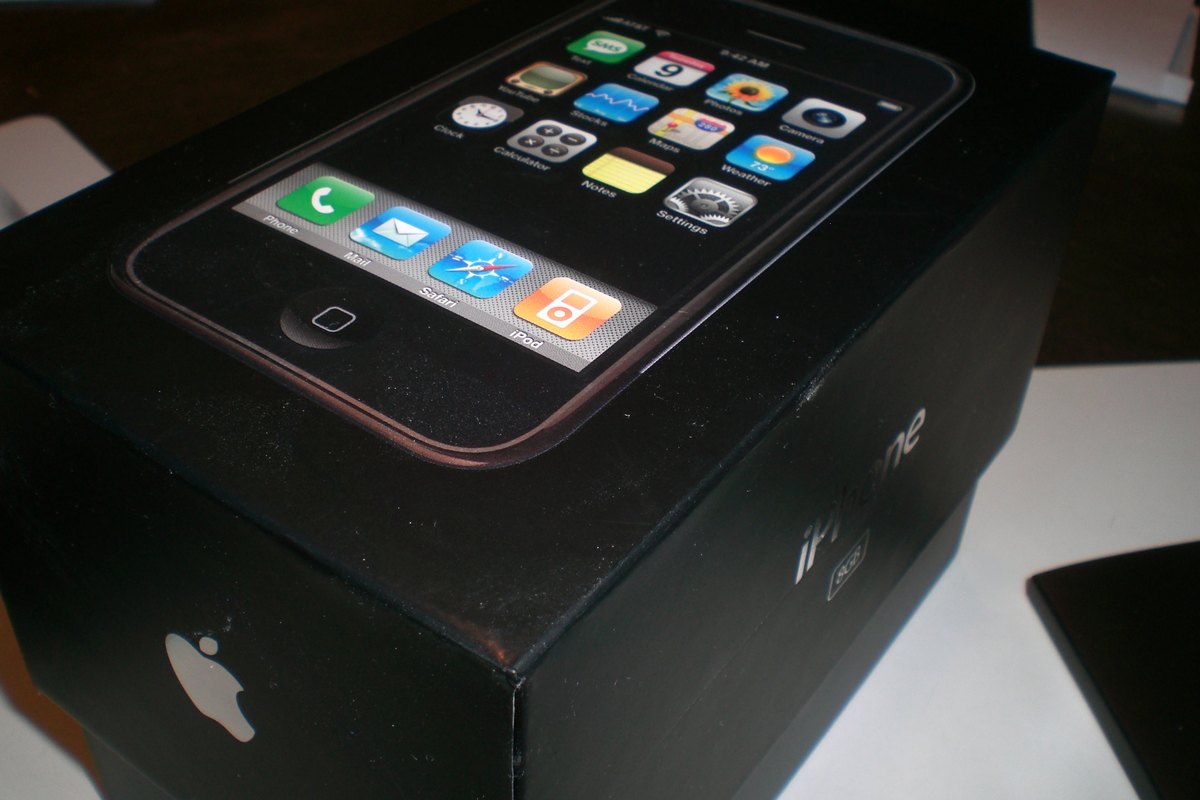
The promise: three devices in one
It started in January. On January 9, 2007, Steve Jobs stood on the Macworld stage in San Francisco and teased the crowd with what he said were three new products, a wide screen iPod with touch controls, a revolutionary mobile phone, and a breakthrough internet device. Then came the punchline. They were not three products, they were one, "an iPod, a phone, and an internet communicator." The room understood what it was hearing. The selling did not start for almost six more months.
The day itself
June 29, 2007 was a Friday, and the wait had become a spectacle. Apple stores closed at 2 p.m. to prepare, then reopened at 6 p.m. for the launch, and by then the lines wrapped around city blocks. People had camped out for days, riding out the summer heat in folding chairs under beach umbrellas, laptops plugged into power strips, staring at storefront glass stamped with a simple decal: iPhone, Coming June 29. When the doors finally opened, the first buyers walked out holding that sleek black box overhead like a trophy while Apple staff lined the exit and cheered. It was part product launch, part block party.
Then reality bit. Demand was so heavy that AT&T's activation servers buckled, and a chunk of early adopters got home, opened the box, and could not actually turn the thing on for hours. The first lesson of the smartphone era arrived the same night as the phone: the device is only as good as the network behind it.
What $499 actually bought you
Here is the part that is easy to forget. By today's standards, the original iPhone was almost comically limited, and people still lost their minds over it.
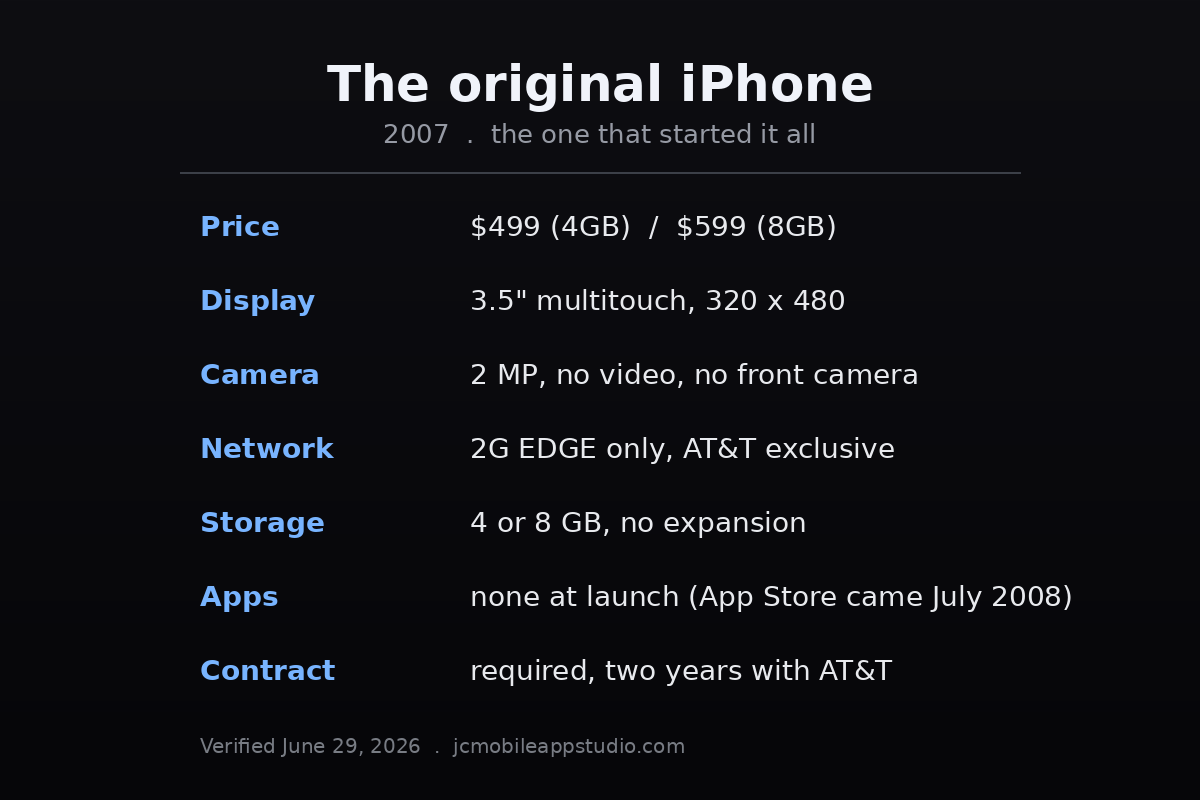
It cost $499 for 4GB or $599 for 8GB, and that was before you signed a mandatory two-year contract with AT&T, the only carrier allowed to sell it. The screen was 3.5 inches. The camera was 2 megapixels, stills only, no video, and there was no front camera at all, so the selfie did not exist yet. It ran on 2G EDGE, not 3G, so the web that Jobs demoed so proudly often crawled. And the feature that defined the iPhone more than any other, the App Store, was not there. It would not arrive until July 2008. At launch, Apple's pitch for third-party software was that you would just use web apps in Safari.
There was no copy and paste either, which sounds made up but is true, that did not arrive until 2009. No multitasking, no MMS picture messaging, no turn by turn navigation. You bought a phone that could not do things a $30 flip phone could. And it did not matter, because the things it could do, it did in a way nobody had felt before.
Why it mattered anyway
The magic was the screen and your finger. Before the iPhone, the smartphone market meant plastic keyboards, tiny joystick nubs, and a stylus you were always losing. The iPhone threw all of it out and bet everything on multitouch, pinch to zoom, a web page that looked like the real web page, and a list you could flick and watch glide to a stop. It felt less like operating a gadget and more like touching the content directly. That single idea is now so normal that it is invisible, which is the surest sign of how completely it won.
And then the App Store turned a nice phone into a platform. Once anyone could write and sell software that lived in your pocket, an entire economy appeared, ride sharing, mobile banking, the camera that ate the camera industry, the maps that replaced the glovebox atlas, the little studios like this one. The iPhone did not just sell well. It moved the center of gravity of computing from the desk to the hand, and almost every phone since, Android included, is a response to the bet Apple placed on that Friday in 2007.
How far it has come
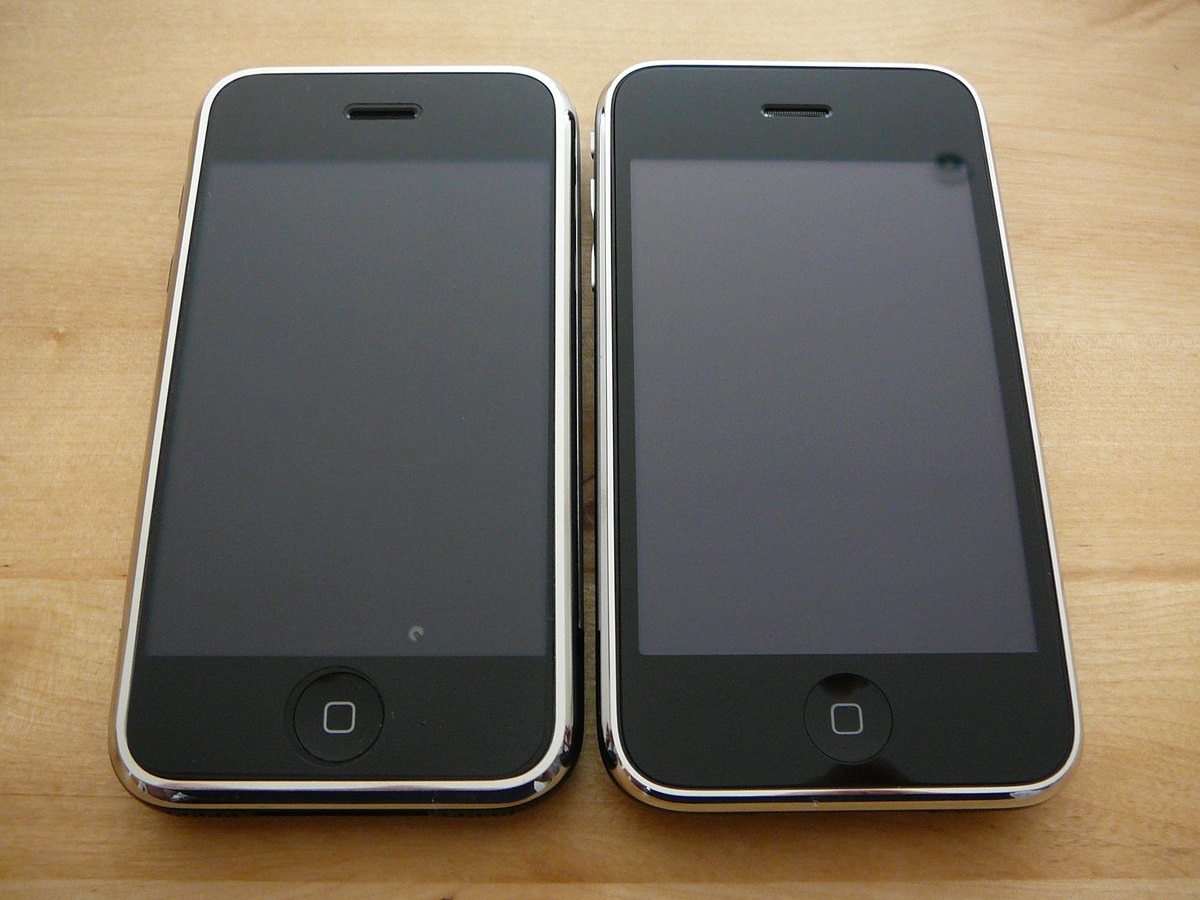
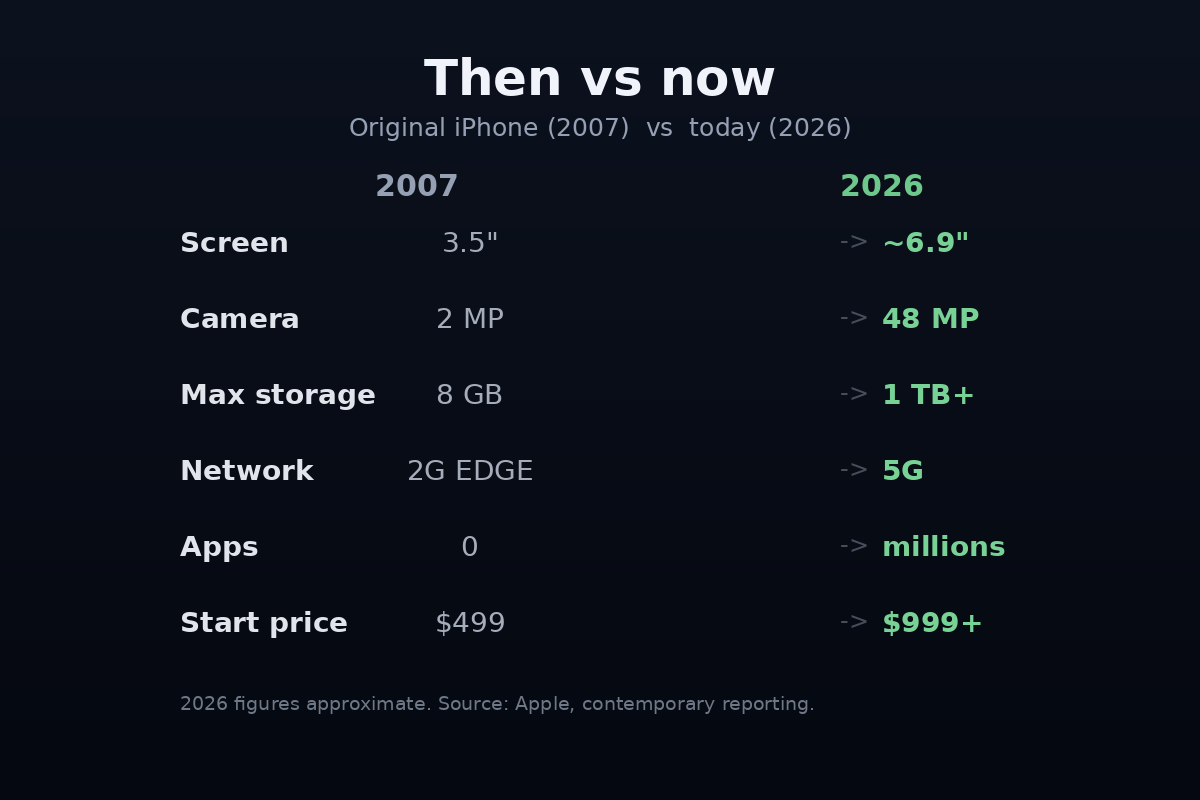
The arc is almost funny when you line it up. The screen more than doubled, the camera went from a 2 megapixel afterthought to a 48 megapixel system that shoots cinema grade video, storage jumped from 8 gigabytes to a terabyte and beyond, and the network went from a crawling 2G signal to 5G. The price climbed too, from a $499 starting point that felt outrageous in 2007 to flagships well north of a thousand dollars now, a story this studio has written about more than once lately.
The honest bottom line
It is worth remembering that the original iPhone was not the best phone on paper. It was slower, pricier, and less capable than plenty of its rivals, and serious tech people lined up to explain why it would flop. They were measuring the wrong things. What the iPhone got right was the feel of using it, and feel turned out to be the whole game. Nineteen years later, the device in your pocket is a direct descendant of the one those campers were waiting for, and the line that formed outside those stores never really ended, it just moved online.
For where Apple is now, the latest Apple news covers this year's lineup and price hikes, and getting your devices ready for iOS 27 looks at what is coming next. You can see what this studio builds at jcmobileappstudio.com.
Comments
Be kind and stay on topic. Comments are reviewed before they appear.