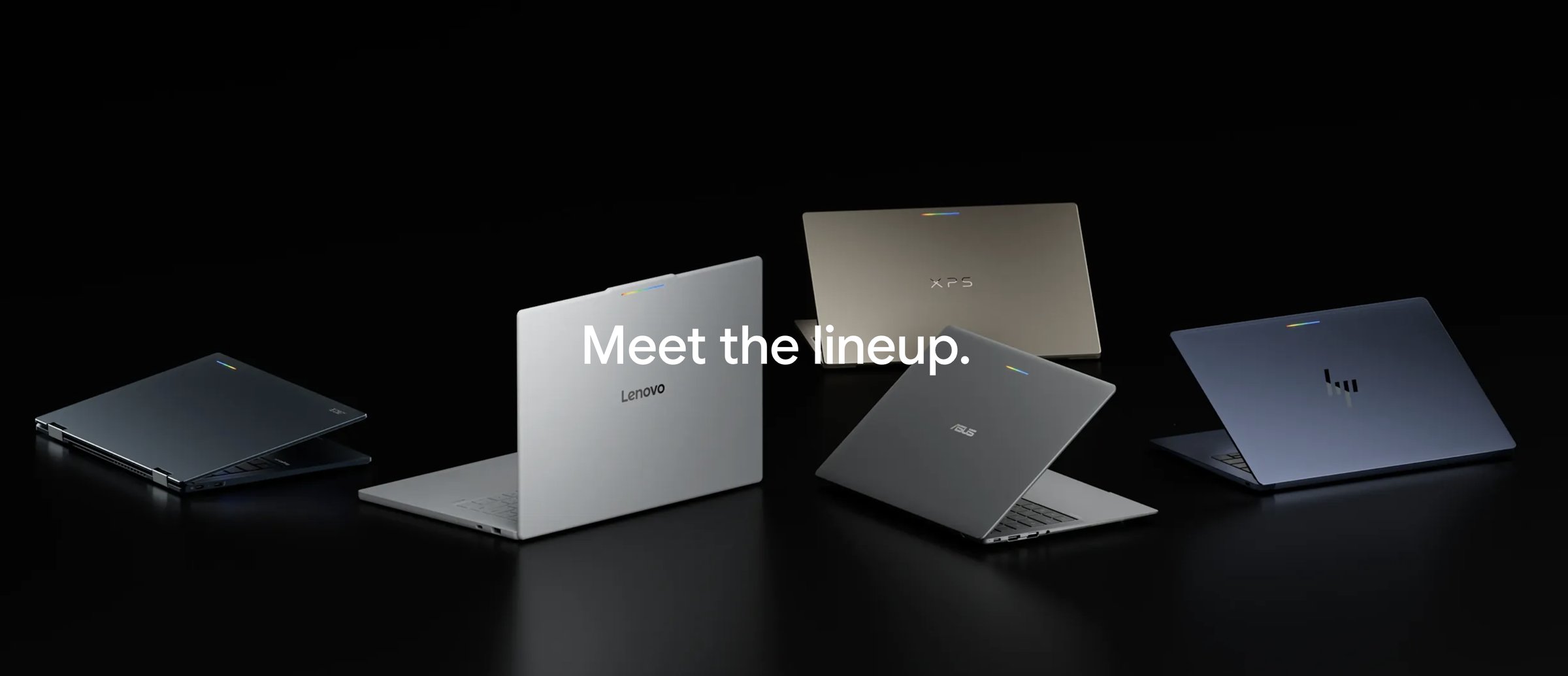
Google made it official on Monday. The Googlebook is a new category of laptop, built by the usual PC makers, running a new Android-based operating system, with Gemini baked into nearly every corner of it. Prices start at $899, preorders are open now, and the first machines ship October 4 in the U.S. (9to5Google)
If you have been half following this, the short version is this: the Chromebook is not dead, but Google's big bet for your next laptop is no longer a cheap browser box. It is a premium machine that wants to be the place you use Gemini all day.
What you actually get
There are five launch models, one from each big partner: the Acer Googlebook 14, Dell XPS Googlebook, ASUS Googlebook 14, HP Googlebook 14, and Lenovo Googlebook 15. The Acer is the $899 entry point, and the nicer builds run up to about $1,299. (9to5Google)
The spec floor is higher than most people expect from anything with "Google" on the lid:
- Intel Core Ultra Series 3 or Snapdragon X Elite chips, each with an AI accelerator (an NPU) rated at 40+ TOPS
- 16GB of RAM standard, 32GB optional
- 256GB of storage or more
- Up to 2.8K LCD or OLED touchscreens
- Up to 14 hours of video playback, per Google's own claims
- Aluminum, magnesium, and carbon fiber bodies, plus a "Glowbar" light strip on the lid that you can customize
Google also promises 10 years of automatic updates with quarterly feature drops, which is a real selling point. Most Windows laptops at this price do not come with a decade-long software promise in writing. (9to5Google)
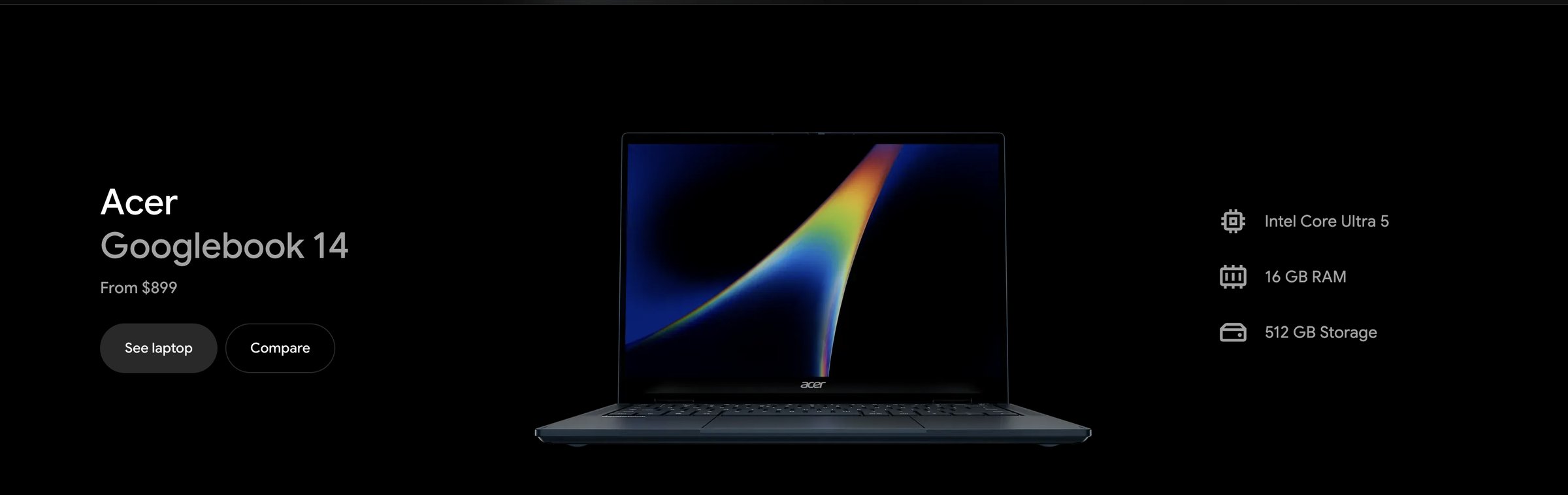
From $899 · Intel Core Ultra 5 · 16 GB RAM · 512 GB storage
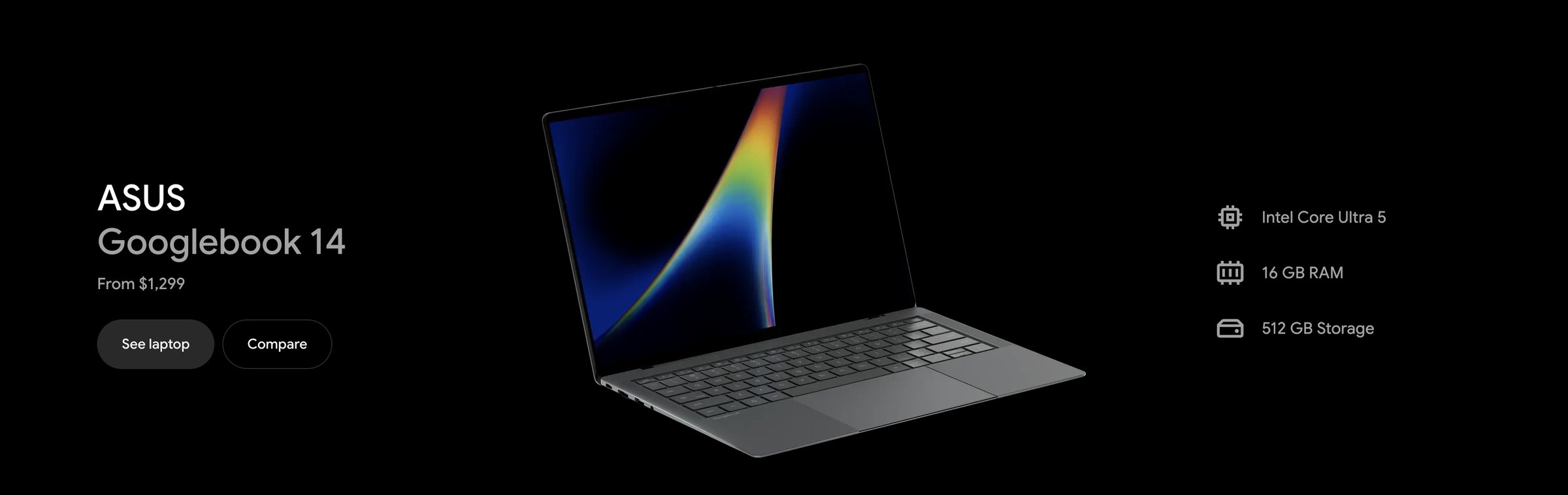
From $1,299 · Intel Core Ultra 5 · 16 GB RAM · 512 GB storage
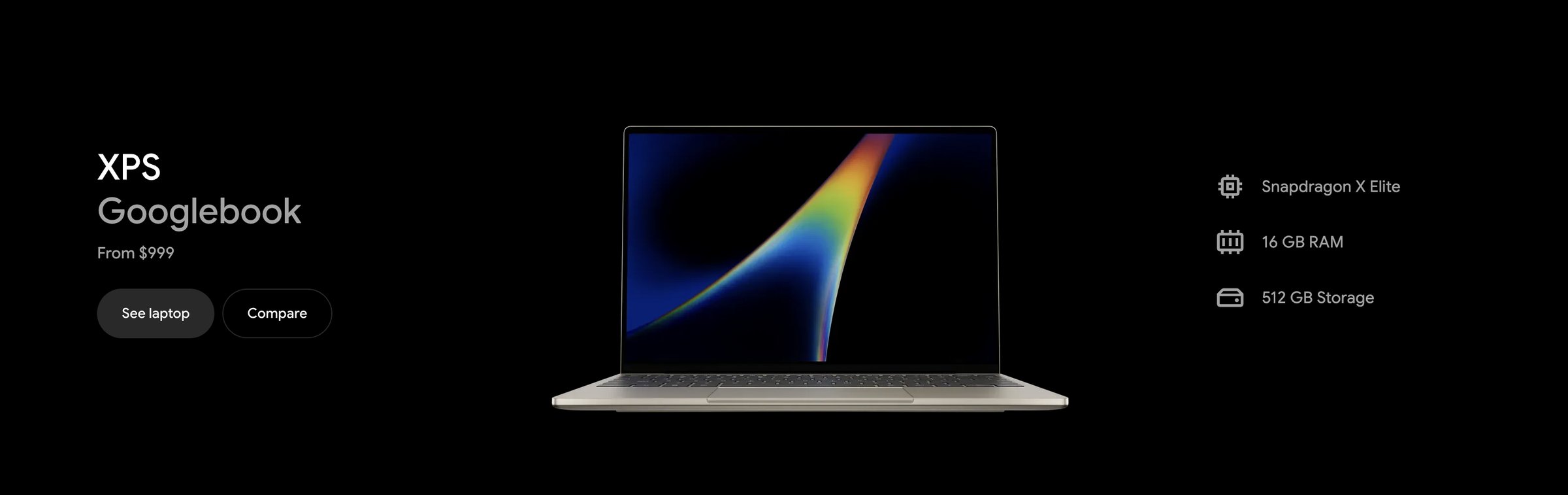
From $999 · Snapdragon X Elite · 16 GB RAM · 512 GB storage
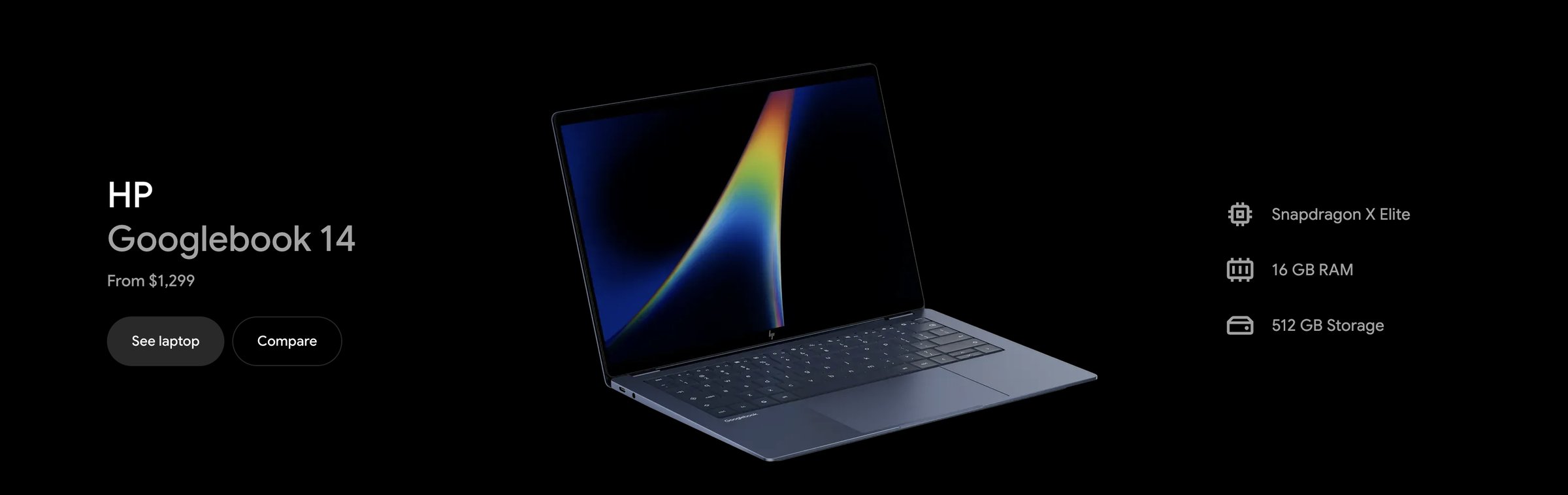
From $1,299 · Snapdragon X Elite · 16 GB RAM · 512 GB storage
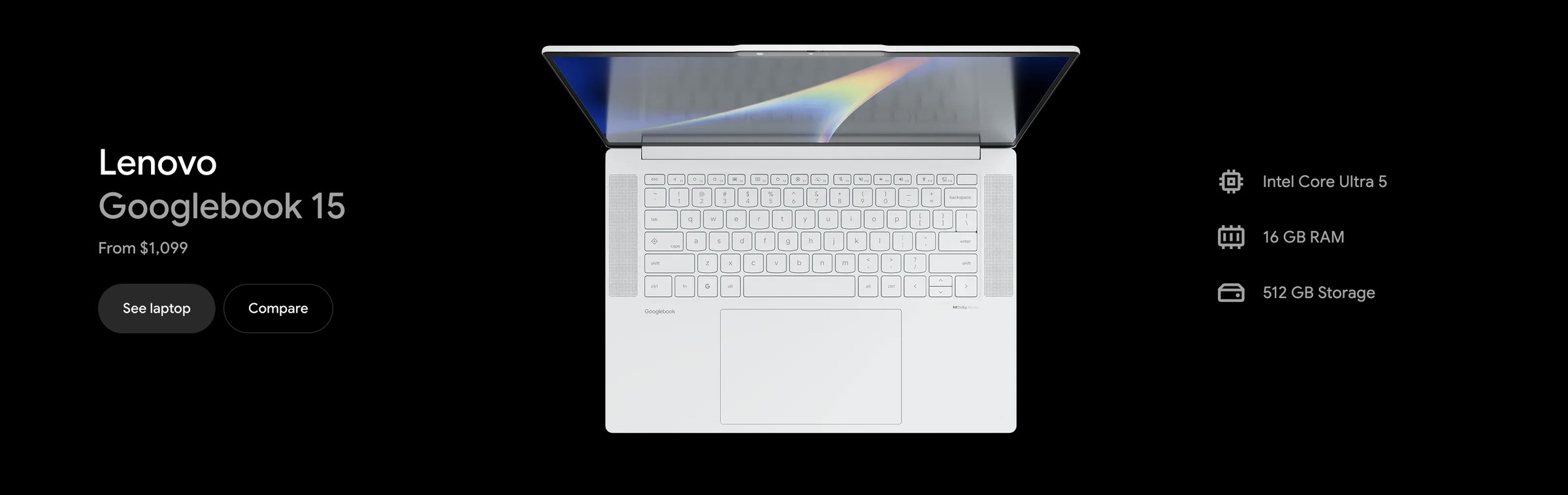
From $1,099 · Intel Core Ultra 5 · 16 GB RAM · 512 GB storage
The software is the real story
Googlebooks run what Google calls Googlebook OS. It is built on Android, but borrows ChromeOS's desktop-style multitasking and the full Chrome browser. In plain terms, it runs Android apps natively, runs the web like a Chromebook, and is designed to hand tasks back and forth with an Android 17 phone through a feature called Continue On. (9to5Google)
The headline Gemini features:
- Magic Pointer. Wiggle the cursor and Gemini pops up contextual suggestions about whatever you are pointing at. Google's own description: "wiggle your cursor and watch it come alive with Gemini." (Google)
- Rambler. You talk in a messy stream of thought, and it cleans it up into readable text.
- Create My Widget. Describe a dashboard in plain English and Gemini builds a widget, pulling from things like Gmail and Calendar.
- A Gemini side panel inside Chrome.
On security, Google is leaning on its Titan chip, on-device malware detection, and a sandboxed Linux environment for developers. (9to5Google)
The bundle is doing a lot of work
Every Googlebook comes with 12 months of Google AI Pro, 3 months of YouTube Premium, Adobe Photoshop, CapCut, and a year of Nvidia GeForce Now for cloud gaming. (9to5Google)
That is a nice pile of extras. It is also a tell. When a company throws a year of its AI subscription into the box, it is betting you will not want to give it up in month 13. Budget for that renewal before you count the bundle as savings.
My take: the pitch is Gemini, and that cuts both ways
TechCrunch framed it well: this is "a bet that you'll buy a new laptop for Gemini." They also pointed out the obvious problem. Magic Pointer sounds a lot like Circle to Search on Android, and Circle to Search did not cause a mass exodus from the iPhone. (TechCrunch)
I agree with that read. The hardware looks legitimately good. Ten years of updates is great. But the features that are supposed to make you switch are nice-to-haves, not must-haves, and several of them only work if you live in Gmail, Calendar, and Google's cloud.
That is the privacy question I would want answered before buying one. Google's announcement talks a lot about security (keeping bad guys out) and very little about privacy (what Google itself sees). The NPU in these machines can run AI locally, but Google has not clearly spelled out which Gemini features stay on the laptop and which send your screen, your voice, or your inbox to its servers. Magic Pointer, by design, is looking at whatever you are looking at. I want that answer in writing, feature by feature.
This is the same standard I hold my own apps to. On-device is not a marketing phrase, it is a list of things that never leave the machine. Until Google publishes that list, assume the answer is "some of it does."
Who should buy one
Maybe yes: You already run your life in Google's apps, you have an Android phone, and your current laptop is old. The 10-year update window makes this a genuinely long-lived machine.
Probably wait: You are on an iPhone. A lot of the magic here is phone-to-laptop handoff, and that is built for Android 17.
Wait for reviews either way: This is a brand new OS. First-generation platforms always ship with rough edges, app gaps, and features that get better (or quietly disappear) by version two. Reviews will land around the October 4 ship date.
There is also a bigger picture here. Google says there are about 50 million Chromebooks in schools, and TechCrunch notes the Googlebook is partly a path to move that whole generation onto Gemini. (TechCrunch) That is a long game, and it is worth watching regardless of whether you buy one.
Verified September 22, 2026. Prices and ship dates are Google's and its partners' published figures and could change. The studio's app lineup is at jcmobileappstudio.com/apps.
Sources: 9to5Google, TechCrunch, Google, Android Authority
Comments
Be kind and stay on topic.
No comments yet. Be the first.