What's actually new in beta 4
The first thing you notice after updating is the new Siri splash screen. Invoke Siri from the Dynamic Island or the Home screen swipe and you get a short explainer about the new Siri AI before it drops you in. It is Apple's way of saying "this is not the old Siri, please give it another chance." Honestly, fair. The old Siri burned a decade of goodwill and a splash screen is the least Apple can do to reset expectations.
The voice settings got real work this round. Two of the enhanced Siri voices now have working pace and expressivity sliders, and playing with them is genuinely fun. You can make Siri talk faster, slower, flatter, more animated. The other five legacy voices just say "coming soon," so this is clearly still mid-construction. There is also a redesigned voice picker with new voices and accents. One catch worth knowing: custom Siri voices are limited to the iPhone 17 Pro, 17 Pro Max, and iPhone Air. More on that in a minute, because it annoys me.
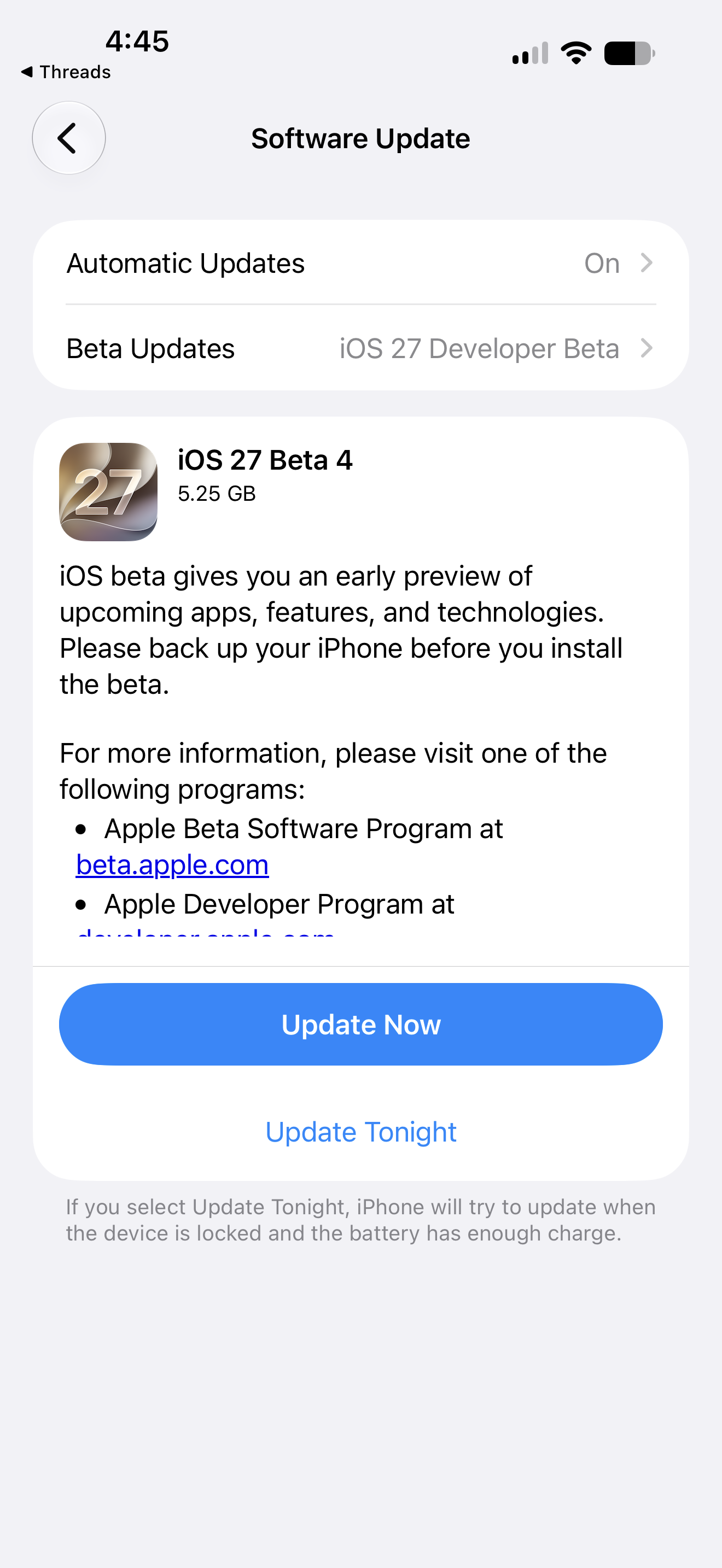
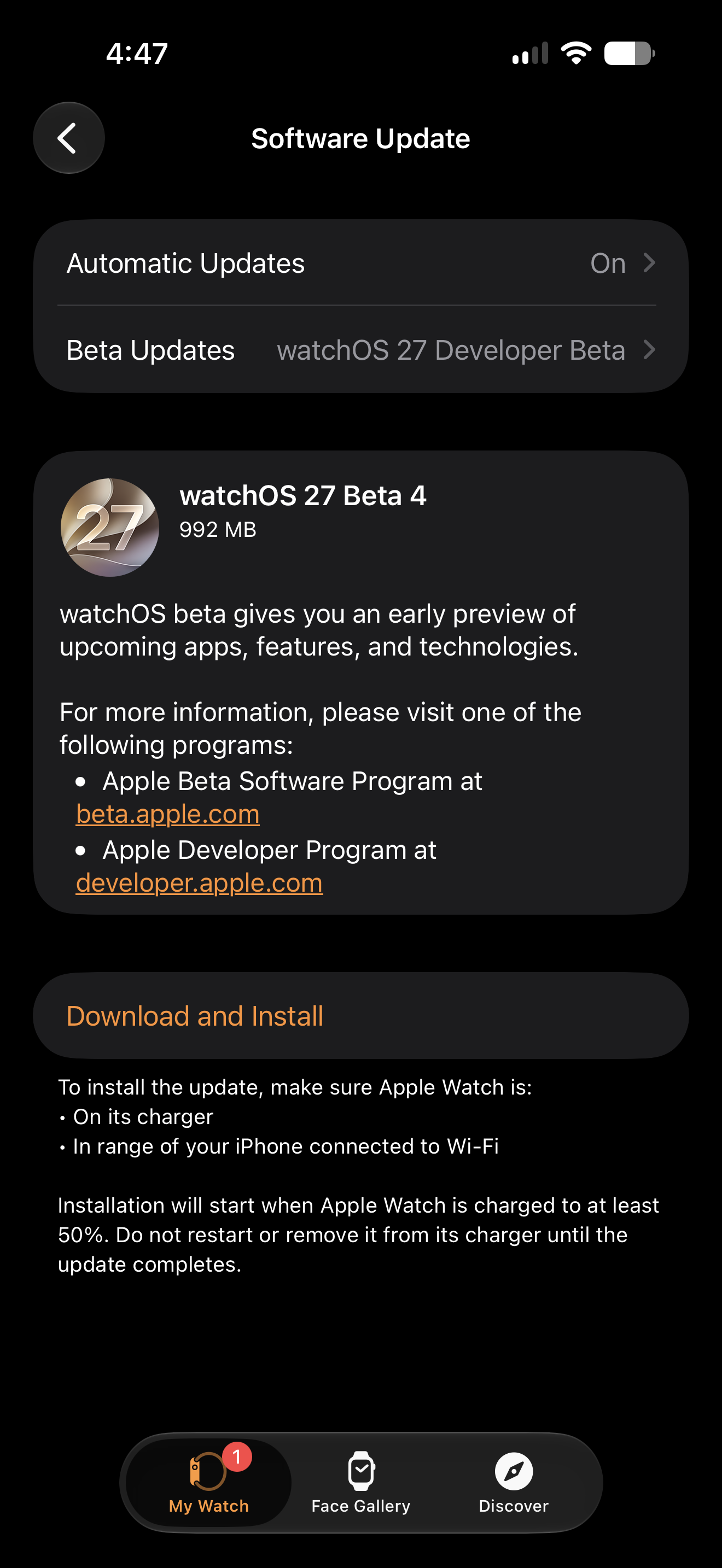
Beyond Siri, beta 4 has a stack of smaller changes that add up. Health now has data sharing reminders that behave like location permission alerts, a periodic "hey, you're still sharing this" nudge. As someone who thinks about data consent for a living, I love this pattern and I want it everywhere. The TV app can auto-download the next two episodes of whatever you're watching. Photos gets a "Zoom to Fill" toggle. There's ProRes Log 2 for the video folks, per-network Connectivity Assist so your phone can be smarter about flaky Wi-Fi, and updated AirPods controls in Control Center.
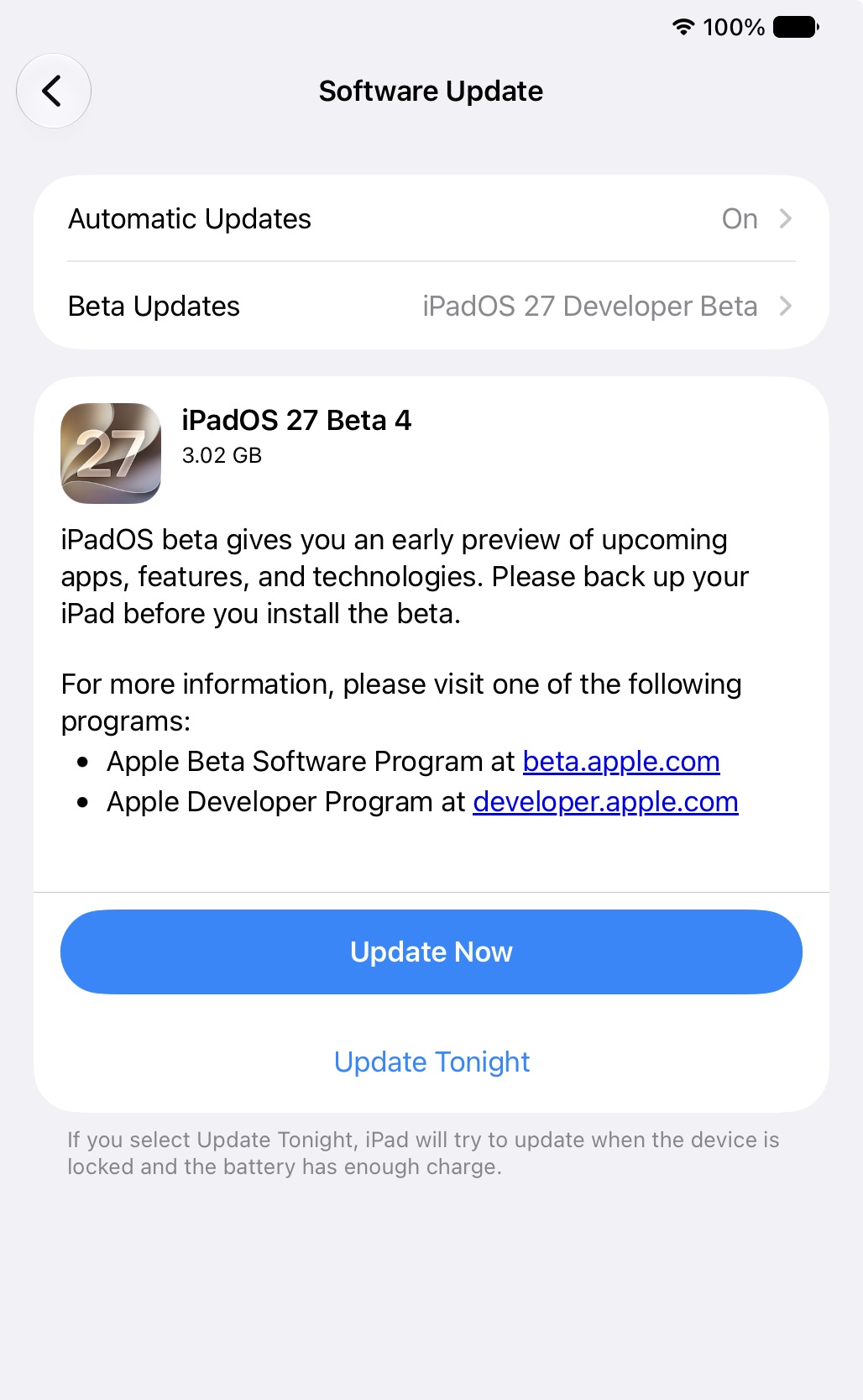
Compatibility is unchanged: iOS 27 runs on the iPhone 11 and later, plus the second generation iPhone SE and later. Apple Intelligence still needs an iPhone 15 Pro or newer, and the newest Siri AI model reportedly needs an iPhone 17 Pro or an iPhone Air. Public release lands in September alongside the new iPhones, and public beta 2 should show up the week of July 27 if you want to try it without a developer account. My usual advice stands: do not put a beta on the phone you depend on. I do it so you don't have to.
The real story: privacy as the product
Step back from the feature list and the strategy is obvious. Apple is betting that on-device-first AI, private by default, is the thing that separates the iPhone from Android. Not a bigger model. Not a flashier demo. The promise that most of the AI happens on the phone in your hand, using your actual data, without shipping your life to a server first.
I think that bet is right. I have built my whole little studio on the same idea, most of my apps run fully on-device, so I am biased, but I am biased because I believe it. People are tired of being the product. An assistant that knows your calendar and your messages is only comfortable if you trust where that knowledge lives.
But let me be honest about the part the marketing glosses over. "On-device" is not the whole picture. Apple Intelligence is on-device first, with Private Cloud Compute picking up the heavier tasks, and since iOS 26.4 Siri hands some complex queries to Google Gemini under the Apple-Google deal. That architecture is still far more private than the alternatives, Private Cloud Compute is genuinely clever, but it is not "nothing ever leaves your phone." When I say that about my own apps, I mean it literally. When Apple implies it, there is fine print. Know the difference.
The hardware gate is a business decision
Now the annoying part. The best version of the new Siri, including custom voices, is gated to the iPhone 17 Pro, 17 Pro Max, and iPhone Air. Apple will tell you it is about the neural engine, and sure, newer chips run bigger models faster. But drawing the line exactly at this year's most expensive phones is a business decision, not physics. Plenty of capable hardware sits just below that line. Apple is using its best software feature to sell its priciest hardware, which is its right, but call it what it is.
Should you care?
If you are on an iPhone 15 Pro or later, September's release will meaningfully change how you use your phone, and most of that intelligence stays local. That is a genuinely good deal, better than anything Android is offering on privacy terms. If you are on older hardware, you still get iOS 27 and a lot of the quality of life stuff, just not the AI headliners.
My take after a day on beta 4: this is the most confident Siri has looked in years, and the privacy-first framing is the right fight to pick. Just read the fine print, and do not let anyone tell you the hardware gate was inevitable.
You can see what privacy-first iOS apps look like at jcmobileappstudio.com/apps.
Comments
Be kind and stay on topic. Comments are reviewed before they appear.