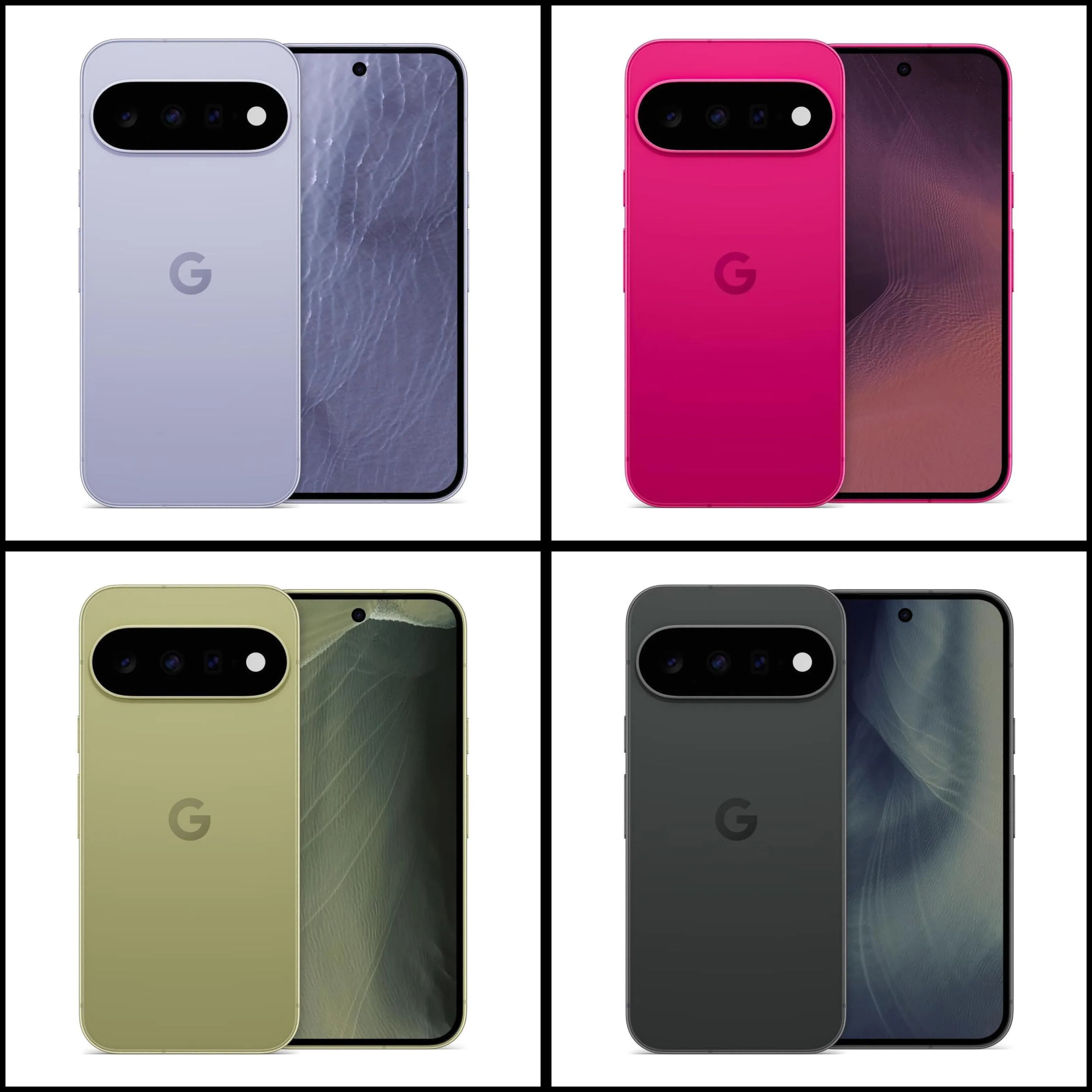
What Google has actually confirmed
Strip out the leaks for a second, because the official invite alone tells you most of the shape of Wednesday. Made by Google 2026 is set for August 12 in New York City, the keynote starting at 3 p.m. Pacific, 6 p.m. Eastern, notably later in the day than past years. The invite art itself is doing some quiet talking too, a shiny gold metal frame rendered front and center, which reads like a hint at a material change on at least one model in the lineup. Google's own teaser copy points at the next generation of Pixel hardware without naming names, but between the invite and the flood of leaks, nobody is actually guessing at this point. The confirmed headliners are the Pixel 11 family and the Pixel Watch 5, both expected to ship the same day or within days of the keynote, the pattern Google has run for the last several years.
The Pixel 11 lineup, full leaked specs
This is where it stops being a preview and starts being closer to a spec sheet, because the leaks on this generation are unusually complete. The base Pixel 11 is expected with a 6.3 inch OLED at 2,424 by 1,080 pixels, peaking around 3,000 nits, running Google's Tensor G6 chip paired with the Titan M3 security chip, 12 or 16GB of RAM, and 256 or 512GB of storage. The camera setup is a 48 megapixel main sensor and a 13 megapixel ultrawide on the back, a 10.5 megapixel front camera, a 4,985mAh battery with 30 watt wired charging plus Qi2, and a reported weight of 197 grams. Pricing is expected to start at $899.
Step up to the Pixel 11 Pro and the display grows to a 6.3 inch LTPO OLED at 2,856 by 1,280, with peak brightness reportedly climbing to 3,600 nits and an adaptive refresh range down to 1Hz for battery savings. Camera hardware gets meaningfully better here too, a 50 megapixel main sensor, a 48 megapixel ultrawide, and a 48 megapixel 5x periscope telephoto that leaks are calling 120x Pro Zoom on the software side. RAM and storage mirror the base model, the battery grows slightly to 4,850mAh, and reported pricing starts at $1,099. The Pixel 11 Pro XL keeps the same camera hardware and pushes the display to 6.8 inches at 2,992 by 1,344, adds a 1TB storage option on top of 256 and 512GB, bumps the battery to 5,115mAh, and moves up to 45 watt wired charging. Expected starting price is $1,299.
Then there's the Pixel 11 Pro Fold, the one I'd actually want to see in person before believing any of it. Leaks point to an 8 inch foldable inner OLED and a 6.4 inch cover OLED, both at 120Hz, the same 48 megapixel main and 10.5 megapixel ultrawide combination as the base Pixel 11 but with a 10.8 megapixel 5x periscope leaks are calling 30x Super Zoom added on top, and matching 10 megapixel selfie cameras on both the cover and inner screens so the camera experience doesn't change depending on whether the phone is open or closed. Battery is reported at 4,806mAh with 30 watt wired charging, storage options run up to 1TB, and because a fold this thin apparently can't fit a standard under-display Face Unlock stack alongside the folding hinge, it's expected to keep a side-mounted fingerprint reader instead. Reported starting price is $1,899, putting it close to where Samsung's own foldables have settled this generation.
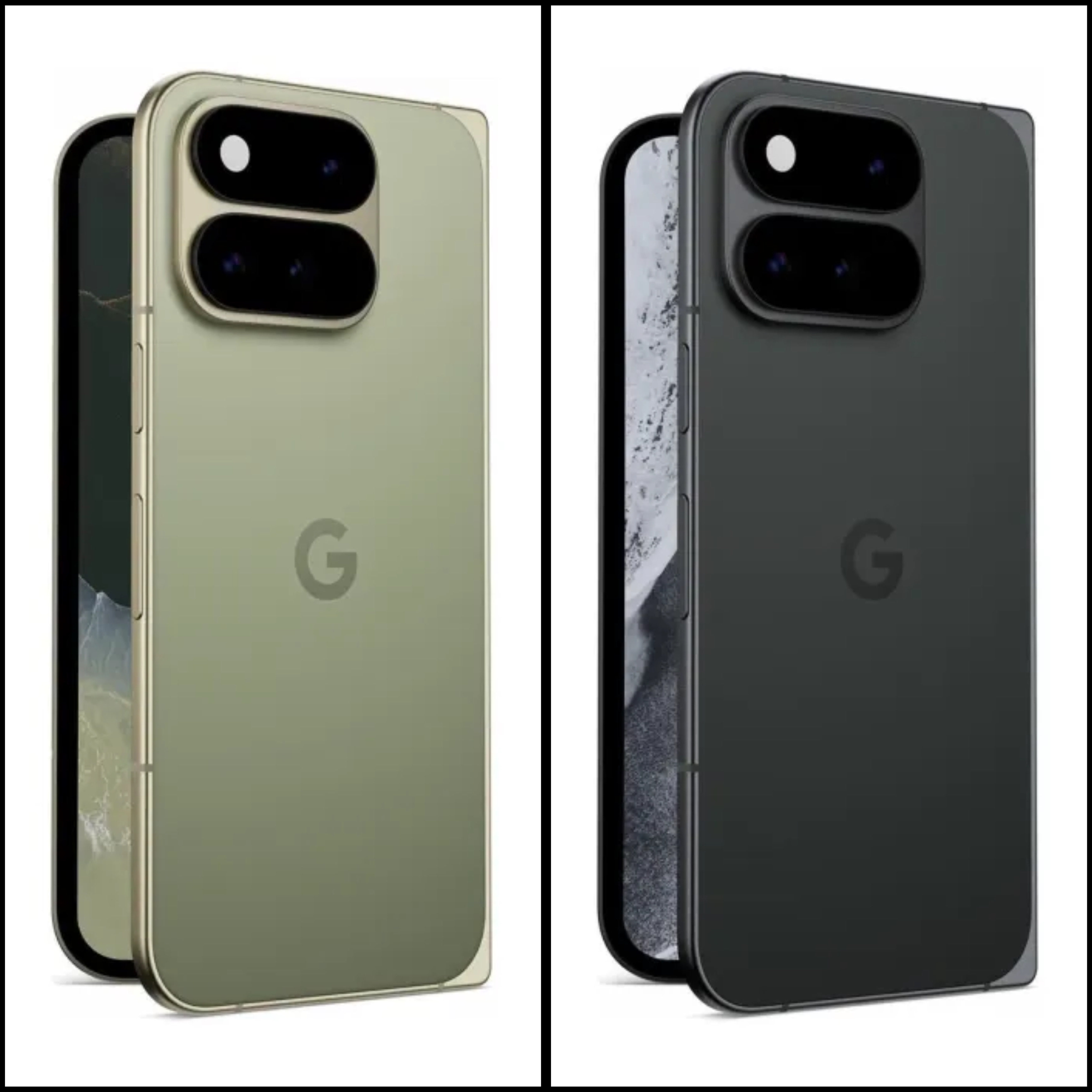
Pixel Watch 5, the quiet upgrade
The Pixel Watch 5 leaks are less flashy but genuinely useful if they hold up. A new Snapdragon W5 Gen 2 Accelerated chip is expected to replace the current silicon, RAM is reportedly moving from 2GB to 3GB, and onboard storage is said to be doubling to 64GB, which should mean noticeably less lag loading Wear OS 7 apps and Gemini Intelligence features. The Actua 360 display reportedly stays at the same 3,000 nit peak brightness rather than pushing higher, and the case is expected in the same two sizes as before. Battery capacity is reportedly climbing too, the 41mm case moving from 325 to 332mAh and the 45mm case from 455 to 465mAh, with about 30 hours of always-on display time on the smaller size and 40 on the larger one, though total runtime looks flat generation over generation even with the bigger cells, which suggests the extra capacity is mostly covering the cost of a more capable chip rather than buying you more time off the charger. The included sport band is reportedly getting its own refresh too, a second-generation bracelet built from hydrogenated nitrile-butadiene rubber in place of the older fluoroelastomer material, which should mean less of that slightly tacky feeling the old bands got over time. Connectivity specs, Wear OS 7 with Gemini Intelligence, Bluetooth 6.0, Wi-Fi, NFC, UWB, and 5 ATM plus IP68 water and dust resistance, are all expected to carry over unchanged.
Two questions the leaks don't answer
Here's what's actually missing from this pile of specs, and it's the part I'd watch the keynote for. First, pricing consistency. Every number above is a leak, not a Google confirmation, and Google has quietly raised Pixel Pro pricing before without much warning. If the Pro Fold really does land at $1,899, that puts it within striking distance of Samsung's Z Fold8, which just posted the biggest pre-order numbers Samsung has seen from a foldable in seven years at almost exactly that price point. Google would be walking into a category where the competition just proved real demand exists at that number, which cuts both ways, there's a market to sell into, but there's also a very good, road-tested alternative sitting at the same shelf price.
Second, and this is the one I actually care about professionally, how far Gemini Intelligence goes on-device versus how much of it needs a network round trip. The spec sheets say "Gemini Intelligence" on the watch and presumably across the whole Pixel 11 lineup, but that phrase covers everything from small on-device models doing real inference locally to cloud calls dressed up in a local UI. Apple has spent two years making a very public deal out of exactly where its AI processing happens. Google has been vaguer about the line, and I'd want Google to be explicit about it on stage rather than letting reviewers find out three weeks later during a teardown.
There's a third open question worth naming even though the leaks can't touch it, which is Tensor G6's real-world thermal behavior. Every Tensor generation so far has run hotter and throttled harder under sustained load than the Snapdragon and Apple Silicon chips it competes against on paper, and Google's spec sheets never mention that, because spec sheets don't measure heat. A 2nm process node, which is what's reportedly backing Tensor G6, should help, smaller transistors generally mean less wasted energy as heat for the same performance. But "should help" and "Google finally solved throttling" are different claims, and the leak roundups covering peak clock speeds and benchmark scores are, by definition, silent on whether those numbers hold up after ten minutes of gameplay or a long video call. That's a review-week question, not a leak-week one, and it's the one I'd actually hold my opinion on the Pixel 11 Pro's camera-heavy autofocus performance for.
Why this matters here
I build for iOS, not Android, but I pay attention to every company's on-device AI story because it is the exact ground my own apps compete on. Renewl reads a receipt screenshot and pulls the merchant, price, and renewal date without a server ever seeing the image. If Google ships a Pixel lineup where Gemini genuinely runs those kinds of tasks locally by default, that raises the bar for what "smart" is supposed to mean on a phone, and raises it for every developer on every platform, myself included. If it turns out to be mostly cloud Gemini wearing an on-device costume, that's worth calling out clearly too, because the gap between those two things is exactly where user trust gets won or lost.
Every spec in this post is pre-announcement leak reporting, not confirmed by Google, and all of it could change or turn out wrong once the keynote actually happens Wednesday. Pixel render images above are leaked CAD renders, not official Google materials or original photography, attributed to Evan Blass's Leakmail newsletter and to Mystic Leaks on Telegram respectively. You can see what this studio builds at jcmobileappstudio.com/apps.
Comments
Be kind and stay on topic. Comments are reviewed before they appear.