Usual disclaimer first, and it is not boilerplate. This is a recap of a single trading day, written so the headlines make sense, not a prediction and not a recommendation to buy or sell anything. The figures are accurate as of Monday, June 22, 2026, and they will drift the moment markets reopen. The point is the story, not the ticker.
What happened at the open
The morning actually started well. Shortly after the bell, the S&P 500 was up about 0.2 percent and the Dow was up roughly 200 points, or 0.4 percent, while the Nasdaq was close to flat. It looked like a quiet, slightly green start to the week. That did not last. As the session wore on, the megacap technology names rolled over and took the growth-heavy indexes with them. (CNBC)
How the day closed
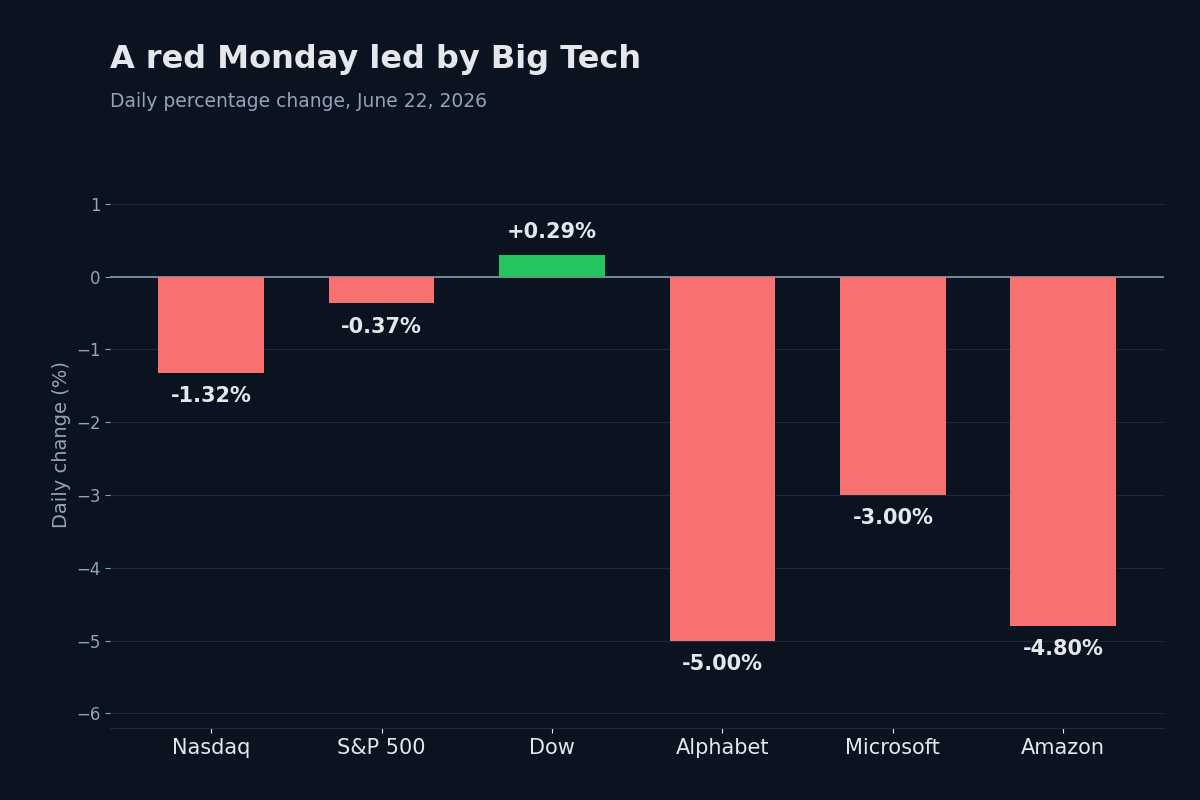
By the close it was a split tape. The Dow Jones Industrial Average held on to a gain of about 148 points, or 0.29 percent, to 51,712.71. But the S&P 500 slipped about 0.37 percent to 7,472.79, and the Nasdaq Composite fell about 1.32 percent to 26,166.60. When the Dow is up and the Nasdaq is down by more than a percent, that is almost always a story about a handful of giant technology stocks, not the broad market.
Why Big Tech was the whole move
The damage was concentrated. Alphabet dropped about 5 percent, Amazon fell about 4.8 percent, Microsoft lost about 3 percent, and Meta slipped about 2.3 percent. Because those companies are such a large share of the S&P 500 and the Nasdaq, a bad day for a few of them can outweigh a good day for hundreds of smaller names. That is exactly what happened, the Dow, which leans more on industrial and value stocks, stayed positive while the tech-heavy indexes went red. (TheStreet)
What investors were watching
Two things hung over the session. First, Wall Street was still tracking developments in the Iran negotiations, the same geopolitical thread that has been moving oil and risk appetite for weeks. Second, traders were positioning ahead of the inflation report the Federal Reserve pays the most attention to, the kind of data that shapes the path for interest rates. Add a routine quarterly index reshuffle that shifted some weighting around, and you get a market that drifted lower without any single dramatic headline.
What a long-term investor does with all this
Nothing, mostly, and that is the point. A red Monday driven by a few megacap names is the mirror image of the green days when those same names rip higher. A boring three-fund portfolio with automatic contributions does not flinch when Alphabet has a bad day, it just keeps buying on a schedule, picking up a little more of everything while prices are lower. The skill being tested on green days and red days alike is the same one, the discipline to not let the headline pick your move.
The honest bottom line
Today was a soft session led by Big Tech, with a calm Dow underneath it, and most of it traces back to a few enormous stocks plus some caution ahead of inflation data. None of it requires you to do anything in the moment. Keep contributing, check on a schedule instead of a mood, and let the good days and the bad days cancel out over time. A recap, not advice.
For the do-nothing discipline behind all this, the three funds and a calendar essay is the personal version, and is a tech stock expensive digs into why these megacaps move the whole market. You can see what this studio builds at jcmobileappstudio.com.
Comments
Be kind and stay on topic. Comments are reviewed before they appear.