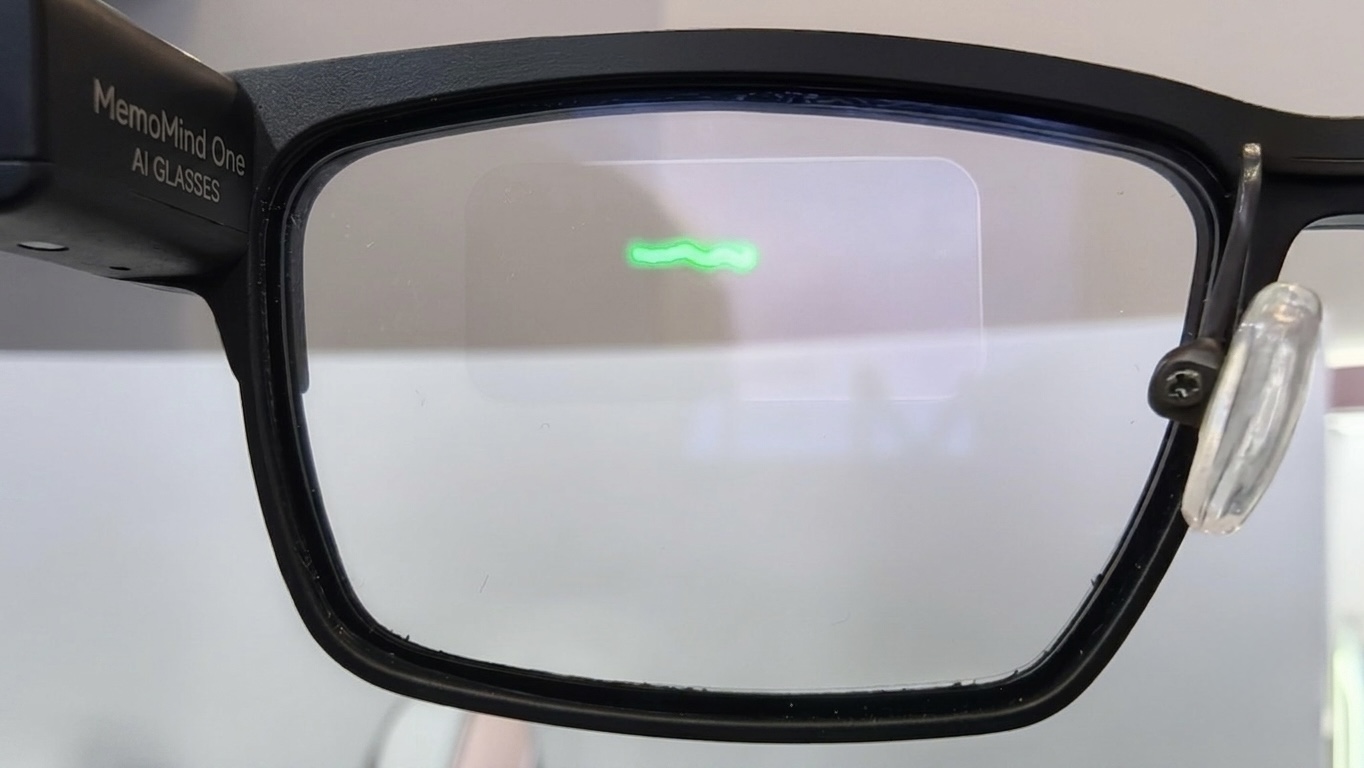
MemoMind One is not an independent startup's fever dream, it is the first hardware release out of MemoMind, a brand incubated by XGIMI, the company that has spent over a decade making smart projectors. That matters more than it sounds like it should. XGIMI already has a real supply chain and a decade of consumer electronics behind it, this is not a Kickstarter page with a rendering and a prayer. It is also, unmistakably, a first generation product from a team that has never shipped a pair of glasses before. (PR Newswire)
A display, not a camera, on purpose
The one decision that defines this product is what it left out. Every other serious AI glasses maker right now, Meta most of all, is racing toward camera-first glasses that see what you see. MemoMind went the other way. Their own tagline for it is "a display, not a camera," and it is not just marketing copy, it is the entire hardware philosophy. No camera means nobody around you has to wonder if you are recording them, which is the single biggest reason people find camera glasses unsettling in a restaurant or a locker room. It also means MemoMind can never do the thing Meta's glasses are increasingly built for, look at something and ask an AI what it is.
The hardware, in full
The display is a dual micro-LED waveguide setup, one projector per lens, monochrome green, 640 by 350 resolution, a 25 degree field of view, and 2000 nits of brightness so it stays readable outdoors. Refresh sits at 30Hz, which is plenty for text and icons and not meant for video. The whole thing weighs 46 to 50 grams depending on the frame, lighter than Meta's camera glasses, built from magnesium-aluminum alloy and beta-titanium, in three styles (a Wayfarer-style Nomad, a Clubmaster-style Gotham, and a Panto-style Archive) with ZEISS prescription lenses available. Battery is rated at 16 to 18 hours of mixed use, three-plus days of standby connected to your phone, up to a week with the case. Audio comes from Harman-tuned speakers built into titanium temples, with triple directional mics for calls and voice commands. (Engadget)
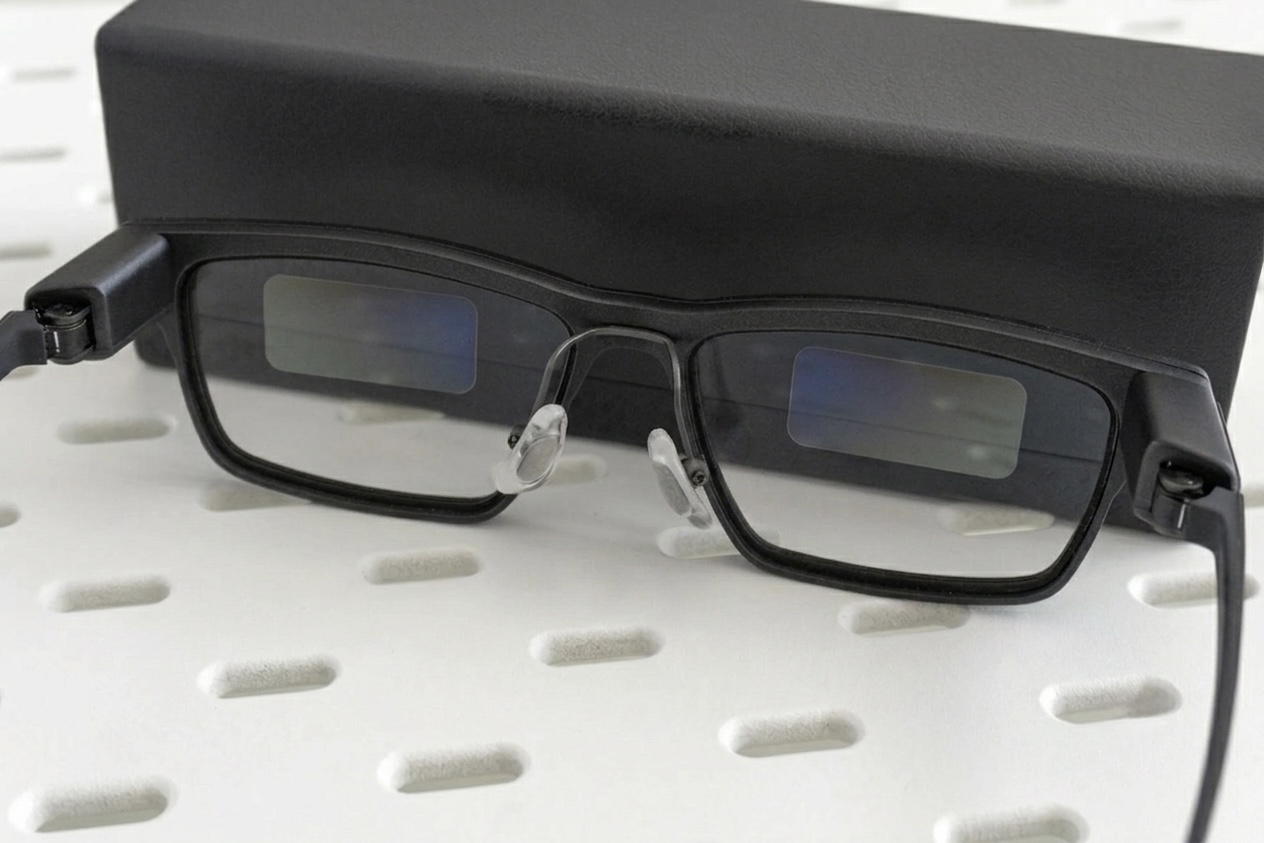
On the software side, MemoMind runs a hybrid AI setup that routes between OpenAI, Azure, and Qwen depending on the task, with real-time translation across 26 languages, live captions, a teleprompter mode, walking and cycling navigation, meeting recording with AI summaries, and a voice assistant called Memo AI. Control is a single button, voice wake words, and tap gestures, backed by a companion app for iOS and Android. All eight of those features ship free. Pricing at global pre-order is $599 for the standard frame, $699 with prescription lenses, and $749 to $849 for a "Custom Edition." Early Kickstarter backers who got in back in April saw a lower $399 to $499 range, so if you see that number floating around, it is the early-bird price, not what a new buyer pays today. (MemoMind)
Two different Meta glasses, two different questions
Meta is not one competitor here, it is two, and they solve different problems. Ray-Ban Meta Gen 2 ($379) is camera-first with no display at all, a 12 megapixel-class sensor shooting up to 3K photo and video, 52 grams, IPX4 rated, an eight hour battery with a case that carries 48 more. That is the "capture and share your life" version of smart glasses, and MemoMind does not compete with it directly since MemoMind has no camera at all. (Android Central)
Ray-Ban Display ($799, and you also need the $250-ish Neural Band wrist controller sold with it) is the actual head-to-head competitor. Full-color monocular display, 600 by 600 resolution, 20 degree field of view, 90Hz refresh, a real 12 megapixel camera, and only about six hours of mixed-use battery before you need the case. Input comes from an sEMG wristband that reads the electrical signal in your forearm muscles to detect pinches and swipes, which is a genuinely new idea and, from what reviewers describe, it works. Put the two side by side and Meta wins on display quality and interaction, full color beats monochrome green every time, and the wristband is a more elegant control method than a single button. MemoMind wins on price, battery life, and not needing a second wearable strapped to your wrist just to scroll a menu. (Road to VR)
The part that undercuts the whole pitch

Here is the tension nobody selling you these glasses wants to lead with. MemoMind's free tier is fine, translation, captions, navigation, a voice assistant you talk to on purpose. The $19.99 a month Memo+ tier is a different animal. Two of its headline features, called Moments and Wishes, work by leaving the microphone running in the background and having AI turn what it picks up into a daily journal or a running list of things you apparently said you wanted. Engadget's reviewer called it "creepy" after it generated journal entries describing things that never happened, and after Wishes logged statements made by other people in the room, not just the wearer. That is not a rough edge, that is the feature not working as advertised, and it is happening on a device whose entire hardware identity is built around not making the people around you uneasy. (Engadget)
I do not think this kills the product. The camera-less hardware decision is still the right call, and it still solves a real problem the Meta glasses do not even attempt to solve. But "no camera, privacy first" was the entire reason I backed this over waiting for Ray-Ban Display, and an always-listening premium tier that fabricates your day is the opposite instinct wearing the same frame. If MemoMind wants that pitch to hold up, Moments and Wishes need an obvious, loud, physical indicator that the mic is capturing for later, not just a subscription toggle buried in an app.
Who this is actually for
Based on the spec sheet and what reviewers who have actually worn it are reporting, MemoMind One is built for people who want a light productivity layer, live translation, captions, meeting notes, walking directions, without looking like they are wearing tech and without pointing a lens at everyone around them. Frequent travelers, people who sit in a lot of client meetings, language learners, anyone who found Ray-Ban Meta's camera a dealbreaker on principle. It is not for anyone who wants to actually capture photos or video from their own point of view, that is what Meta's camera glasses are for. And it is a rough sell for the exact privacy-conscious buyer the hardware is aimed at, once they read what the subscription tier does. That contradiction is the most interesting thing about the product right now, and it is exactly what I will be paying attention to once mine ships.
Pricing, specs, and the Memo+ subscription behavior above are current as of pre-order pricing and public reviews, verified July 22, 2026, and may change before MemoMind One ships this summer. None of my apps use an always-listening background recording model like Moments or Wishes. You can see the full lineup at jcmobileappstudio.com/apps.
Comments
Be kind and stay on topic. Comments are reviewed before they appear.