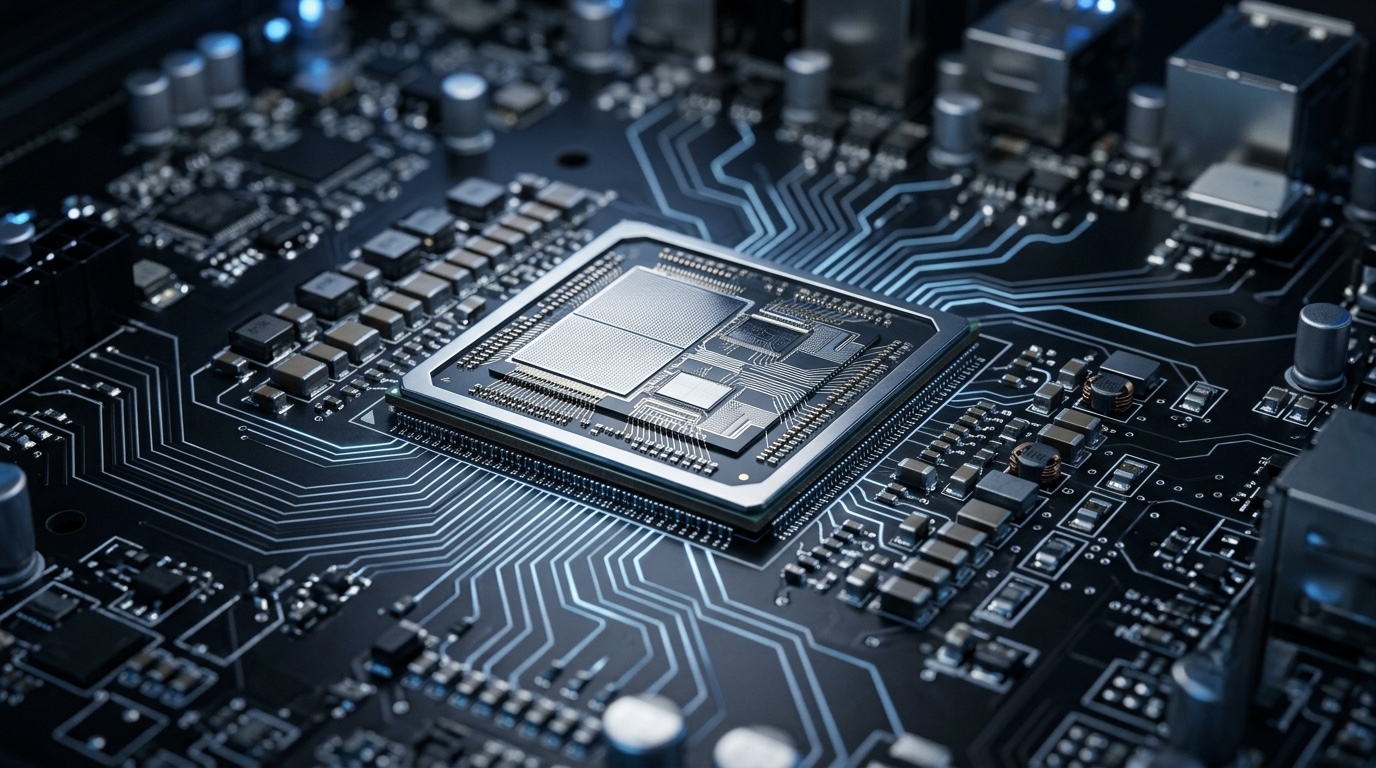
Meta is about to start making its own AI chips at a bigger scale than before. An internal memo reported this week says the company's custom silicon project, code-named Iris, cleared testing in about six weeks and is set to enter production in September. That might sound like a routine hardware update, but it is really about something bigger, whether Meta can keep growing its AI operations without writing an ever-larger check to Nvidia every quarter. (U.S. News)
What Iris actually is
Iris is the fourth generation of Meta's in-house AI silicon, built under its MTIA program, short for Meta Training and Inference Accelerator. Meta designed it with Broadcom and is having it manufactured by TSMC, the same foundry that builds chips for Apple, Nvidia, and most of the industry. The two companies expanded their partnership on custom AI chips earlier this year, with an agreement that reportedly runs through 2029 and covers multiple future MTIA generations. (Data Center Dynamics)
The chips are meant to handle AI workloads for Facebook, Instagram, and Meta's other apps, things like ranking your feed, powering recommendation systems, and running inference for the company's AI features. That is a narrower job than what a general-purpose Nvidia GPU does, and it is exactly the point. A chip built for one company's specific workloads can be cheaper to run at scale than a general-purpose chip bought at a markup.
This is not Meta quitting Nvidia
It is worth being clear about what this is not. Meta is not walking away from Nvidia or AMD, both of which remain central to its AI infrastructure spending. The internal memo reportedly frames Iris as a supplement, not a replacement, for the chips Meta already spends billions of dollars buying. The company is targeting 7 gigawatts of AI compute capacity by the end of 2026, then doubling that to 14 gigawatts in 2027, and it expects to spend up to $145 billion on AI infrastructure this year alone. No single custom chip program is going to cover a bill that size on its own. (Let's Data Science)
What Iris does is give Meta leverage. Every gigawatt of compute it can run on its own silicon is a gigawatt it does not have to buy from Nvidia at Nvidia's margins, and that matters more the bigger Meta's AI ambitions get. Google, Amazon, and Microsoft have all been running similar custom chip programs for years, so Meta scaling this up is really catch-up as much as innovation.
Why this is bigger than one company's chip
Step back and this is part of a wider pattern. Chip production is getting more regional and more company-specific at the same time. Intel is putting roughly 5 billion euros into European chip manufacturing, and Samsung has been speeding up construction on a new semiconductor plant, both signs that the industry expects AI demand for chips to keep climbing rather than level off anytime soon.
My honest take, I am skeptical of any headline that frames a custom chip announcement as a company "breaking free" from Nvidia. That framing shows up every time one of these memos leaks, and it has not been true yet for Google, Amazon, or Microsoft, all of which still buy huge volumes of Nvidia hardware alongside their own chips. What Iris really tells you is that AI compute costs are big enough now that even a company as large as Meta wants more than one supplier. That is a sensible business decision, not a revolution, and the real test will be whether Iris chips actually ship on schedule in September and hold up under real production load. Memos are easy. Six-week test cycles at data center scale are not.
General information about corporate infrastructure plans, not investment advice. For the studio's privacy-first, on-device apps, the full lineup is at jcmobileappstudio.com/apps.
Comments
Be kind and stay on topic. Comments are reviewed before they appear.