Quick disclaimer first, and it is a real one. This is general information to help you think about your own habits, not medical advice, and not a diagnosis. If screen use is tangled up with anxiety, low mood, or sleep problems that worry you, that is a conversation for a doctor or a licensed professional, not a blog post. With that said, the numbers are striking enough to be worth a plain look.
How much is normal now
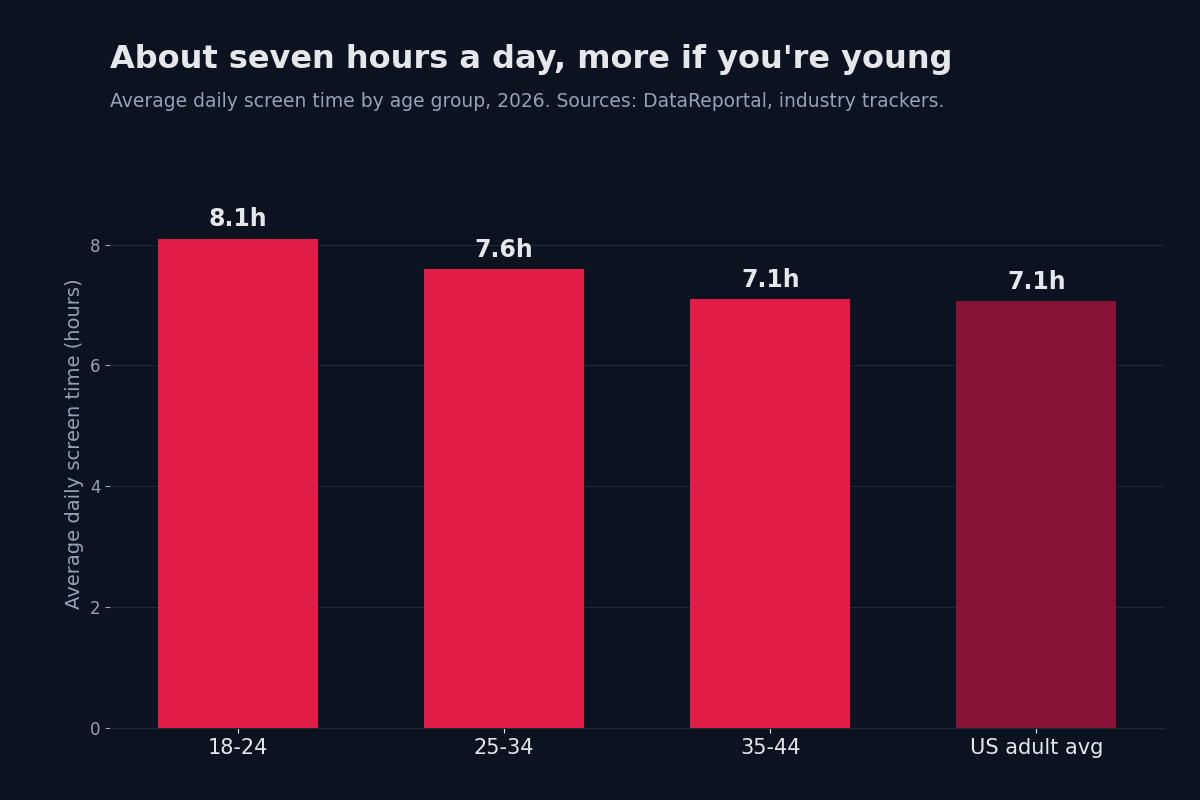
A lot, it turns out. Global trackers put the average adult around 6 hours and 51 minutes of screen time a day in early 2026, with the United States a bit higher at roughly 7 hours and 4 minutes. The phone is the biggest single piece, about 4 and a half hours of that total. It skews by age too, adults 18 to 24 average north of 8 hours, with the numbers easing as you get older. The point of these figures is not guilt, it is scale, this is a daily input on the order of a full-time job, so it is reasonable to ask what it does to you. (DemandSage)
What the research actually says
Carefully, this is the part where it is easy to overclaim. Most of the strong evidence is about association, not proof of cause. With that caveat, multiple reviews, including work cited by the National Institutes of Health, link recreational screen time above roughly 3 to 4 hours a day with higher rates of anxiety, depression, and disrupted sleep in adults. The sleep link is the most consistent and the most mechanical, late-night screens push your bedtime later and shorten your sleep, and short sleep drags down mood and focus the next day. Notice the word recreational, the eight hours you spend on a screen for work is a different question from the scrolling after the kids are down.
The two changes with the best evidence
If you only do two things, do these, because they have the most support behind them. First, get the phone out of the bedroom, or at least off the nightstand, so it cannot quietly steal the last hour of your night and the first ten minutes of your morning. Second, give social media a set time rather than letting it fill every gap in the day. Both produce measurable improvements in sleep quality and self-reported wellbeing in studies, and both are free. You are not quitting anything, you are putting a fence around it.
Where iOS 27 actually helps
Your phone can enforce the fence so you do not have to rely on willpower at 11pm. iOS 27, now in developer beta, ships a redesigned Screen Time and parental-controls system, and the existing tools already do most of the job. Set a Sleep schedule and a wind-down in Focus so notifications go quiet before bed. Use App Limits on the apps you lose time to, and Downtime to grey out the feed after a set hour. The trick is that these work best as a default you set once, not a wall you negotiate with every night. Set it calm, let it run.
The honest bottom line
Screens are not poison and you do not need a dramatic digital detox. Seven hours a day is the normal backdrop of modern life, and most of the harm clusters in a specific place, recreational scrolling that eats into sleep. Protect your sleep first, give the time-sink apps a boundary, and let your phone's own controls hold the line for you. Small, boring, repeatable. That is what actually moves the needle. General information, not medical advice.
For the sleep side of this, see the summer solstice and your sleep, and guarding your attention covers the focus angle. You can see what this studio builds at jcmobileappstudio.com.
Comments
Be kind and stay on topic. Comments are reviewed before they appear.