I read a lot of health tech studies that get summarized into a scary headline and fall apart the moment you look at the sample size or the methodology. This one held up, and it is a genuinely useful example of what on-device style health tracking could eventually catch that a yearly checkup would not.
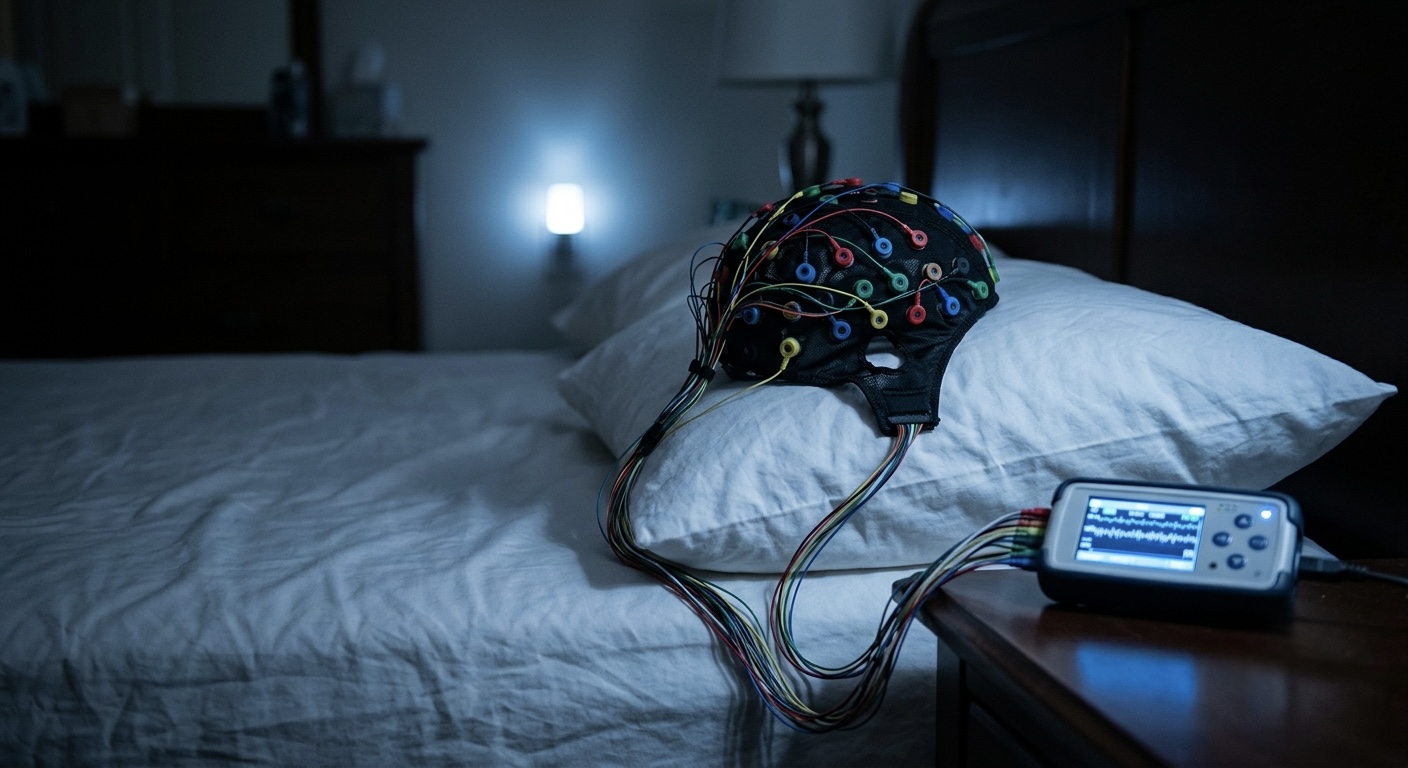
Researchers built an interpretable machine learning model that pulls 13 microstructural features out of overnight sleep EEG recordings, the kind collected during home based polysomnography, essentially a sleep study you can do in your own bed with sensors instead of in a lab. The model does not just look at how long you slept or how many times you woke up. It looks at things like delta wave activity, which shows up during deep sleep, sleep spindles, short bursts of fast brain activity tied to memory consolidation, and kurtosis, which measures sudden large spikes in brain activity. That last one is the interesting twist: higher kurtosis actually looked protective against dementia risk, which is not something you would guess from any consumer sleep app's summary screen.
From those 13 features, the model calculates a "brain age," essentially how old your brain's electrical activity looks compared to your actual age. The bigger the gap, the higher the risk.
The study behind this pulled data from 7,105 participants, ages 40 to 94, across five separate community based cohorts (MESA, ARIC, FHS-OS, MrOS, and SOF for anyone who wants to look up the originals), with follow up periods ranging from three and a half to seventeen years. About a thousand of those participants went on to develop dementia. The headline number: every 10 year increase in brain age corresponded to a 39 percent higher dementia risk. That held up even after adjusting for education, BMI, smoking, exercise, other health conditions, and genetic risk factors.
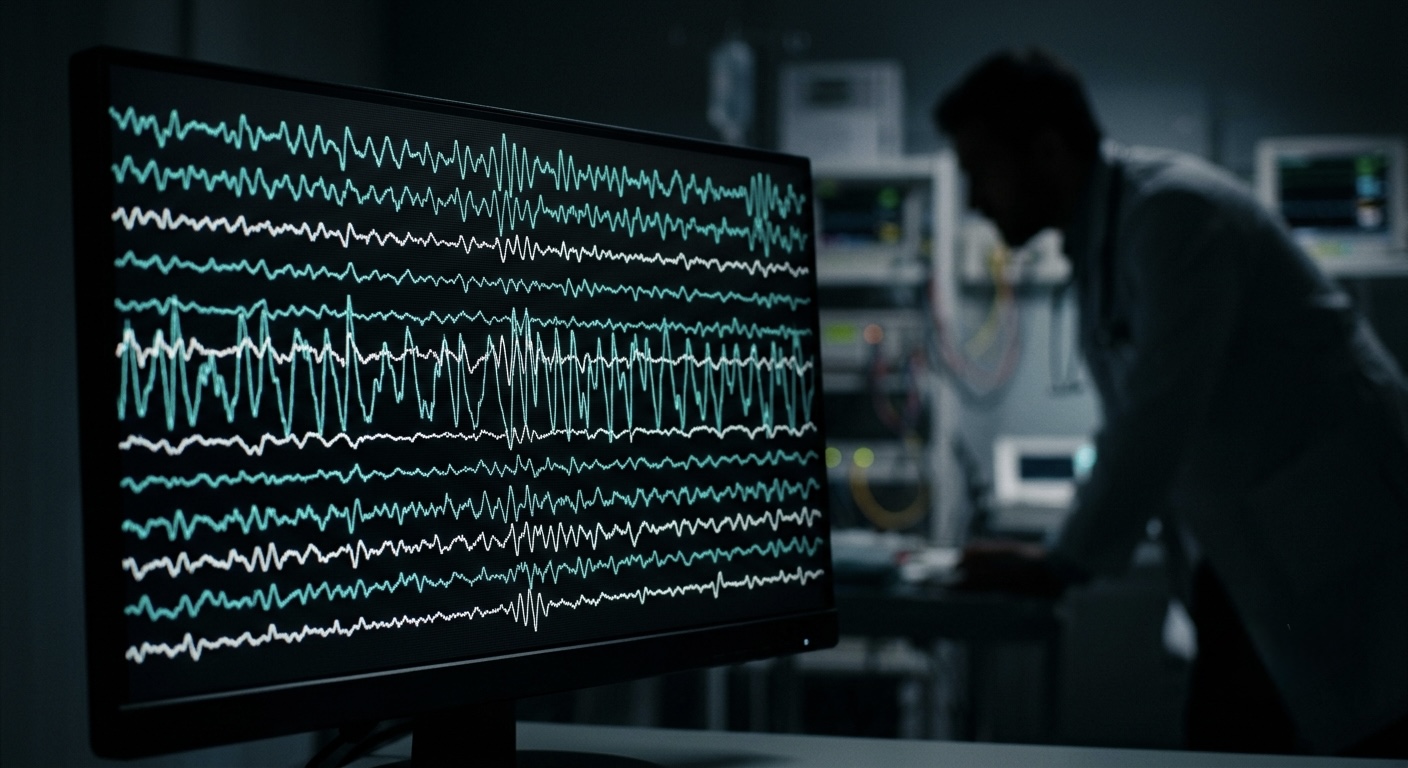
The part that made me stop and actually pay attention is this line from senior author Yue Leng: "Broad sleep metrics don't fully capture the complex multidimensional nature of sleep physiology." Translation, the conventional sleep score your Apple Watch or Oura ring gives you, total hours, time in each sleep stage, showed no correlation with dementia risk at all in this study. The signal was hiding in the fine structure of the brain waves themselves, not the summary stats.
I want to be careful about the leap here, because this is exactly the kind of study that gets overstated. This is not a diagnostic test, it is a research finding from pooled cohort data, and it needs a validated, clinically deployed version before it means anything for an individual person reading their own sleep data. Nobody should look at an app's sleep score tonight and draw a conclusion about their dementia risk from it. That is not what this measures, and it is not what the researchers are claiming either.
What it does tell us is where the ceiling is for local, on-device health tracking. Right now, consumer wearables are mostly reporting things that, per this study, are not the actual signal. The actual signal lives in raw EEG microstructure, which is a much harder thing to capture outside a clinical setting, but not an impossible one. Home EEG headbands already exist. If a model like this one gets validated and eventually licensed into consumer hardware, that is a real jump in what a device sitting on your nightstand can tell you, using data that never has to leave your device to be useful.
This is a sensitive topic for a lot of people, since dementia and brain aging touch families directly. If anything here is stirring up worry rather than curiosity, that is worth talking through with a doctor rather than a research summary, mine included.
Sources: Neuroscience News, PMC, and NEJM AI. You can see what this studio builds at jcmobileappstudio.com/apps.
Comments
Be kind and stay on topic. Comments are reviewed before they appear.