Disclaimer first, and it is not filler. This is a preview of a single Fed meeting written so the headlines make sense, not a forecast and not a recommendation to buy or sell anything. The figures are accurate as of Tuesday, June 16, 2026, and the actual decision lands Wednesday afternoon, so by the time you read this the numbers may already have moved. The point is the story, not the trade.
What is actually being decided
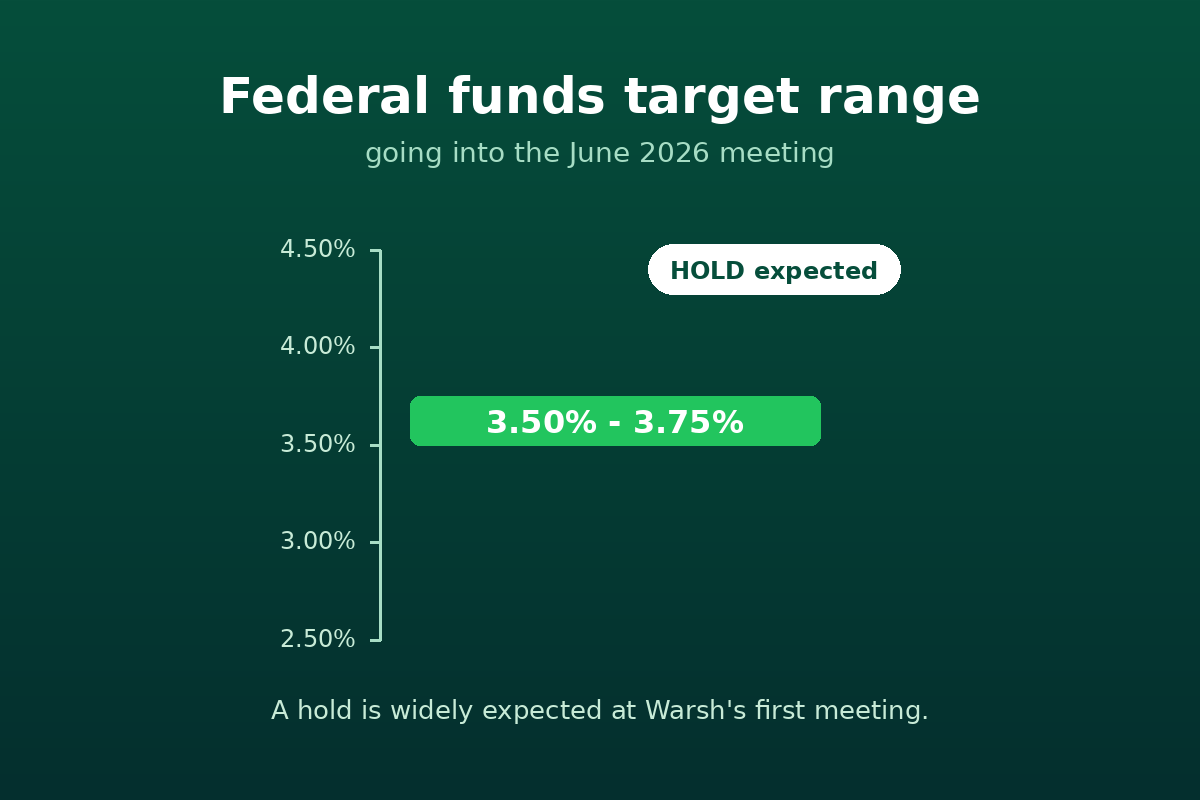
The Fed sets a target range for the federal funds rate, the interest rate banks charge each other overnight, which ripples out into mortgages, car loans, credit cards, and savings yields. Right now that range sits at 3.50 to 3.75 percent. Economists broadly expect the Fed to leave it there on Wednesday. So the decision itself is likely to be a non-event. The drama is in the surrounding details, the written statement, the updated projections, and Warsh's first press conference as chair, where every word gets parsed for hints about the path ahead.
Why a new chair makes a boring meeting interesting
A hold is a hold, but a first meeting is a personality test. Markets do not just want to know what the Fed did, they want to know how Warsh thinks, how he talks about inflation, how much weight he puts on the job market, and whether he signals cuts later this year or pushes back on that idea. New chairs sometimes move markets more with tone than with the actual decision. That is why you can get a calm hold and a jumpy afternoon at the same time.
The backdrop adds to the tension. Stocks have been on a strong run, with the Dow Jones Industrial Average notching fresh record highs, even as the tech-heavy Nasdaq slipped about 1.4 percent into the meeting as investors took some chips off the table. Oil has fallen back below 80 dollars a barrel on hopes of more supply, which quietly helps the inflation picture. So Warsh debuts into an optimistic, record-flirting market, which is a lot of good mood riding on one press conference.
What it means for your actual money
If the Fed holds, the practical effects are small and slow. Savings accounts and money-market yields stay roughly where they are, which is still decent. Mortgage and loan rates do not move much on the decision itself, though they can drift on the tone. And the stock reaction, up or down, is mostly about expectations for the next few meetings, not this one. None of that requires you to do anything today.
What a long-term investor does with all this
Nothing, mostly, and that is the entire point. A globally diversified, low-cost plan, the familiar three-fund mix of a total US market fund, a total international fund, and a bond fund, does not care who chairs the Fed or whether Wednesday is a hold or a surprise. It keeps buying on a schedule through every meeting, every chair, and every record high. The investors who get hurt around Fed days are the ones who try to guess the reaction and trade ahead of it. The ones who do well are the ones who set up automatic contributions and then go live their lives.
If a Fed meeting genuinely makes you want to change your portfolio, that is usually a sign the plan is too aggressive for your real comfort level, not that the plan is wrong this week. The fix for that is to adjust your stock-and-bond split once, on a calm day, so you can sit through meetings like this one without flinching. The decision should be boring to you on purpose.
The honest bottom line
Wednesday is a big day for headlines and a small day for your plan. A hold is expected, a new chair makes the tone worth watching, and the market is priced for good news, which means it can wobble on anything less. None of that is a reason to touch a long-term portfolio. Keep contributing, check on a schedule instead of a mood, and let one more Fed meeting come and go. A preview, not advice.
For how the week set up, see Monday's market open, and the three funds and a calendar essay is the personal version of the do-nothing discipline above. You can see what this studio builds at jcmobileappstudio.com.
Comments
Be kind and stay on topic. Comments are reviewed before they appear.