What actually changed on July 1
Virginia layered several new rules on top of its existing labor code, all effective July 1, 2026. The three that matter most for an ordinary employee are pay transparency in job postings, a ban on asking about your past pay, and a real tightening of when a non-compete can be enforced against you. There are others in the same batch, including new protections for volunteer emergency responders and a clearer wage theft enforcement framework, but the pay and non-compete pieces are the ones that touch the most people. (Virginia DOLI)
I read these the way I read any new rule at work, by asking a simple question first. What does this change about a normal Tuesday for a normal employee? Here is the plain version of each one.
Pay ranges have to be in the posting now
Under the new law, Virginia employers have to include a wage or salary range in their job postings, both the ones the public sees and the internal ones. The range is not supposed to be a fig leaf either. The law says it has to be set in good faith and reflect the actual pay scale or the budgeted amount for the role, not a made up spread from minimum wage to a number no one will ever hit. Posting violations carry civil penalties of up to $5,000, with a short window to fix a bad posting before it counts against the employer. (Jackson Lewis)
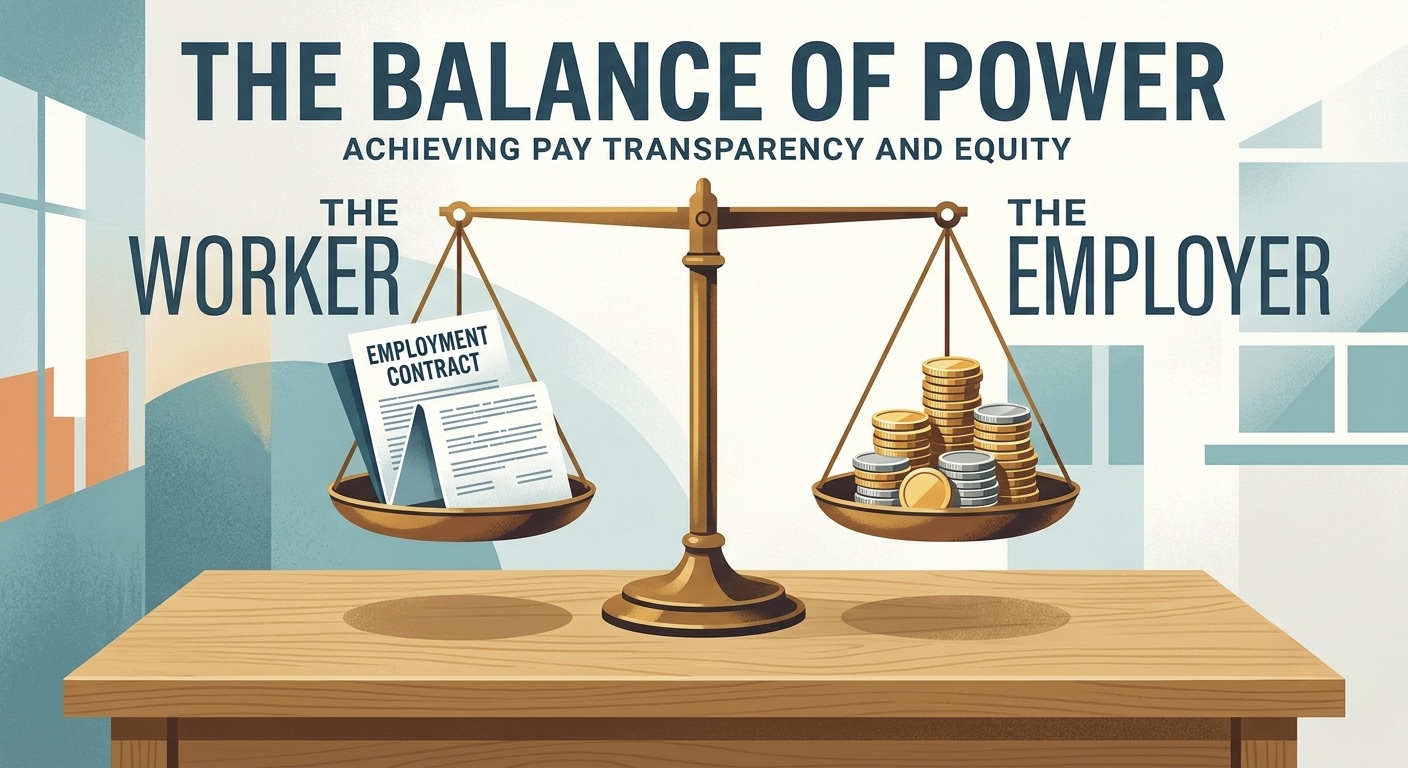
Paired with that is a salary history ban. Employers can no longer ask you, your former employer, or a third party service what you used to make. The only narrow exception is if you bring it up yourself, and even then it can only be used to justify a higher offer, not a lower one. This is the part people underrate. Salary history is how underpayment compounds. If every new offer is anchored to what the last employer paid, someone who started behind stays behind for a whole career. Cutting that anchor is the point.
Non-competes just got a lot weaker
This is the bigger deal, and it is the one I would want every hourly and salaried worker in the state to understand. Virginia already banned non-competes for low-wage workers. As of July 1, the definition of who is protected got much wider. A non-compete generally cannot be enforced against you if you fall into any of these groups.
First, if you earn less than the average weekly wage in Virginia, currently $1,507.01 a week, which works out to roughly $78,000 a year, you are covered, same as before. Second, and this is new, if you are a non-exempt employee, meaning you are entitled to overtime pay, the ban now reaches you regardless of your salary. Third, health care professionals licensed by the state boards for medicine, nursing, counseling, optometry, psychology, or social work can no longer be bound by one at all, and an employer cannot stop a departing provider from telling patients where they went. (Epstein Becker Green)
There is one more piece that applies broadly. If you are let go without cause and the employer does not pay you severance or some other monetary payment, a non-compete generally cannot be enforced against you. The severance terms have to be spelled out when you sign the agreement, not invented later. The law does not set a minimum severance dollar amount, which is the kind of gap the courts will end up filling, so I would not treat this as bulletproof. Enforcing or even threatening to enforce a banned non-compete can expose the employer to a $10,000 penalty and a private lawsuit.
Why this matters even if you are not in Virginia
Virginia is not alone, and that is the real story. A whole batch of state employment laws took effect on July 1, and more land later this month. Maine's pay transparency requirement kicks in July 29. New Jersey is expanding its Family Leave Act to cover employers with 15 or more employees, down from 30, on July 17. Tennessee stood up its first real statutory framework for non-competes. Minimum wages ticked up in a long list of states and cities. The pattern is consistent, more disclosure about pay, tighter limits on non-competes, and broader leave. (Fisher Phillips)
The catch is that employment law is intensely local. A protection that is now automatic in Virginia might not exist one state over, and the thresholds and definitions differ everywhere. So the useful move is not to assume your state matches Virginia. It is to go look up your own state's rules on pay transparency and non-competes, because the odds that something changed in the last year are higher than they have ever been.
What I would actually do with this
A few grounded, practical steps. If you are job hunting in Virginia and a posting has no pay range, that is now a red flag and a fair thing to ask about, because the law expects it to be there. If you already signed a non-compete, dig it out and read it, and check where you fall on the new lines, hourly status, that weekly wage number, your profession, and what happens if you are laid off. Do not quietly assume it is still binding, and do not assume it is automatically dead either. And if you are negotiating a new job, remember that no one can force your old salary out of you as the anchor anymore, so anchor to the posted range instead.
One honest caveat, because this is the part that matters. Everything here is general information, not legal advice, and the details turn on your exact facts, your state, and how a specific agreement is written. If you are staring at a non-compete or think an employer broke one of these rules, talk to an employment lawyer in your state or your HR department before you act. The value of a law like this is only real if you know it exists when the moment comes.
For more plain-language writing on your rights at work, see the blog, and you can see what this studio builds at jcmobileappstudio.com.
Comments
Be kind and stay on topic. Comments are reviewed before they appear.