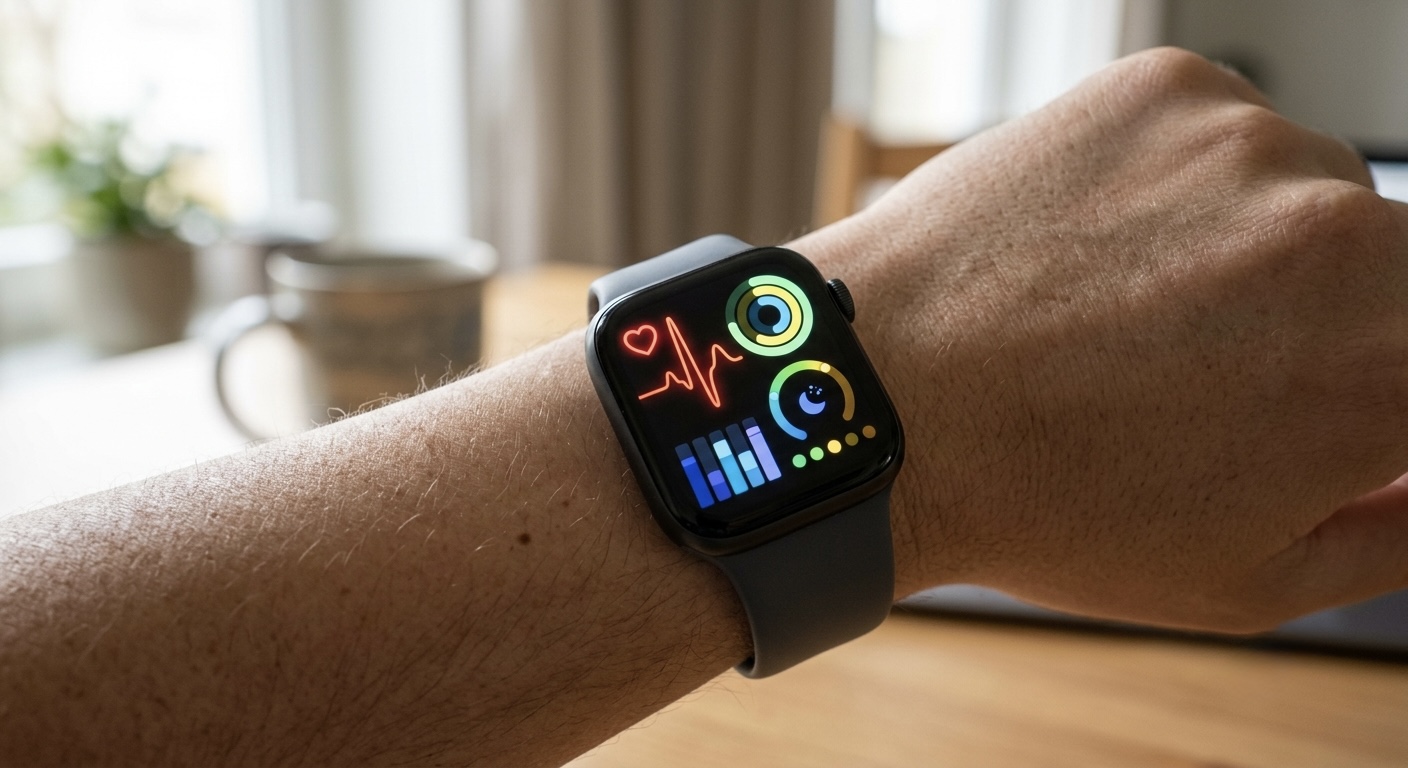
Your smartwatch will tell you your heart rate variability, your blood oxygen, your sleep stages, your stress, and lately it wants to guess at things like blood pressure too. It feels medical. It sits on your wrist looking clinical and confident. But most of those features were never reviewed by the FDA the way an actual medical device is, and in early 2026 the agency finalized a policy that makes exactly where that line sits a lot clearer. This is a plain-language walk through what changed and, more importantly, what it means for the thing on your wrist.
What actually happened
On January 6, 2026, the FDA finalized its updated General Wellness: Policy for Low Risk Devices. In plain terms, it spells out the conditions under which a wearable that estimates body measurements, blood pressure, oxygen, heart rate variability and the like, can stay outside formal medical device regulation. It can, as long as two things are true: the product's intended use is limited to general wellness, and it presents low risk to the user.
The timing was not random. In July 2025, the FDA sent a warning letter to WHOOP for marketing a "Blood Pressure Insights" feature without the clearance a blood pressure medical device would require. That enforcement action is basically what prompted the agency to draw the boundary in ink.
The difference, in normal words
Here is the distinction that matters to you. A general wellness feature is allowed to talk about fitness, stress, sleep, and weight management. It can nudge, track, and estimate. What it cannot do, without crossing into medical device territory, is claim to diagnose, treat, cure, mitigate, or prevent a disease. It also should not call itself "medical grade" or push you toward a specific clinical action based on its reading.
A medical device feature is one that makes those clinical claims, and to make them legally, it has to be cleared or approved by the FDA, which means it was actually tested for accuracy and safety against a standard.
And here is the subtle part the policy really drives home: it is not only what the feature measures, it is how the company talks about it. The same sensor can be a "wellness insight" or an unapproved medical claim depending on the words wrapped around it, the marketing, the in-app text, the notifications, the dashboard. A number that says "your sleep trend" is fine. The same number dressed up as "you may have a sleep disorder, see a doctor" is a different animal.

Why you should care
Because it changes how much weight you should put on that number. When your watch flags an irregular heartbeat with a feature that actually went through FDA clearance, that is meaningful, and it is worth acting on. Some wearable features genuinely are cleared, an ECG or an AFib notification on certain devices, for example. But a lot of the flashier stuff, the stress scores, the "readiness," the estimated blood pressure, is wellness-tier. It is a useful trend, not a diagnosis.
Treating a wellness estimate like a medical verdict cuts both ways: it can send you into a panic over a number that was never meant to be precise, or it can give you false comfort and talk you out of seeing a doctor when something is actually wrong. The practical move is to know which is which. When a device makes a health claim, look for whether that specific feature is FDA-cleared, it is usually stated somewhere, or notice the careful "not intended to diagnose" language that tells you it is wellness-tier. That language is not a company hiding something. Under this policy, it is the company telling you the truth about what the feature is.
The honest take
I like wearables. Used right, a device that quietly tracks your resting heart rate or your sleep over months can catch a trend you would never have noticed, and that trend is a great thing to bring to an actual doctor. The problem is never the tracking. The problem is the marketing that blurs "we are estimating this for your general awareness" into "this is basically a clinic on your wrist." The 2026 policy is the FDA saying, clearly, that companies do not get to have it both ways. That is good for you, because it makes the labels mean something.

Bottom line
Your smartwatch's health features fall into two buckets: wellness estimates that were never FDA-reviewed, and a smaller set of features that actually earned clearance. The FDA's 2026 policy makes the wall between them clearer, largely because a company got caught marketing a blood pressure feature it had not cleared. Learn to spot which bucket a feature is in, trust the cleared ones more, treat the estimates as helpful trends, and bring anything genuinely worrying to a human doctor. The watch is a great early-warning tool. It is not the doctor.
General health information, not medical advice. Verified July 23, 2026. If a wearable feature worries you, talk to a licensed clinician. For the studio's privacy-first, on-device apps, the full lineup is at jcmobileappstudio.com/apps.
Comments
Be kind and stay on topic. Comments are reviewed before they appear.