The Argument Apple Actually Won
For years the cloud camp said on-device AI was performance theater. A demo trick. Real AI lived in a data center, and your phone was just a screen for it.
That argument is over, but not because local models got smarter than cloud models. They didn't, and anyone telling you otherwise is selling something. What changed is the default direction. Watch what the big three are doing, not what they are saying. Apple built its whole AI story around on-device first. Google ships Gemini Nano on Android phones so basic tasks never leave the device, even though the main Gemini experience is still cloud. And at Build 2026, Microsoft, the most cloud-native company in the conversation, dropped its Copilot+ NPU-only framing and started pushing local agents and on-device AI on whatever hardware you have, GPUs included.
When Microsoft pivots toward your position, you won the argument. Not the benchmark, the argument. The industry consensus is now local first, cloud when you need it. That was Apple's framing from day one.
Read the "On-Device" Label Carefully
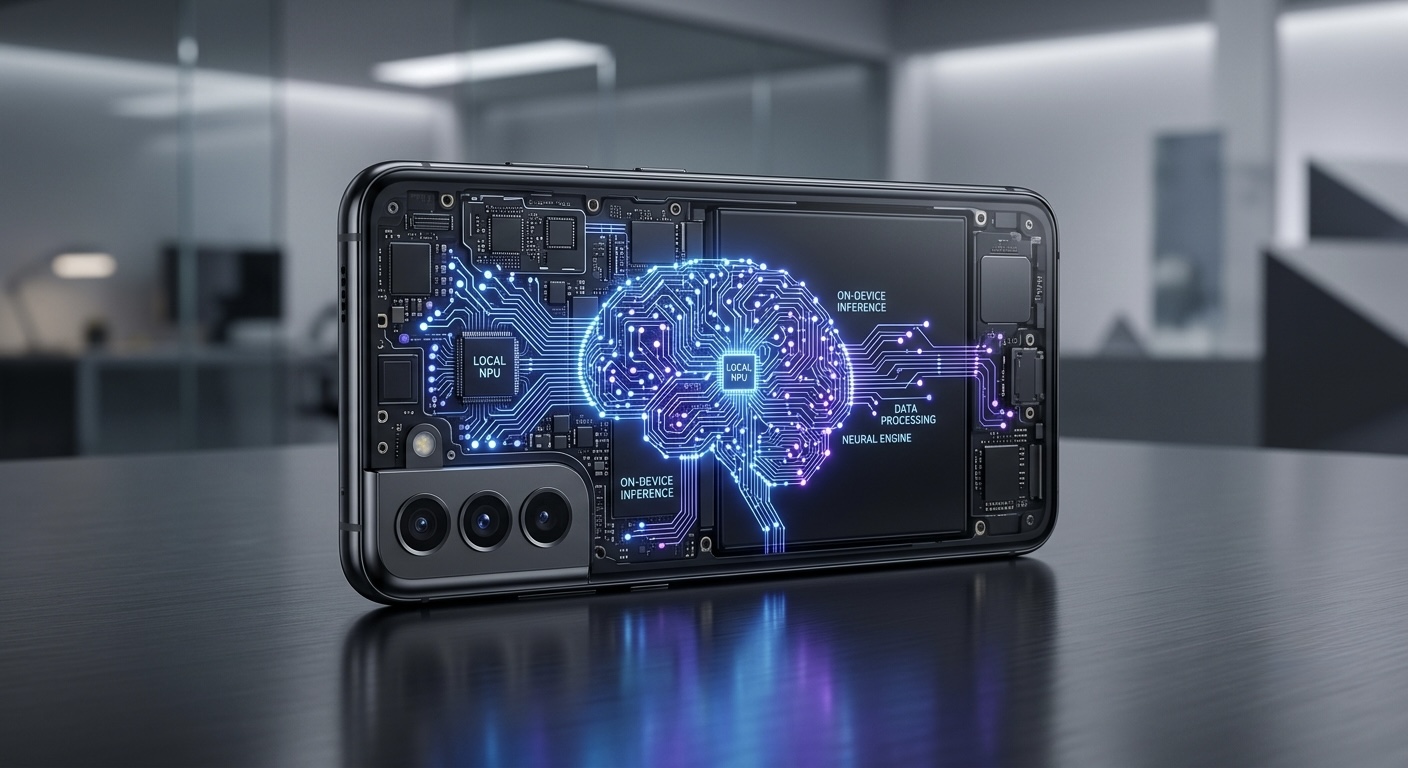
Here's the part the marketing skips. Apple's stack is not purely on-device, it's a hybrid with three layers. Small tasks run locally, and only on A17 Pro or newer silicon, older iPhones don't get the local models at all. Bigger tasks get handed to Private Cloud Compute, Apple's own servers. And since iOS 26.4, some complex Siri queries go further out, to Google Gemini, under the Apple-Google deal. So when Siri answers a hard question, your request may have touched Apple's cloud or Google's cloud, and most people have no idea.
To be fair, Private Cloud Compute is not ordinary cloud. Apple's security research lays out real guarantees: stateless computation, meaning your data is used only for that request and never retained or logged. Cryptographic keys erased on every reboot. Published code measurements that outside researchers can verify. No privileged access, not even for Apple staff. That is a genuinely higher bar than "trust us," and nobody else in the market has matched it publicly.
But it is still a fallback, and it proves my point. Even the company that won the on-device argument cannot run everything on-device. Capability still lives in the cloud. If someone tells you local models beat cloud models head to head, ask for the benchmark. There isn't a verified one between Apple, Google, and Microsoft, and I'm not going to invent numbers to make a cleaner story.
What Shipping On-Device Actually Teaches You
I build on-device iOS apps, so this is not theory for me. The pitch on most of my lineup is simple: nothing leaves your device. That sentence only means something because I scope features to what a phone can actually do. Planning your day, tracking spending, journaling, parsing a PDF, none of that needs a data center. A local model, or honestly just good local code, handles it instantly, offline, with zero privacy tradeoff.
That is the real lesson of this whole fight. Local wins on latency, privacy, and trust for scoped tasks. Cloud wins on heavy reasoning, research, synthesis, the open-ended stuff. The mistake is pretending one replaces the other. The skill, whether you're Apple or a one-person studio, is knowing which jobs belong where and being honest about it. iOS 27 beta 4, which landed July 20, leans even further into on-device Siri, and that's the right instinct: push the scoped, personal, frequent tasks local, and be upfront when something has to leave the phone.
The Moat Is Vertical Integration
One old argument still holds up, maybe better than ever. Apple owns the silicon, the OS, and the models, so it can draw a hard line: local models require A17 Pro or newer, period. Every capable iPhone is a known quantity.
Google can't do that. Android runs on thousands of devices from OEMs Google doesn't control, which is exactly why Gemini stays primarily cloud with Nano covering the basics. Microsoft just admitted the same problem in its own way. The NPU-only Copilot+ framing was an attempt to mandate hardware in a PC market Microsoft doesn't own, and at Build 2026 they backed off and said local AI should run on any hardware. That's the honest move for an open platform, but it also means they'll always be optimizing for the messy middle while Apple optimizes for exactly the chips it designed.
The Takeaway
On-device won the argument about direction, not the argument about capability. The whole industry now agrees your phone should do as much as it can locally and reach for the cloud only when it must. That's a real win for privacy, and Apple deserves credit for forcing it.
Just read the labels. "On-device" in a keynote often means "on-device until it isn't." When a company tells you exactly where the line is, like Apple does with Private Cloud Compute, that's a good sign. When the line is fuzzy, assume your data is traveling.
You can see what privacy-first iOS apps look like at jcmobileappstudio.com/apps.
Comments
Be kind and stay on topic. Comments are reviewed before they appear.