
Who's on the call
John Ternus became CEO on September 1, with Tim Cook moving to executive chairman. On the July 30 call Cook said it was his last and that Ternus would run them from here, so tomorrow is a first. Kevan Parekh has been CFO since January 2025, so the numbers voice is familiar. Ternus ran hardware engineering for a decade. Expect him to be more comfortable talking about the iPhone Duo's hinge than about free cash flow, and expect analysts to test that. (9to5Mac, MacRumors)
The numbers to expect
- Revenue: about $113.4 billion is the consensus, with Zacks a touch lower at $113.0 billion and Goldman at $113.6 billion. A year ago the September quarter was $102.5 billion, so that's growth of about 10 to 11 percent. Apple guided 9 to 11 percent in July, including a 2.5-point hit from currency. (MarketBeat, Apple's year-ago 8-K)
- Earnings per share: $1.99, against $1.85 a year ago.
- Gross margin: Apple guided 47 to 48 percent, which includes about a point of tariff refunds. Last quarter was 50.1 percent with two points of refunds in it. So the underlying number is drifting from about 48 to about 46 or 47, and the reason is memory. (July call transcript)
- Services: about $31.5 billion expected, from $28.75 billion a year ago and $30.7 billion last quarter. Apple said Services growth would look like June's, which was 12 percent.
- iPhone: Apple guided mid-teens growth. The quarter ended September 26, so it has about ten days of iPhone 18 and none of the iPhone Duo, which went on sale October 23.
The three things that actually matter
Memory. In July Cook called DRAM and NAND pricing "a 100-year flood," and Apple said costs would keep rising past the September quarter. TechInsights has NAND prices up about five times in a year and estimates Apple's NAND bill at roughly $25 billion in 2026 against about $6 billion in 2025. Nikkei reported in October that Apple cut iPhone 18 Pro component orders by at least 15 percent. The question for tomorrow is simple: what's the December-quarter gross margin guide? If it starts with a 45, the stock will care more about that than about anything Ternus says. (24/7 Wall St., Fortune)
The Duo. $1,999, pre-orders opened October 16 and sold out within minutes, delivery dates slid to late January. None of that is in tomorrow's quarter. All of it is in the guidance. The thing to listen for is whether Apple says supply, not demand, is the limit for the holiday quarter, and whether anyone asks about the cracked screens. Apple's October 26 statement said failures are limited; a question on the call would be the first time the company has to say it out loud to investors. (Yahoo Finance)
Capital spending, by not doing it. This is the part the market will read against last week. Alphabet now plans $195 to $205 billion of capex for 2026, Meta $135 to $145 billion, Amazon about $220 billion, and Microsoft spent $45.2 billion in the September quarter alone with more than $50 billion guided for the next one. Apple's last four quarters add up to about $10 billion. Its on-device AI runs on the Neural Engine in the chips people already paid for, and the cloud part, Private Cloud Compute, runs on Apple's own silicon in Apple's own data centers at a scale that doesn't show up in the cash flow statement the way a GPU cluster does. Whether that's a strength or a sign Apple is behind depends on who you ask and on which week you ask them. After Alphabet's Friday, it reads as a strength. (CNBC on Alphabet, Amazon's call, Apple cash flow, quarterly)
The touch Mac report
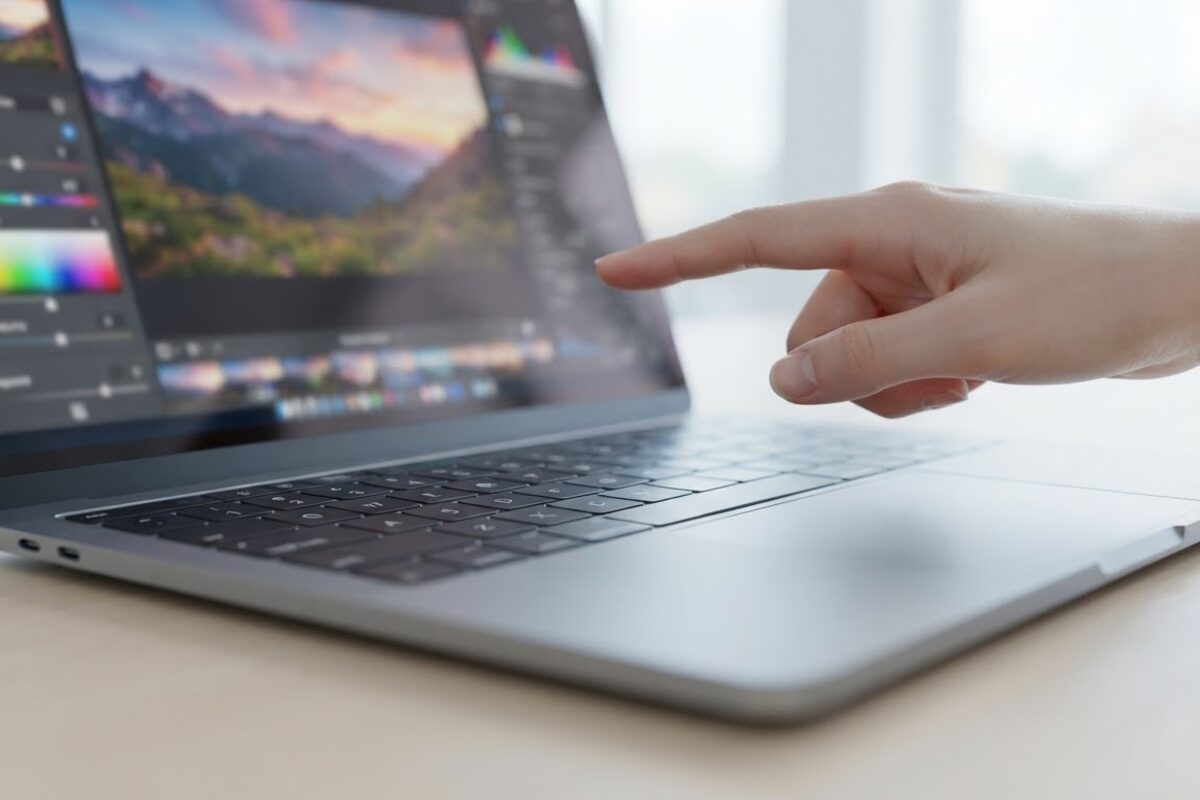
Mark Gurman's Sunday newsletter, picked up by AppleInsider, says Apple plans to stop selling the non-touch versions of the higher-end MacBook Pro when the second generation of touch models arrives in late 2027 with M7 Pro and M7 Max chips. The base 14-inch would move to a plain M7 and the thinner design and stay non-touch. That's a plan for a year from now, not a change to what's on sale. What's on sale, from Friday, is the PROLED XDR MacBook Pro announced October 28: 14-inch from $2,899 and 16-inch from $3,399, M5 Pro or M5 Max, every one of them touch, shipping November 6. The entry 14-inch has the M6 and the old non-touch display. If the report is right, two years from now "MacBook Pro" means touch unless you buy the cheapest one, and the Mac software roadmap has to be built around that. (AppleInsider, MacRumors)
How the stock usually reacts
Apple closed Friday at $344.63, down 1.2 percent, a day after a record close of $348.91. That's a market value of about $5.03 trillion. Trefis looked at the last 19 reports over five years: nine times the stock rose the next day, ten times it fell, and over the last three years it has fallen after two of every three. The median up day was 3.3 percent and the median down day 1.9 percent. In July Apple beat on everything, revenue up 16 percent and earnings up 29 percent, and the stock fell 7.4 percent the next day on the memory warning. That's the pattern to keep in mind: the quarter is probably fine, and the reaction is about the guide. (Stock Analysis, Trefis)
What I was sent, and what was wrong with it
- "Apple's $5.11 trillion market valuation." It was about $5.03 trillion at Friday's close. $5.09 trillion was Thursday's record.
- "Services revenue is projected to climb past $30.7 billion." $30.7 billion is what Services did last quarter. The estimate for this one is about $31.5 billion. Passing $30.7 billion would be a miss.
- "Alphabet, Meta, and Microsoft are spending between $45 billion and $135 billion." $45 billion is Microsoft's single quarter. The 2026 plans are $195 to $205 billion at Alphabet, $135 to $145 billion at Meta, about $220 billion at Amazon.
- "Following the debut of the M6 MacBook Pro with a PROLED XDR touch display." The touch models are M5 Pro and M5 Max. The M6 is in the entry 14-inch, which is the non-touch one. The briefing got the chips exactly backwards.
- "Apple is phasing out non-touch configurations" and "moving forward, only entry-level 14-inch models will offer non-touch." That's Gurman's report about late 2027, written as if it were happening now.
- "Average one-day post-earnings move of roughly 3.3% to the upside or 1.9% to the downside." Those are medians of the up days and the down days, not averages, and the briefing left out that more than half of the days were down.
- "Expanded enterprise developer adoption of Apple Intelligence APIs" driving Services. I can't find a source for that, and Apple doesn't break Services out that way.
- "Maintaining a capital expenditure profile that allows Apple to protect its gross margins above 45%." Capex doesn't flow through gross margin. Memory prices do, which is the actual story and the one the briefing skipped.
What I'm doing
Nothing before the call, same as last week. I hold Apple inside index funds and I'm not adding or trimming around a print, because the last four Apple reports show the stock moving on the guide and not on the quarter, and I'm not better at guessing the guide than the people who do it for a living. I'll read the gross margin line for December first, the Duo supply comment second, and anything Ternus says about memory contracts third. If you want the numbers in context as they come in, the webcast is on Apple's investor page at 5 p.m. Eastern, and I'll have the results written up the way I did Alphabet and Microsoft.
Verified November 1, 2026, from MacRumors on the date, 9to5Mac on the July call, the July transcript, MarketBeat, Zacks via Yahoo, Apple's year-ago results, Apple's June-quarter results, CNBC, CNBC on Microsoft, AppleInsider, Stock Analysis and Trefis. Consensus figures vary by a few hundred million between data providers. The touch MacBook Pro plan is a single report from Bloomberg's Mark Gurman and Apple has not commented. Nothing here is investment advice; I'm an app developer with index funds.
Comments
Be kind and stay on topic.
No comments yet. Be the first.