The usual disclaimer first, and it is not boilerplate. This is a recap written so the headlines make sense, not a prediction and not a recommendation to buy or sell anything. The figures are accurate as of the decision and the market close on Wednesday, June 17, 2026, and they will move the moment markets open again. That is normal.
What the Fed actually did
The Federal Open Market Committee voted unanimously to keep its benchmark rate in a range of 3.50 to 3.75 percent. No cut, no hike, a hold. That part was widely expected. The surprise was in the projections that came with it, and in the tone. (CNBC)
The dot plot is where the story is
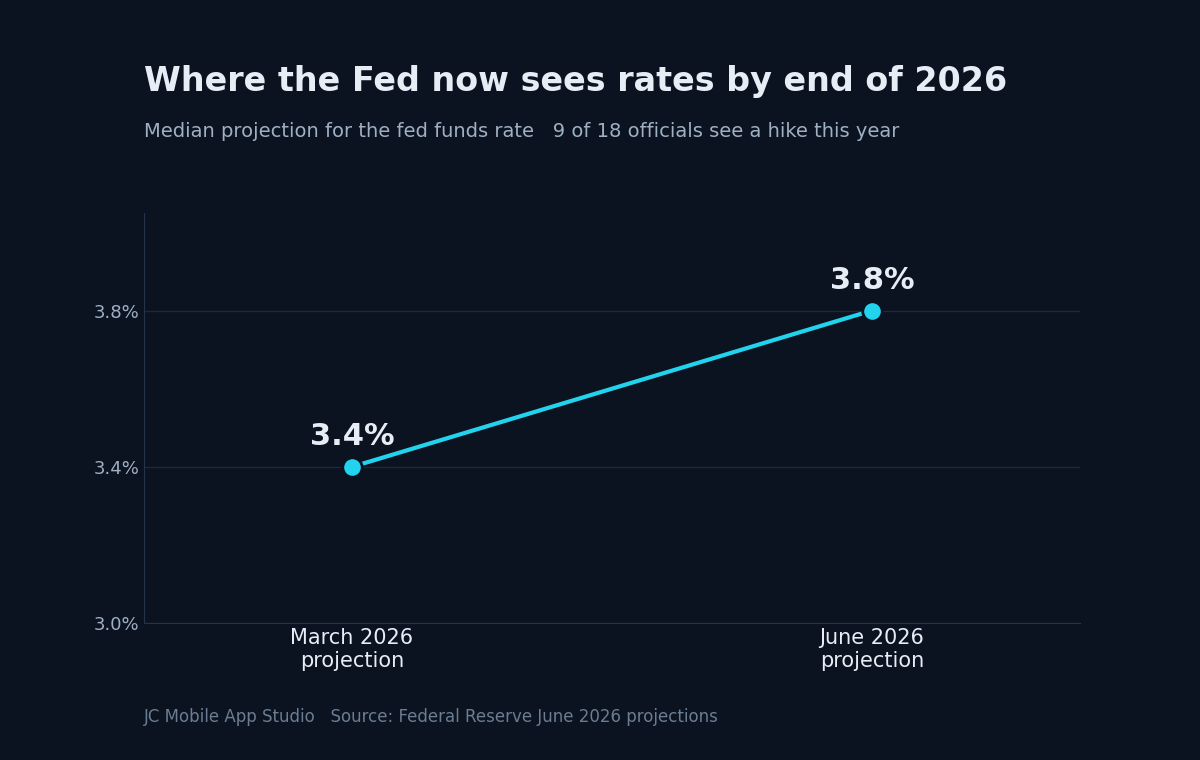
Four times a year the Fed publishes a chart, nicknamed the dot plot, where each official marks where they think rates should be at the end of the year. It is not a promise, it is a snapshot of opinion. In June, that snapshot moved up. The median projection for the fed funds rate at the end of 2026 rose to 3.8 percent, up from 3.4 percent back in March. Nine of the eighteen officials now pencil in at least one rate increase this year, and six of them see two. (CNBC)
So the Fed held today while telling you it leans toward tightening soon. Inflation has been firmer than the Fed wants, growth is projected to slow, and that uncomfortable mix, slower growth with sticky prices, is exactly the setup where a central bank keeps the door open to higher rates rather than lower ones.
Warsh ran it differently
This was Kevin Warsh's first decision as Fed chair, and he made his style clear. He declined to submit a dot of his own, saying plainly, "I did not submit a dot for me," and called the exercise "not helpful in the conduct of policy." He also said the Fed will review how it communicates by year end, including the press conferences, the dots, and the meetings themselves, and he announced five task forces to look at everything from how the Fed reads the labor market to what really drives inflation. The statement itself was noticeably shorter, and it dropped earlier language that had hinted at future cuts. (NPR)
Why stocks went up on hawkish news
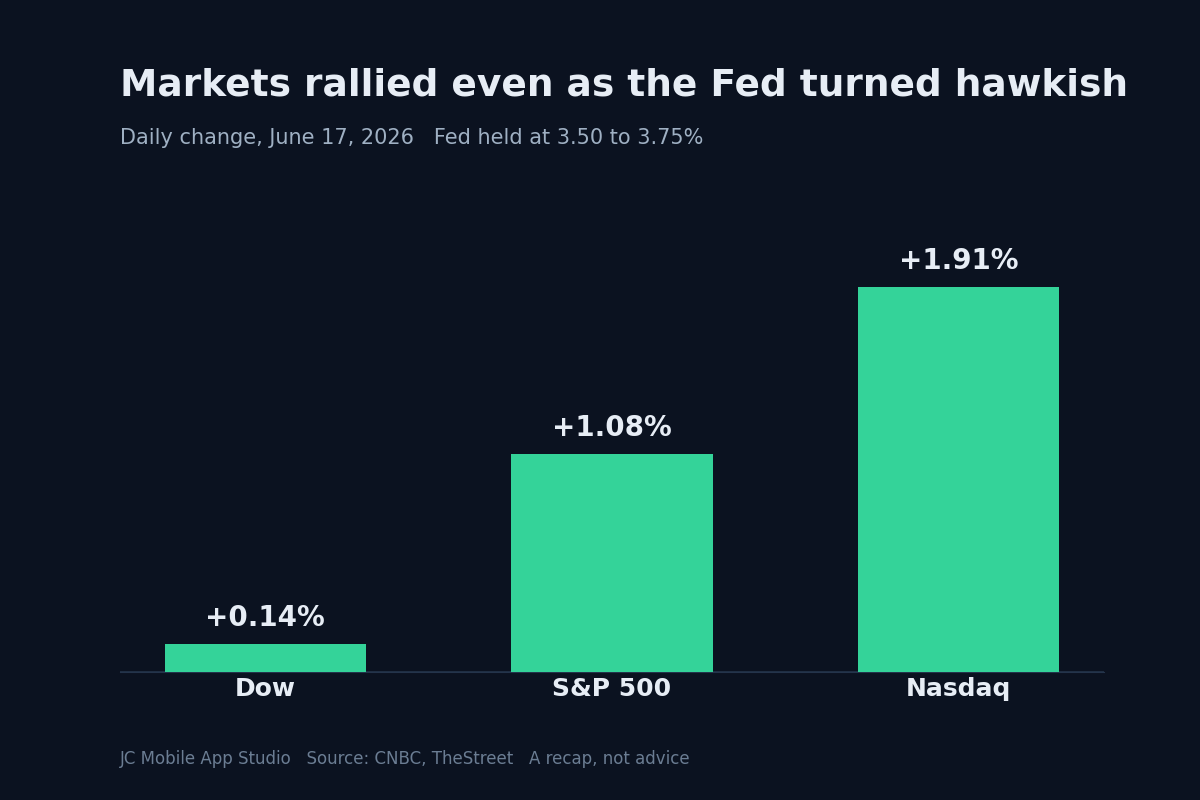
Markets had been bracing for something that sounded scarier. When the decision landed as a steady hold with no immediate hike, the relief showed up as a rally. The S&P 500 rose about 1.08 percent to 7,500.58, the Nasdaq jumped about 1.91 percent to 26,517.93, and the Dow added a smaller 0.14 percent. Removing uncertainty, even when the underlying message is cautious, is often enough to lift prices on the day. (TheStreet)
What it means for the boring parts of a portfolio
If rates stay higher for longer, two quiet things follow for a simple three fund investor. First, the cash and short-term bond side of your portfolio keeps paying a real yield, which is a feature, not a bug, for anyone reinvesting income. A bond fund like BND is not exciting, but higher rates mean its new holdings earn more over time. Second, your dividend payers keep doing what they do regardless of the dot plot. A fund like VTI or VXUS does not pause its distributions because nine officials moved a dot. The ex-dates and the payments arrive on their own schedule.
What a long-term investor does with this
Mostly nothing, and I mean that as encouragement. The Fed leaning slightly hawkish is not a reason to sell, and a one-day rally is not a reason to pile in. Automatic contributions keep buying on schedule, a little more when prices dip and a little less when they climb, and the question of whether the Fed hikes once in November mostly washes out over the decades that actually matter to you. The discipline is dull on purpose: keep contributing, and check on a schedule rather than on a mood.
That calm, watch the income instead of the headlines posture is the same idea behind Holdwise, the dividend tracker this studio builds. It is designed for people who would rather see when their next payment lands and how it compounds than refresh a rate-decision live blog all afternoon. If you want to see that compounding for yourself, we built a free dividend snowball calculator you can play with.
That was the Fed on June 17, reported June 18. None of this is investment advice, just a clearer view of a decision that was quieter on the surface than underneath. For the lead up, I wrote about what to expect from the Fed under Warsh, and for the calm, contribute-and-check approach there is three funds and a calendar. You can see what this studio builds at jcmobileappstudio.com.
Comments
Be kind and stay on topic. Comments are reviewed before they appear.