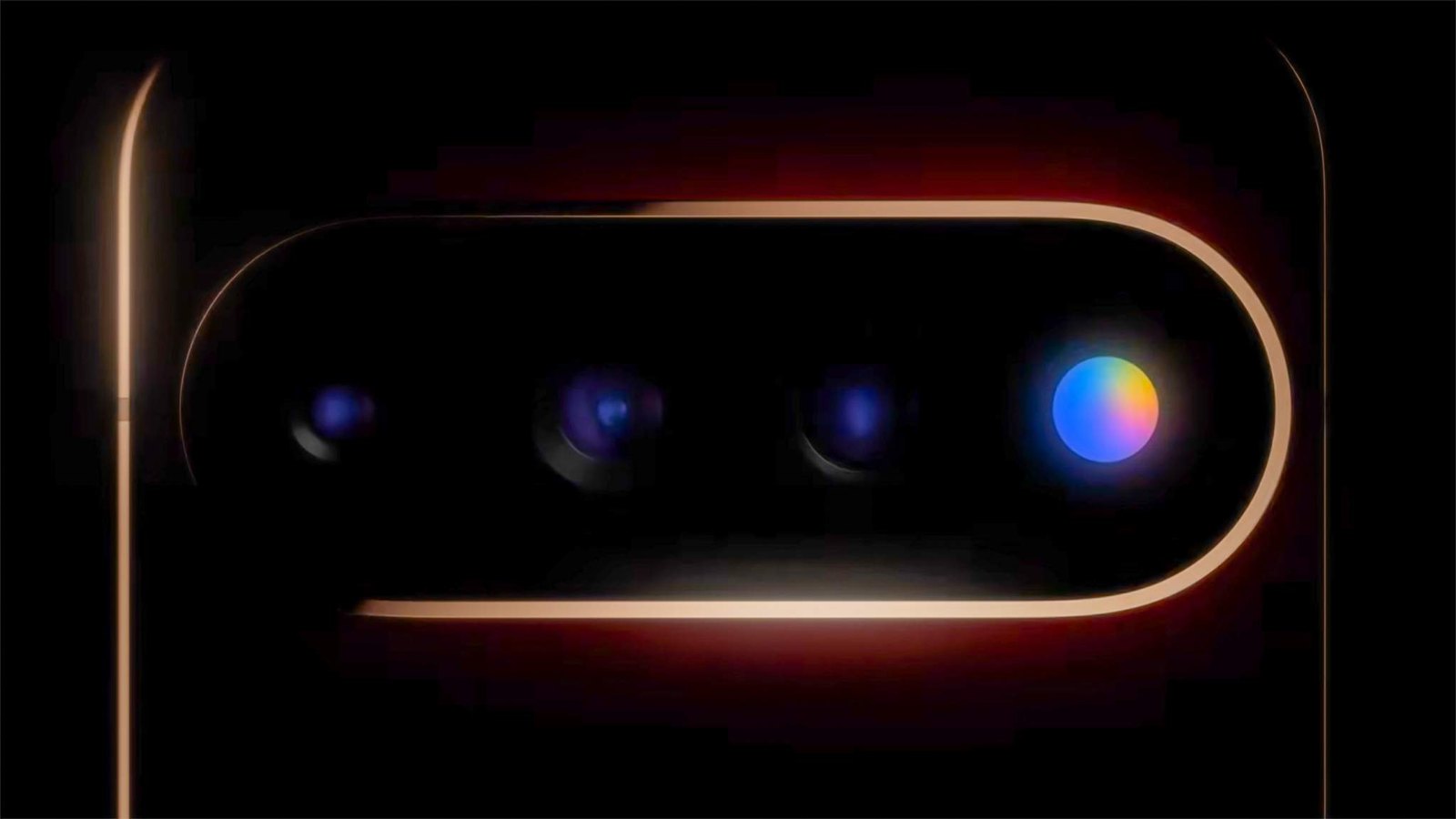
Full disclosure before anything else. I preordered a Pixel 11 Pro XL in Olive, 256GB, unlocked, about twenty minutes after the stream ended, and I am trading in the base Pixel 10 Pro XL that has been my secondary phone to do it. My receipt is at the bottom of this post, and the number on it is the reason I am writing this instead of skipping the generation like I probably should have.
Google held Made by Google in New York on August 12, 2026. Four phones, a watch, a tracker, and a very long stretch of Gemini demos. Preorders went live the same day and everything ships August 20. I wrote a leak roundup on Monday and I want to be honest about how that aged: the leaked spec sheets were almost perfect. Screen sizes, battery figures, zoom numbers, prices, all of it landed. Remember that, because it comes back at the end. All product images in this post are Google's, used with credit to Google.
Here is the thing nobody said out loud during the keynote. Every phone in this lineup costs $100 more than its predecessor. The Pixel 11 went from $799 to $899. The Pro went from $999 to $1,099. The Pro XL went from $1,199 to $1,299. The Fold went from $1,799 to $1,899. Google's cover story is that the 128GB tier is gone and everything now starts at 256GB, which is a real improvement and also a very convenient way to raise a price while calling it a value add.
Then, in the same breath, Google made trade-in credits the most aggressive I have seen from them. Up to $1,000 back. Instant credit at checkout instead of a mail-in wait. That is the actual story of this launch. The sticker price went up and the sticker price became fiction.
Pixel 11, the one most people should be looking at
The base Pixel 11 starts at $899 for 256GB, with a 512GB option above it. It runs the new Tensor G6 with the Titan M3 security chip, 12GB of RAM, and a 6.3 inch Actua OLED at 1080 by 2424 that peaks at 3,000 nits. Battery is 4,985mAh typical, and Google quotes 30 plus hours with 55 percent in about 30 minutes on a 30W wired charger, plus 25W wireless over Qi2 with Pixelsnap magnets.
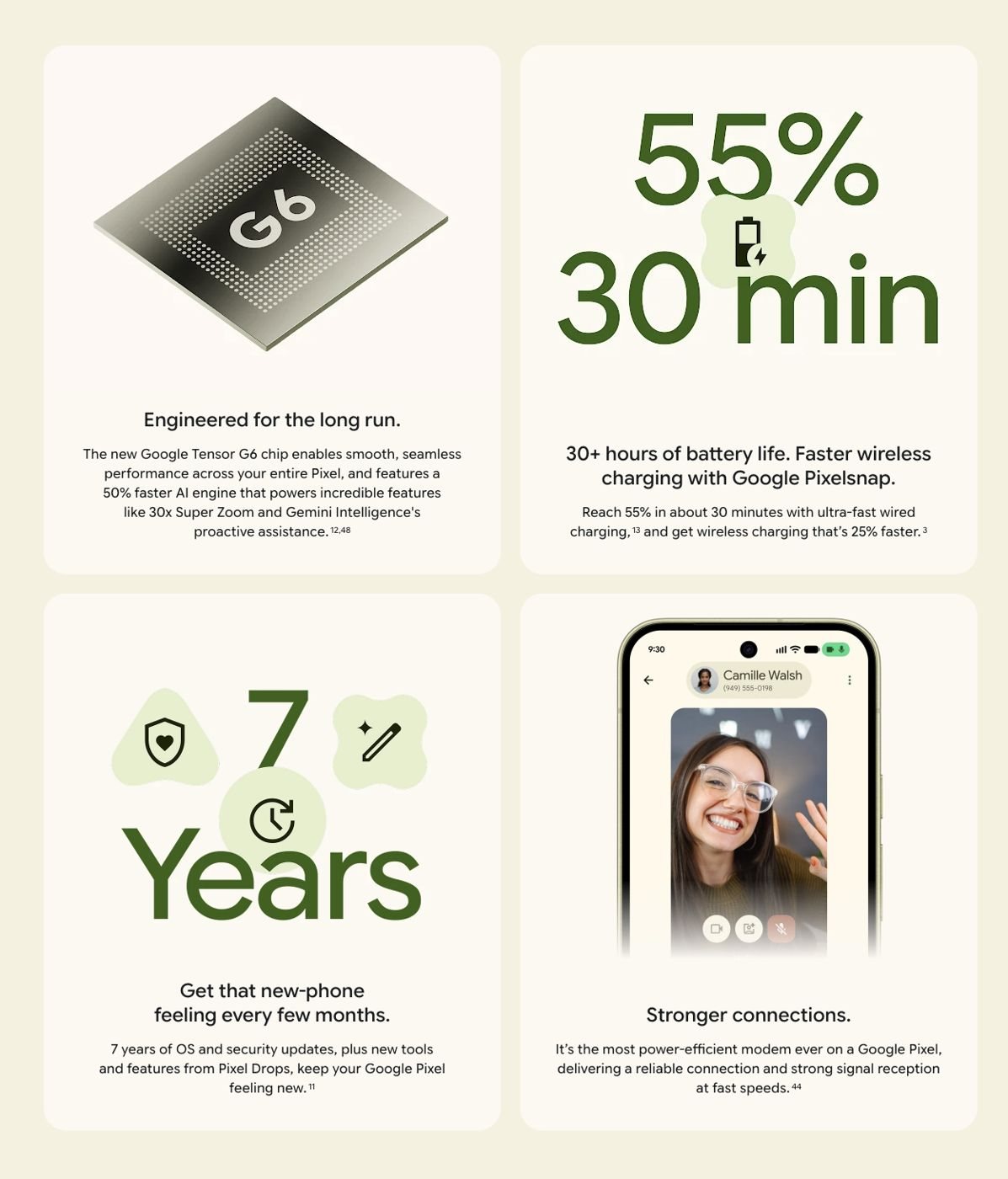
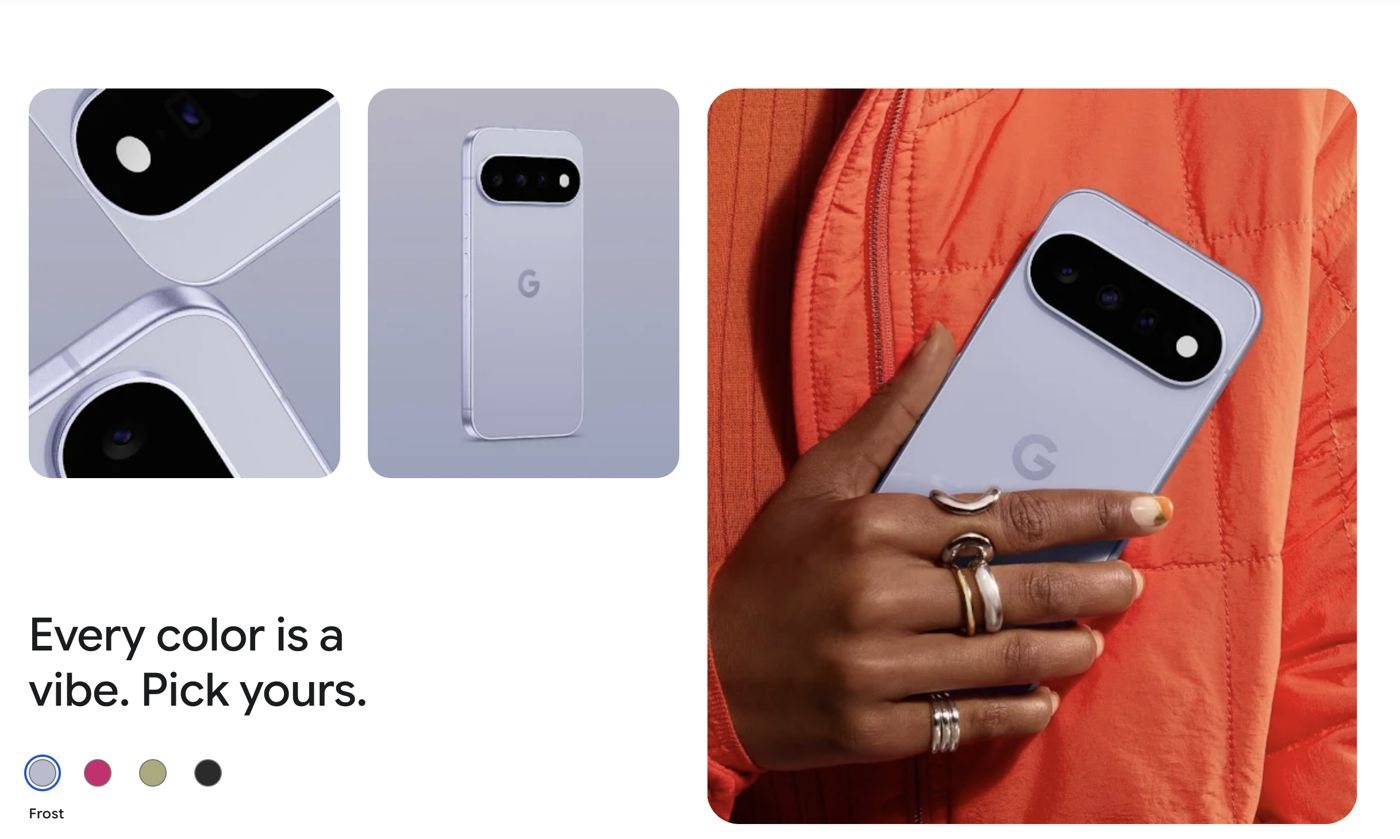
Cameras are where the real generational change lives. The main sensor is a new, larger 48MP unit that Google says pulls in 56 percent more light than last year's. The ultrawide is 13MP, the telephoto is a 10.8MP 5x, and Super Zoom now reaches 30x, up from 20x on the Pixel 10. Selfie is 10.5MP. Colors are Frost, Pistachio, Hibiscus, and Obsidian.
Compared to the Pixel 10, which launched at $799 with 128GB and a Tensor G5, you are paying $100 more for double the storage, a meaningfully better main sensor, 30x instead of 20x, and a chip Google says browses 25 percent faster and launches apps 15 percent quicker. The AI engine claim is the loudest one, up to 3.5 times faster on-device processing while burning less power.
Is it worth upgrading? If you are on a Pixel 10, no. That is a one year jump for a sensor swap and a storage bump, and your Pixel 10 already gets Pixel Drops through 2032. If you are on a Pixel 8 or older, this is a real leap and the trade-in math makes it easy. That is the honest split.
Pixel 11 Pro, where the new toys actually are
$1,099 gets you the same 6.3 inch footprint as the base model with a Super Actua LTPO panel at 2856 by 1280, 1 to 120Hz, and 3,600 nits peak. That is up from 3,300 on the Pixel 10 Pro, and Google says the anti-scratch coating is more than twice as resistant as last year's. Google quotes 30 plus hours of battery with 30W wired charging, and wireless charging is up to 29 percent faster than the outgoing model. Published spec listings put the cell at 4,850mAh, though Google does not print the milliamp figure on its own store page.
The camera stack is 50MP main, 48MP ultrawide with macro, and a bigger 48MP telephoto that Google rates at 30 percent better light sensitivity. Pro Zoom now goes to 120x, up from 100x, and there is Portrait Mode at 5x. The selfie camera is a 42MP autofocus unit with a 103 degree field of view.
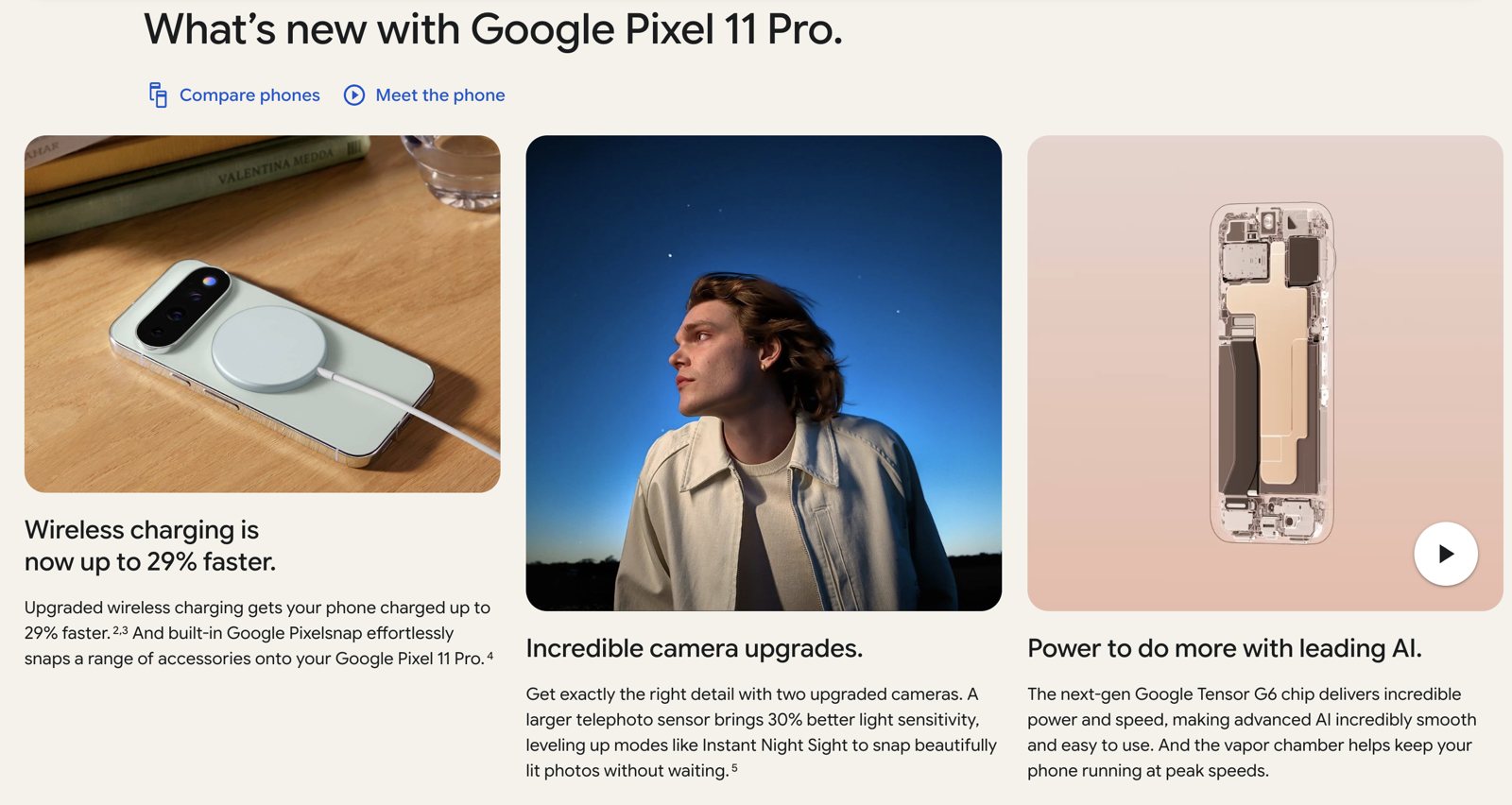
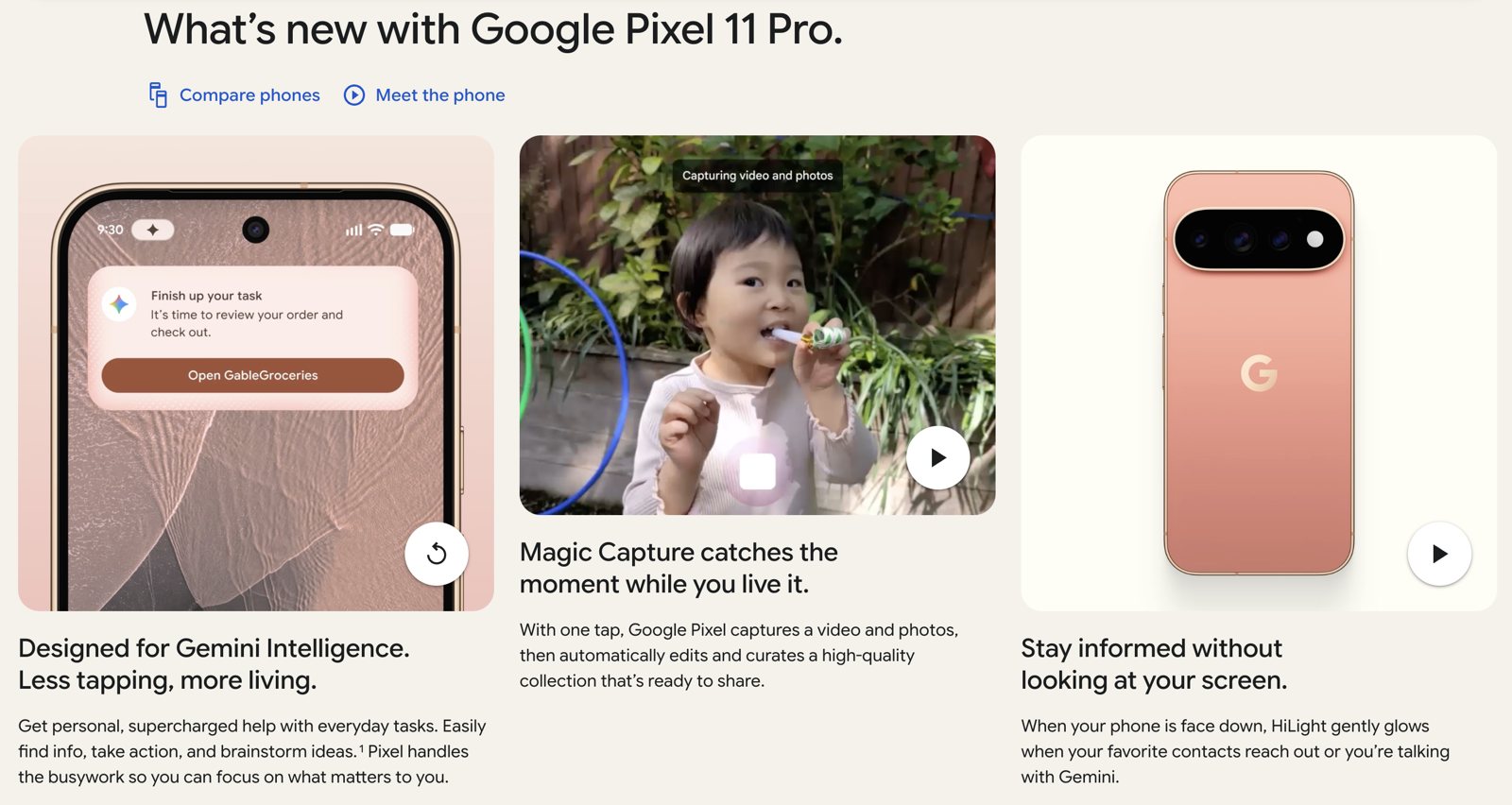
Two things here are actually new rather than incremental. The first is HiLight, a ring of colored LEDs around the camera bar that glows when a favorite contact reaches out or when you are talking to Gemini, so a face down phone can still tell you something without lighting the screen. I like this more than I expected to. The second is Instant Night Sight, which Google says captures Night Sight shots up to 4.5 times faster, exclusive to the Pro and Pro XL. Night Sight has always been the mode where you hold your breath and hope. Cutting the wait is a bigger quality of life win than another zoom multiplier.
Worth upgrading from a Pixel 10 Pro? At full price, no. You are paying $1,099 for a brighter screen, a better telephoto, an LED ring, and a faster chip. That is a good year two purchase, not a good year one purchase. With a trade-in it changes completely, which is the pattern for this entire lineup.
Pixel 11 Pro XL, the one I bought, and the smallest jump on stage
$1,299, 6.8 inch Super Actua LTPO at 2992 by 1344 and 3,600 nits, same G6, same camera trio as the Pro, a listed 5,115mAh cell, and 45W wired charging that Google says reaches about 75 percent in 30 minutes. Storage goes 256GB, 512GB, or 1TB.
I am going to be straight about this because I am the one writing the check. Going from a Pixel 10 Pro XL to a Pixel 11 Pro XL is the weakest upgrade Google put on that stage. Same screen size, same 45W wired, same 5x telephoto family, same body dimensions within a rounding error. What I am actually buying is the G6, 300 more nits, HiLight, Magic Capture, Instant Night Sight, and a 256GB floor. If I had to pay $1,299 for that list I would have closed the tab and kept my 10 Pro XL for another year without a second thought.
I did not have to pay $1,299. More on that in a minute.
Pixel 11 Pro Fold, the only phone here with a real engineering story
$1,899 buys an 8 inch inner display and a 6.4 inch cover display, both running 120Hz and both now hitting 3,600 nits, which Google calls 20 percent brighter than last year. It is almost 10 percent lighter and about 1mm thinner than the Pixel 10 Pro Fold, which weighed 258 grams and measured 10.8mm folded.
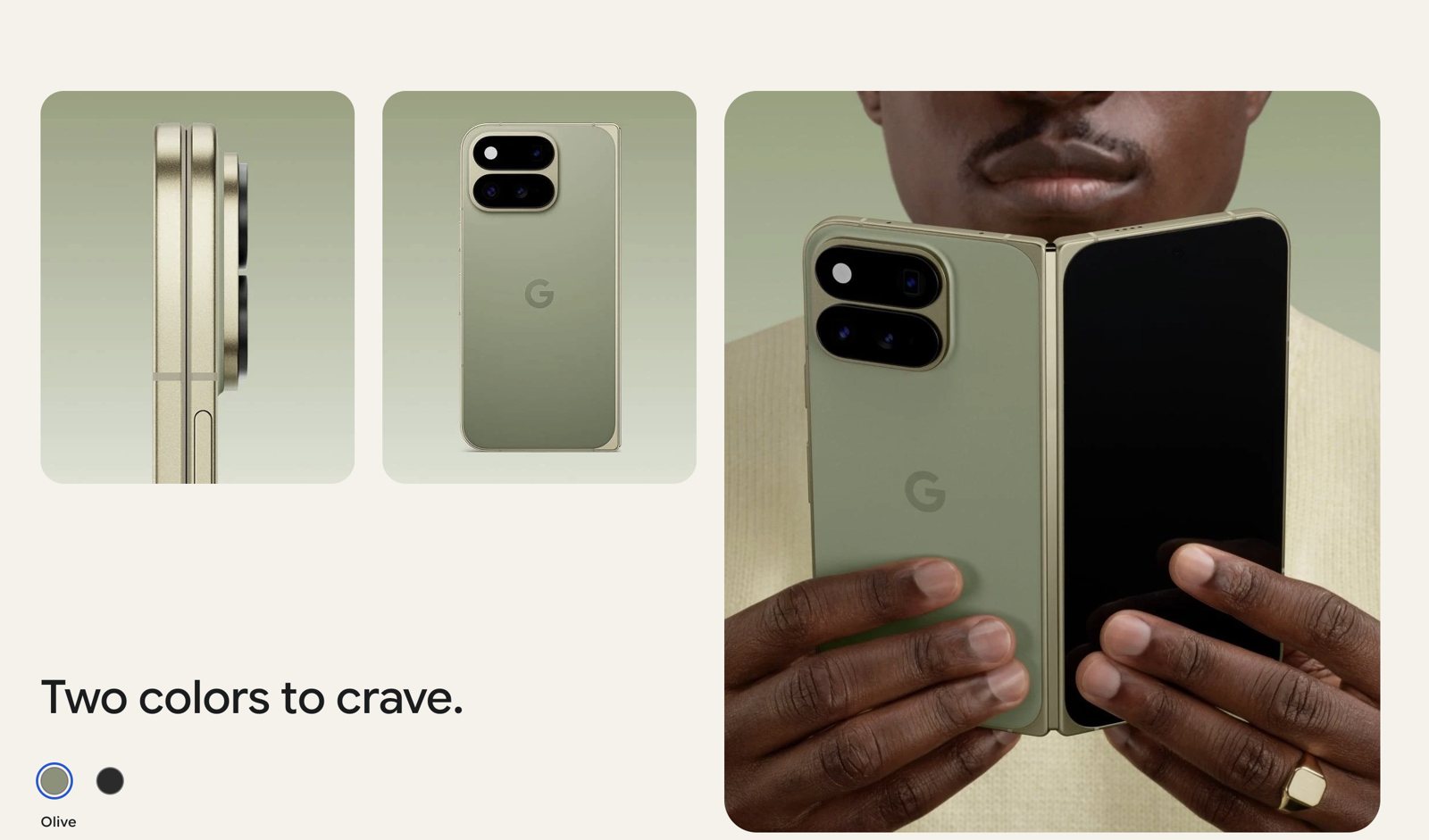
The durability work is the headline. A glass fiber composite back cover, a new gearless hinge, a Super Actua ceramic cover glass on the outside, and IP68. Google claims three times more durable than the Pixel 10 Pro Fold. That is a single party claim from the company selling the phone, and durability is the hardest thing in this industry to verify without a drop rig, so treat it as a direction rather than a measurement until the teardown people get their hands on one. Cameras are a 48MP main with 30x Super Zoom, 16GB of RAM, over 24 hours of battery, and 30W wired charging at 50 percent in 30 minutes. Colors are Olive and Obsidian.
This is the one where a year over year upgrade is defensible. Lighter, thinner, brighter, tougher, and a hinge redesign is not spec sheet padding on a device whose main failure mode is the hinge.
Pixel Tag, four years late and priced correctly
$29 each, $99 for a four pack. It rides Android's Find Hub network, which Google puts at over a billion devices, and you can ask Gemini through Pixel Buds to ring it. Location data is encrypted and Google says it is not stored on the Find Hub network.
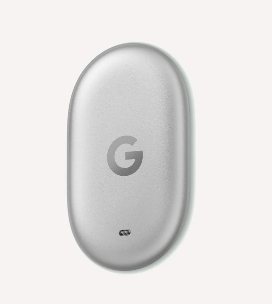
AirTag has been $29 since 2021 and Google matched it exactly, which tells you they know they are late rather than early. The four pack undercuts Apple's, and the privacy framing is the part I actually care about, since a tracker network is one of the few consumer products where the security model is the product.
The Pixel Watch 5 also landed, $399 for 41mm, $429 for 45mm, and a $579 Stephen Curry edition. The interesting part is health, with monthly blood pressure and insulin resistance trend summaries. Trend summaries, not diagnoses, and that is general wellness information rather than medical advice. Google was careful with that framing on stage and I will be too.
The part that actually matters: the checkout page
Here are Google's own preorder offers, all ending 8/27/26.
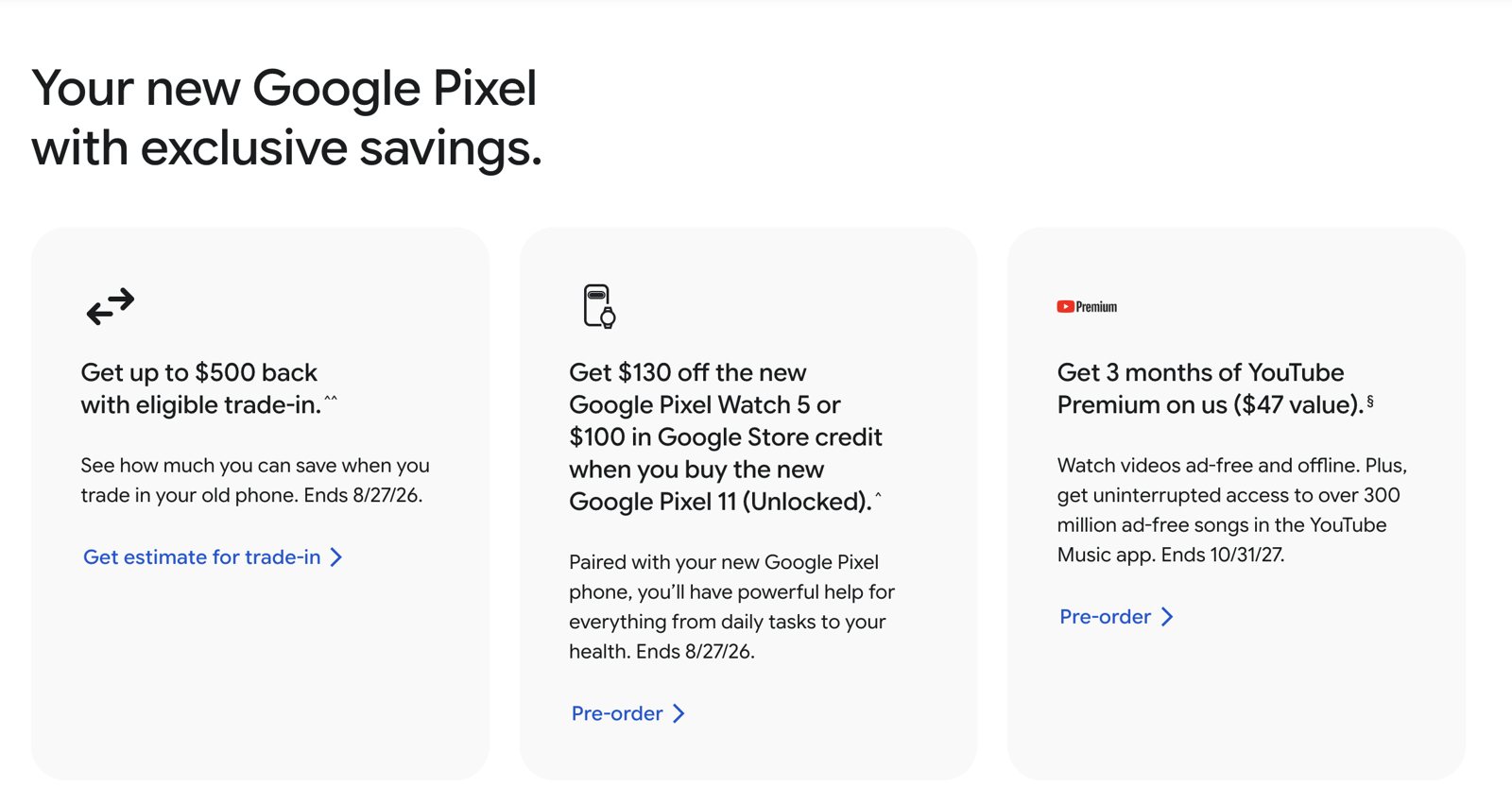
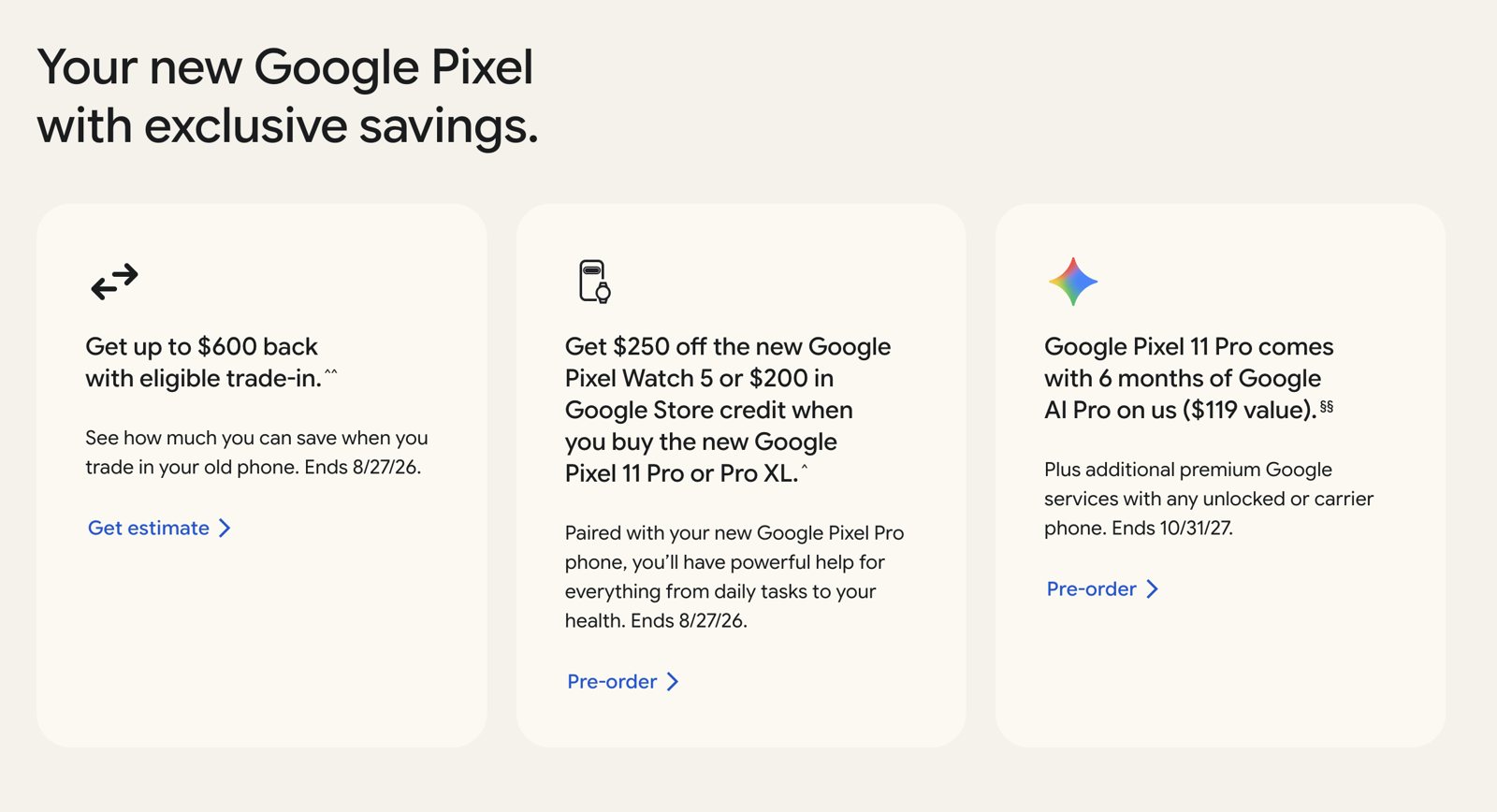
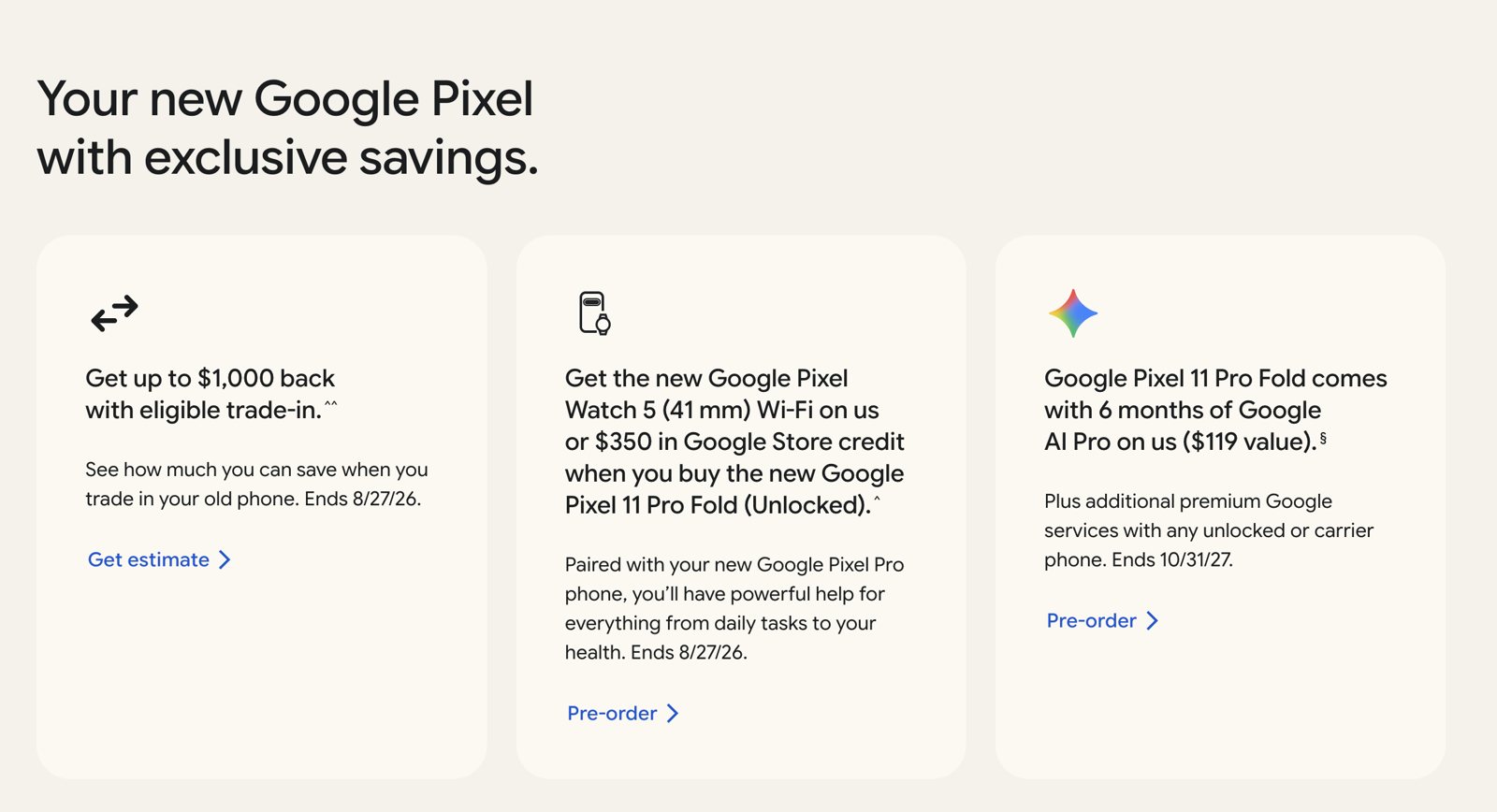
Reported Google Store trade-in values for the previous generation are $500 for a Pixel 10, $600 for a Pixel 10 Pro, $700 for a Pixel 10 Pro XL, and $899 to $1,000 for a Pixel 10 Pro Fold, all assuming unlocked base storage models in good condition (9to5Google). Worth noting that the Pro tier card says "up to $600 back" while the quoted value for my Pixel 10 Pro XL came in at $700 as instant credit. The marketing number and the checkout number were not the same, and the checkout number was better. Always run your own device through the estimator before you assume the card is the ceiling.
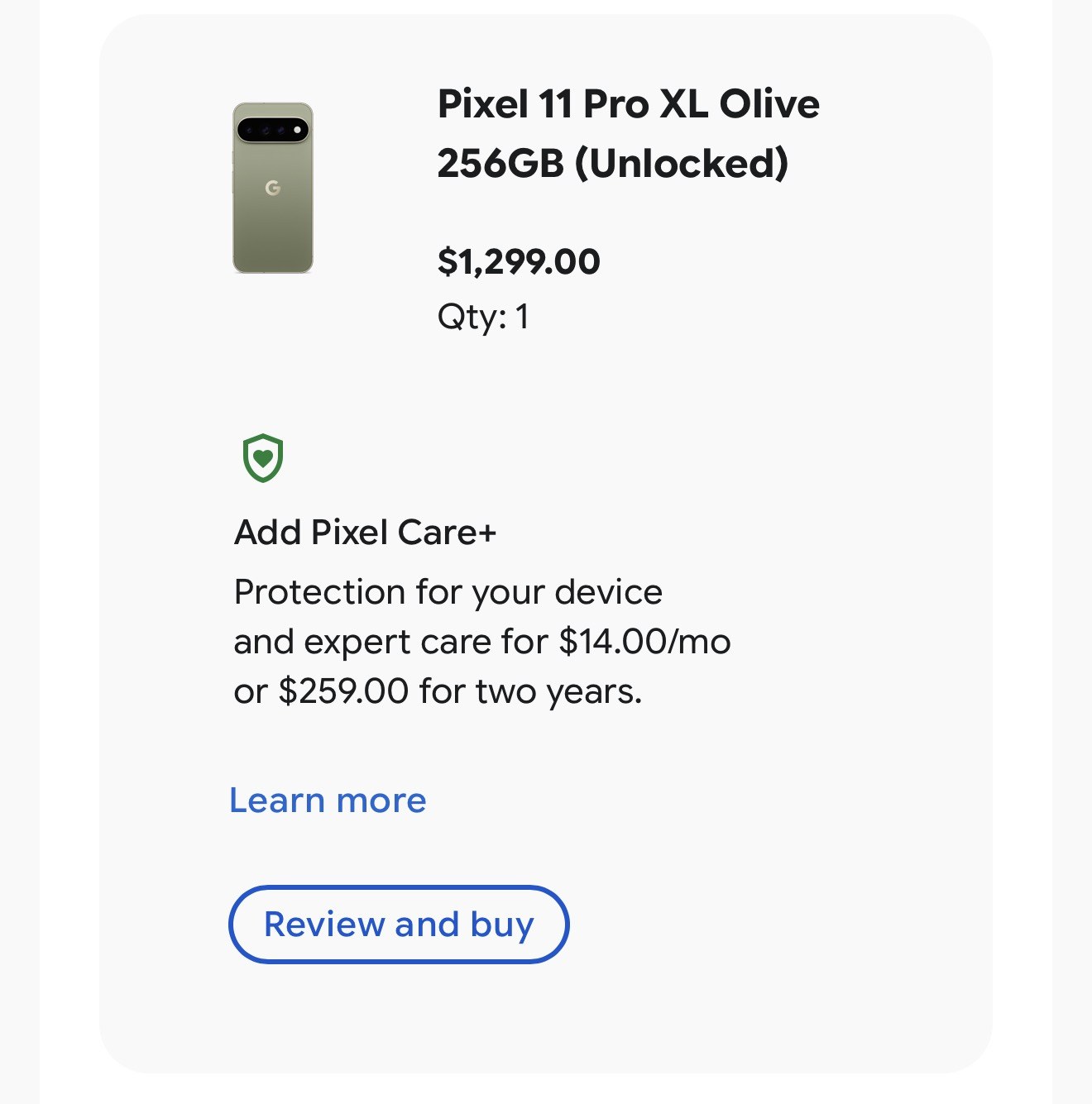
Now my receipt. Pixel 11 Pro XL, Olive, 256GB, unlocked, straight off the Google Store checkout page. Subtotal $1,299.00. Discount, minus $250.00. Instant trade-in credit, minus $700.00. Tax $20.94. Shipping $0.00. Total $369.94.
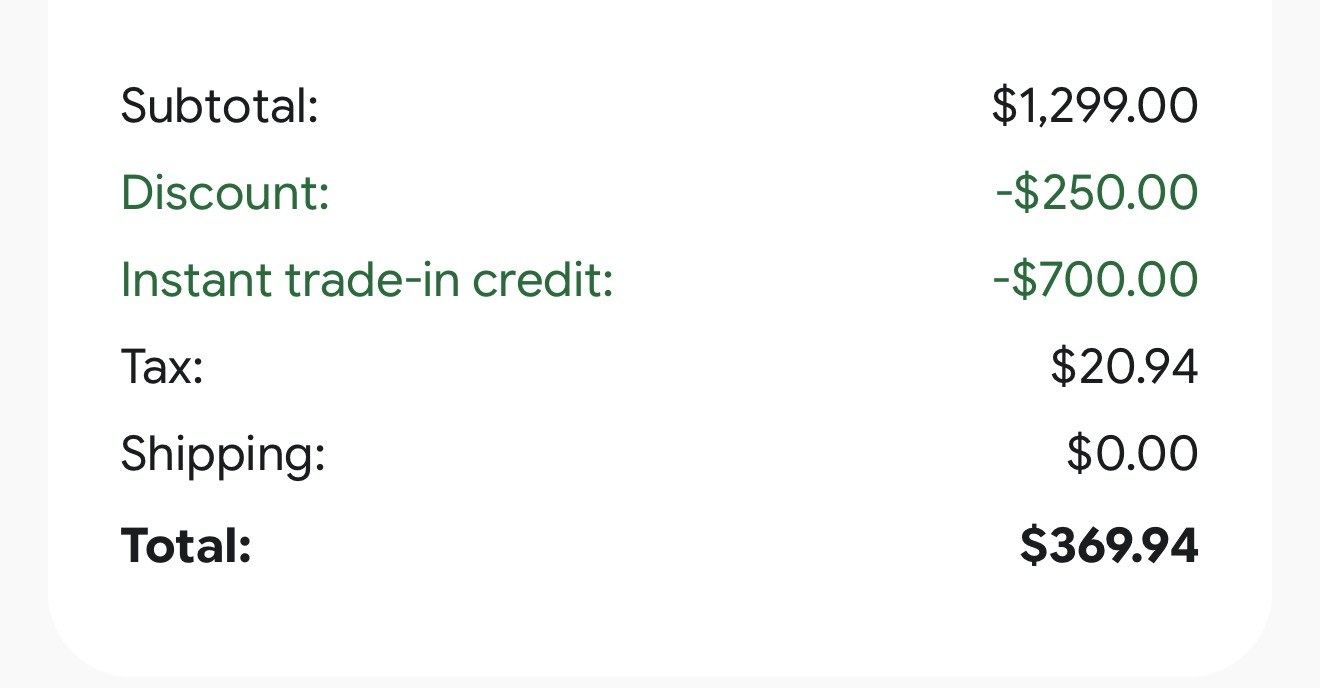
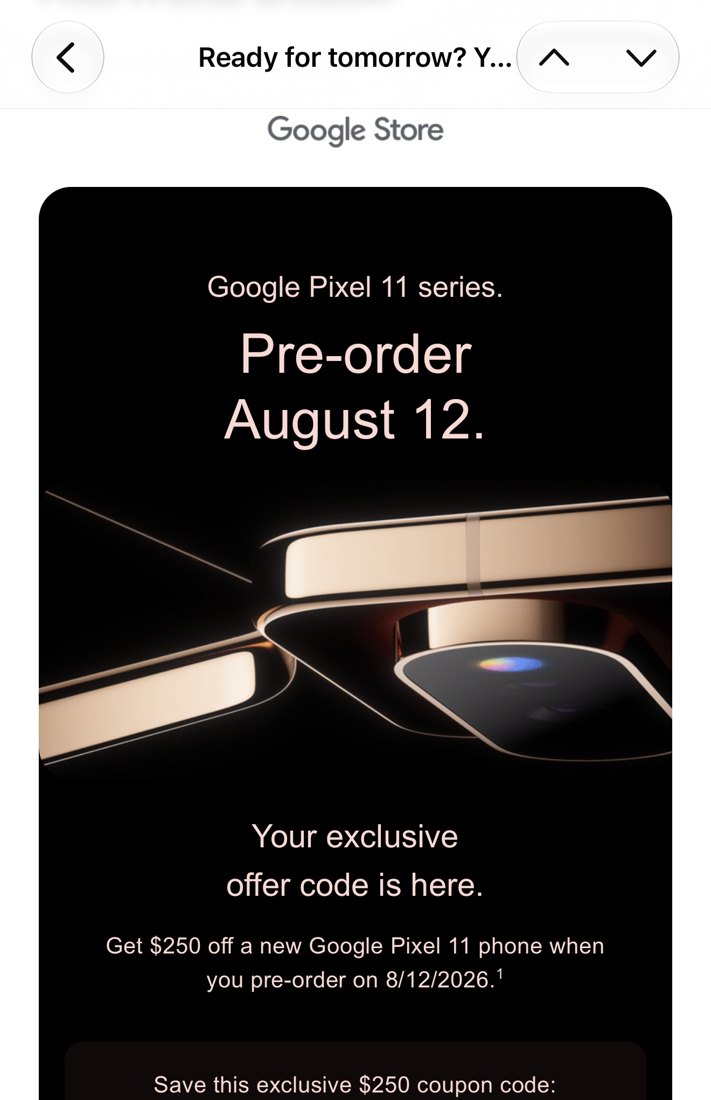
That $250 discount was a code that showed up in my email. Not everyone gets one, and I have no idea what Google's targeting logic is. But the shape of the deal is repeatable: a current generation Pro trade plus a promo code puts a $1,299 phone under $400 out the door, and Google eats the difference to keep you inside Pixel for another seven years of Drops.
So my verdict splits two ways. At sticker, this generation is skippable for anyone on a Pixel 10, and the Fold is the only model where I would tell a one year owner to look twice. At the trade-in price the calculus flips entirely, because you are no longer asking whether the upgrade is worth $1,299, you are asking whether it is worth $370 and a phone that was headed for a drawer.
Buy the discount, not the phone.
The leaks were right, and that is the real story
Back to Monday's preview. Nearly every leaked number held up: 4,985mAh on the base, 4,850 on the Pro, 5,115 on the Pro XL, 3,600 nits, 120x Pro Zoom, 30x Super Zoom on the Fold, and all four prices to the dollar. When a keynote confirms a spec sheet the internet already had, the hardware stops being the announcement. What was left to reveal on stage was the offer structure, and that is exactly where Google spent its energy. The phone was never the news. The checkout page was.
Why this matters here
My daily driver is an iPhone 17 Pro Max, and I build privacy-first, on-device iOS apps at JC Mobile App Studio, so the Pixel is my secondary phone rather than a development device. That is exactly why I keep one. Carrying both is the cheapest way I know to stay honest about what each platform is actually good at instead of arguing from a spec sheet. And the on-device AI story is the one I watch closest on the Android side, because it is the same bet I have made in my own lineup. When Google says the G6 runs AI 3.5 times faster while using less power, that is the same trend line that lets an app read a receipt screenshot on your device instead of shipping it to a server, or write you a briefing without an account behind it. Every year the phone gets better at this is a year the privacy-first approach gets cheaper to build and easier to defend.
I will have a real review of the Pro XL once it lands on August 20, including whether Instant Night Sight and HiLight are as useful in a week of normal use as they looked in a keynote reel. I am skeptical of both, which is usually the right place to start.
Caveats. Trade-in values, promo codes, and offer end dates vary by account, device condition, and region, and mine will not necessarily be yours. Google's durability, brightness, and performance figures are the company's own claims and have not been independently tested at time of writing. Health features on the Pixel Watch 5 are general wellness information, not medical advice. Specs are accurate as of the August 12, 2026 announcement and may change before devices ship. Sources include Google's own launch blog, the Google Store spec pages, TechCrunch, and Droid Life. All product images are Google's, used with credit to Google. Verified August 12, 2026.
More of what I build at jcmobileappstudio.com/apps.
Comments
Be kind and stay on topic. Comments are reviewed before they appear.