What Google promised, and what it said
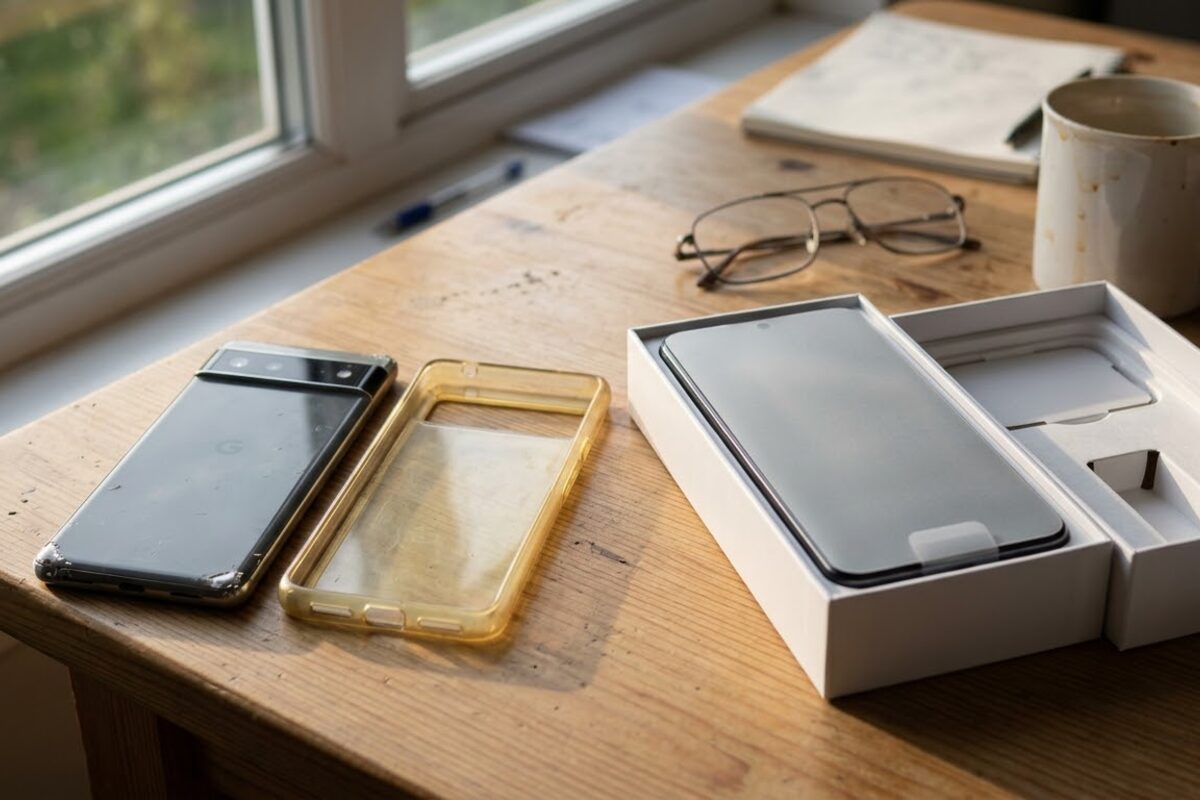
Google's support policy for the Pixel 6, 6 Pro and 6a is five years of Android version and security updates "from when the device first became available on the Google Store in the US." For the 6 and 6 Pro that was October 28, 2021, so the window ran out at the end of October 2026. Google doesn't publish a day, and it hasn't published a "final update" notice. What it told Droid-Life in July is that the two phones "will reach End of Life status with Android 17 QPR1," the feature drop they got in September, and that they "will remain security compliant for the full duration of their support windows." They were left out of the next beta. (Google, Droid-Life)
The October 6 update, build CP3A.261005.002.A1, included the Pixel 6 and 6 Pro, and it's almost certainly the last one. I wrote that on October 8 and nothing since has changed it, except that the month is now over. If a November patch shows up, it's a gift. One correction to the briefing I was sent, which lumped the Pixel 6a in: the 6a went on sale in July 2022, so its five years run to July 2027. (Droid-Life, my October 8 post)
Worth remembering what these phones were. First Tensor chip, the camera visor, on-device voice typing that actually worked. I know people still carrying one. And worth remembering how the five years happened: Google originally promised three, extended it to five in December 2024, and in the last sixteen months the Pixel 6 missed eight monthly patches as Google moved older phones to a slower cadence. It kept the promise. It didn't overdeliver.
What stops, and what keeps going
A Pixel 6 works exactly the same on November 1 as it did on October 31. Here's the honest split:
- Stops: the monthly Android security patch, kernel and firmware fixes, modem and driver updates, and new Android versions. Android 17 QPR1 is where it ends. Anything Google's bulletin lists under "Pixel" from here on doesn't reach you.
- Keeps going, in practice: Google Play system updates, which patch core modules like the media stack and Bluetooth through the Play Store rather than a full OS update. Play Protect. Chrome and the Android WebView, which carry a huge share of the real exposure and update through the Play Store on any Android 7 or newer phone. Your apps. Google hasn't published a page saying this specifically for the Pixel 6, so call it the standard behavior rather than a promise. (Android Open Source Project)
So the risk is real but gradual. Each month the gap between what's known and what's patched on your phone grows. For the first several months that gap is small. A year from now it isn't. If the phone is your bank, your email and your two-factor codes, plan to move inside that year. If it's the kid's YouTube device on the home Wi-Fi, it has a lot of life left.
The 1 percent, and why it isn't a crisis
The other number this week came from heise, which pulled Android version share out of Android Studio's distribution data, the only place Google still publishes it. As of October 19: Android 16 at 25.4 percent, Android 14 at 15.3, Android 15 at 14.7, Android 13 at 11.8, Android 11 at 10.5, Android 12 at 9.6, and Android 17, released to Pixels on June 16, at 1 percent. Android 8.1 is ahead of it. (9to5Google, Android Authority)
Three reasons that's less alarming than it reads. First, the comparison people want, Android 16 at the same point last year, doesn't exist; Google's snapshots were April 2025, December 2025 and now. The closest is Android 16 at 7.5 percent six months after its release. Second, Samsung only started shipping Android 17, as One UI 9, in the last few weeks, and Samsung is most of Android outside China. The 1 percent is basically Pixels and early OnePlus phones. Third, and this is the part the briefing turned into a fake Google statement, the version number stopped being the security story years ago. Google has shipped core system modules through Play system updates since Android 10 in 2019, which is exactly why a phone on Android 14 isn't as exposed as that sounds. Nobody at Google said anything about these numbers. Google didn't even publish them.
What the 1 percent does tell you is which phone to buy if you care about updates. The Pixel 8 and everything after it get seven years. Samsung's flagships get seven. Everyone else, check before you pay.
Where every brand's Android 17 actually is
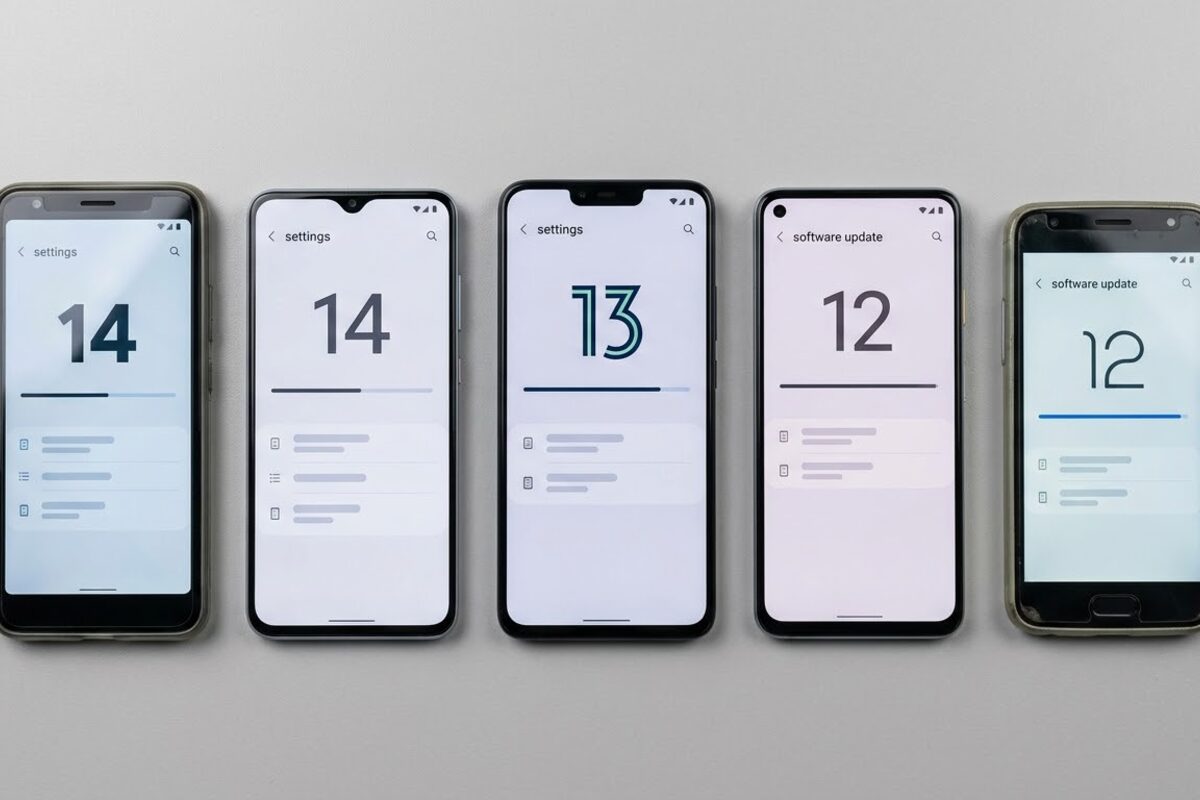
Since I had the schedule in front of me, here it is, with the caveat from the source itself that these are planned windows and rollouts go out in regional batches. (NokiaMob, citing Gizmochina)
- Google: done since June for the Pixel 6 through 11, Tablet and Fold.
- Samsung: One UI 9 is rolling out widely but Samsung has published no calendar. The October security patch reached the Galaxy S24 line, Z Fold 6, Z Flip 6, Galaxy A57 and Galaxy Watch 9 this week, per Android Headlines. (Android Headlines)
- OnePlus: ColorOS 17 already shipped early to the 15, 15R, 13, 13s, 13R and Pad 4. The Open, 12, Nord 6, Nord CE6 and Pad 3 are November; the 12R, 11, Nord 5, Nord CE5 and the Pads are December; Nord 4 and the N6 line early next year. I covered the whole opt-in-and-rollback situation on Friday.
- Xiaomi: China only so far, no global dates. HyperOS 4 reached the Xiaomi 17 line October 15, the Xiaomi 16 line and Pad 7 Ultra around October 31, the Xiaomi 15 line and the rest of the Pad 7 series mid-November, the 14 and 13 lines in December.
- Nothing: Phone (3) in mid-October, Phone (4a) and (3a) lines early November, (2a) mid-November, (3a) Lite late December, (4b) and CMF Phone 2 Pro mid-January.
- Oppo, Vivo, Realme: flagships now through November, mid-range December, budget lines in the first quarter of 2027.
- Motorola: nothing published.
What I'd do with a Pixel 6 today
- If you're keeping it: make sure Play system updates and Play Protect are on in Settings, Security & privacy. Keep Chrome updated. Turn on two-factor with an app for anything that matters. Don't install apps from outside the Play Store. Plan to be off it by next fall.
- If you're upgrading: the Pixel 10a is $499 and gets seven years. The Pixel 11 line is the step up. Google Store trade-in for a Pixel 6 was $230, and $300 for a 6 Pro, in late August; Google's October trade-in promotion ended on the 29th, so run the estimator before you assume a number. Carrier offers change weekly. (9to5Google)
- If you're handing it down: a factory reset, the kid's Google account with Family Link, and it's a fine first phone for someone who isn't logging into a bank.
My own old Pixel is a desk clock. It's been a desk clock since the Pixel 11 arrived, and it is very good at it.
What I was sent, and what was wrong with it
- "October 31, 2026 marks the official turning point." Google published no date. Five years from October 28, 2021 is "end of October." Close enough, but not official.
- "The Pixel 6a bows out" with the others. July 2027.
- "Google is standardizing low-level system modules through Google Play system updates" as a response to the 1 percent figure. That's Project Mainline, from 2019, and Google said nothing this week. Google didn't publish the numbers; heise dug them out.
- "Xiaomi locked in its global Android 17 schedule." China only. Gizmochina says there is no global schedule yet.
- "Samsung One UI 9" dates in the brand schedule. Samsung hasn't published any.
- "Check carrier trade-in promotions this weekend for upgrade deals." Google's own promotion ended Thursday and I couldn't find a published Pixel 6 value this weekend from anyone. Generic filler.
Verified October 31, 2026, from Google's Pixel update policy, Droid-Life's reporting on Google's statements, 9to5Google and Android Authority on the distribution numbers, and NokiaMob's reproduction of the Gizmochina schedule (Gizmochina itself blocks fetches). The claim that Play system updates continue on an unsupported Pixel is standard Android behavior, not a Google statement about the Pixel 6. Trade-in values are late-August figures and will have changed.
Comments
Be kind and stay on topic.
No comments yet. Be the first.