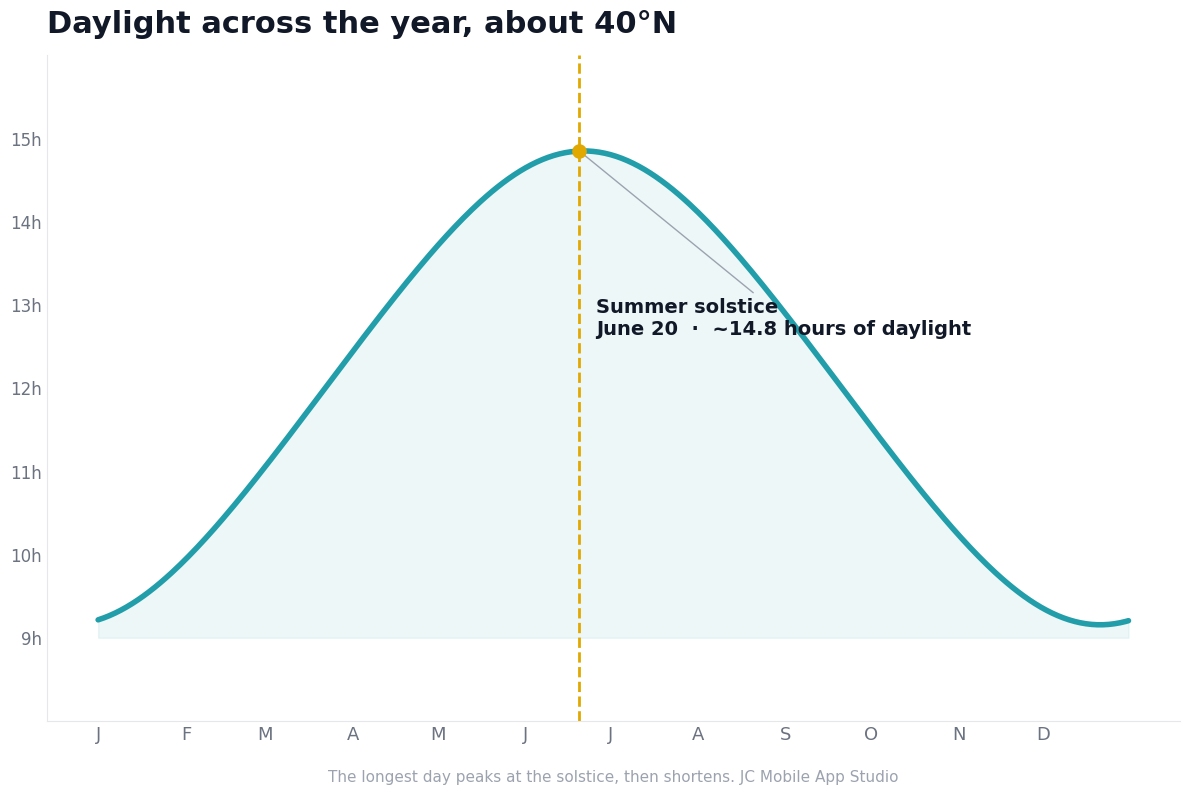
The summer solstice lands on June 20 this year, the day with the most daylight of any in 2026. In the continental US that means roughly 15 hours of light, and crucially, sunsets that stretch well past 8pm. That long evening light is lovely, and it is also exactly why your sleep gets harder this time of year.
Light is the clock
Your body runs on a roughly 24-hour internal clock, and the single strongest thing that sets it is light. In the evening, as it gets dark, your brain releases melatonin, the hormone that tells your body it is time to wind down. Bright light does the opposite, it suppresses melatonin and tells your brain it is still daytime. So when the sun is still up at 8:30 or 9pm, your body gets a "stay awake" signal hours later than it does in winter, and your natural sleep time drifts later with it.
That is the quiet mechanism behind solstice insomnia. Nothing is wrong with you. Your clock is simply doing what evolution built it to do, follow the sun, and right now the sun is staying out late. The chart above is the whole story in one line, the peak in June is also the peak of evening light hitting your eyes.
Sponsored
It is not only the light
Two other summer factors pile on. Heat is one, a bedroom that stays warm into the night makes it harder for your core temperature to drop, and that temperature dip is part of how you fall asleep. The other is schedule drift, longer evenings pull dinners, social plans, and screens later, so behavior shifts your bedtime even further than biology alone would.
What actually helps
You cannot move the solstice, but you can manage the light and the room. A few habits do most of the work:
- Get bright light early. Morning sun nudges your clock earlier, which is the direction you want in summer. Ten or fifteen minutes outside after waking helps.
- Dim the evening. In the last hour or two before bed, lower the lights and cut bright screens, or at least drop their brightness. You are trying to let melatonin show up on time.
- Darken the room. Blackout curtains or an eye mask undo the late sunset and the early summer sunrise, both of which can cut your sleep short.
- Cool it down. A cooler room, a fan, or lighter bedding helps your body temperature fall. Many people sleep best around the mid-60s Fahrenheit.
- Keep your wake time steady. A consistent wake time, even on weekends, is the anchor that holds the whole clock in place.
If your schedule already fights the sun
For shift workers, the solstice stacks on top of an already-displaced clock, you may be trying to sleep through the brightest mornings of the year. The same tools matter more: a genuinely dark room, consistent timing anchored to your shift rather than the sun, and strategic light exposure to shift your clock in the direction you need. That is the entire idea behind Steady, the studio's sleep app for shift workers, calibrate to your real schedule instead of pretending you live a 9-to-5.
The bottom line
If you have been lying awake this past week wondering why, the answer is probably hanging in the western sky at 8:45pm. Long days are a feature of summer, not a flaw in you. Protect the edges of your day, bright light in the morning, darkness and cool at night, and a steady wake time, and you can enjoy the long evenings without paying for them at 2am. General wellness information, not medical advice. If sleep problems persist, talk to a clinician.
For more on building sleep around a real schedule, see what shift workers taught me about sleep. You can see what this studio builds at jcmobileappstudio.com.
— JC Mobile App Studio