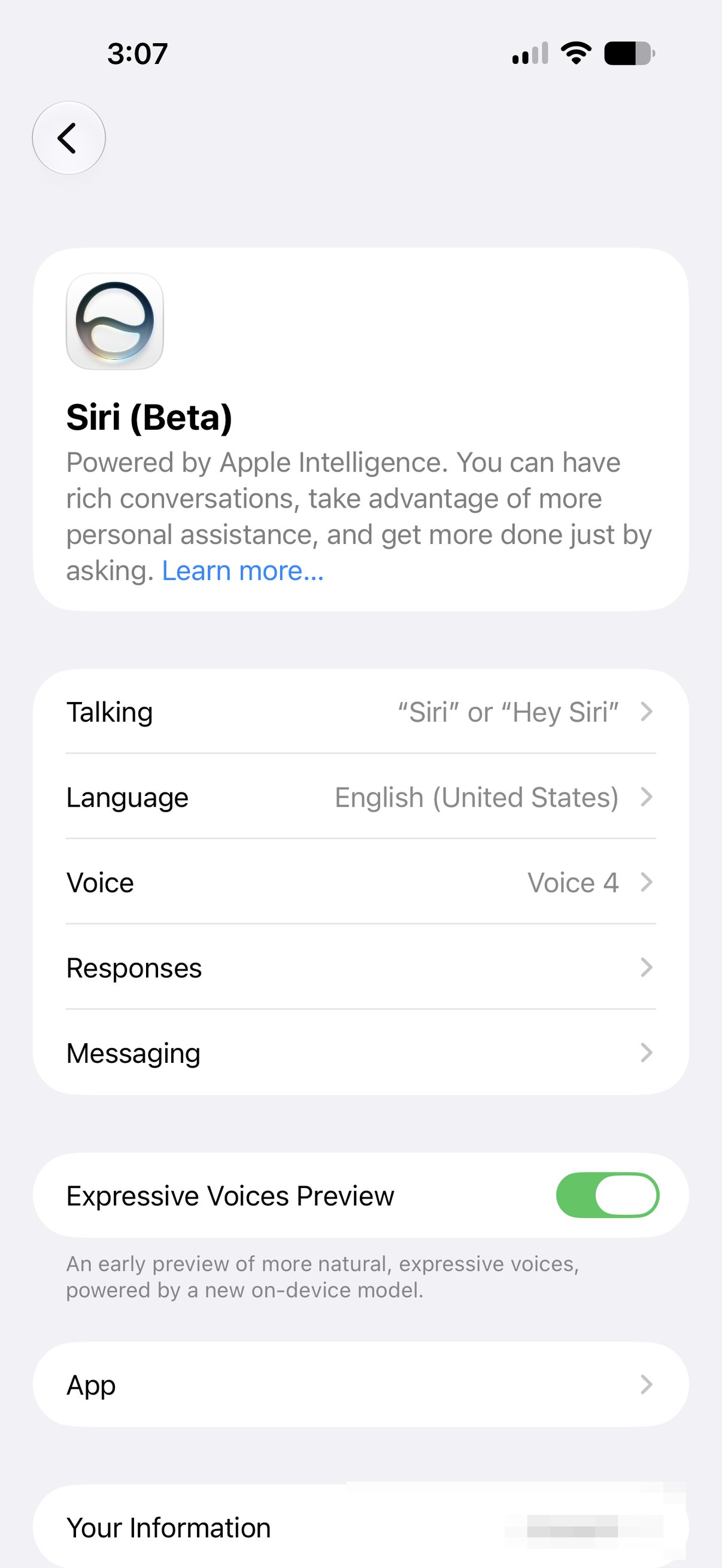
Start with what is not in dispute. As Bloomberg's Mark Gurman has reported, the new Siri's most ambitious answers lean on a large Google Gemini model that Apple licensed, a model far too big to run on a phone. (Power On) Apple's pitch is that it can do this while keeping your conversations private, routing what it can to on-device models and to its Private Cloud Compute when more power is needed. The pitch is sincere. It is also a pitch, and the honest move is to read the plumbing rather than the marketing.
On-device, cloud, and the seam between them
Roughly speaking, there are three places your request can go. The smallest, most personal stuff, reading your screen, simple commands, the new expressive voices, runs on the model on your phone. Bigger reasoning that Apple can still keep private goes to Private Cloud Compute, Apple's own servers built so that even Apple is not supposed to be able to see the content. And the most demanding answers can reach the licensed Google model. The privacy story is only as strong as that last hop, and that is the part worth watching as the beta matures.
Why does it matter where a request goes? Because "on your device" and "on a server" are genuinely different privacy postures. On-device means the data never leaves. A server, even a well-designed private one, means trusting a chain of promises and engineering. Neither is automatically bad. But you deserve to know which one you are using, and right now that seam is mostly invisible in the interface.
Sponsored
The one control you should actually set
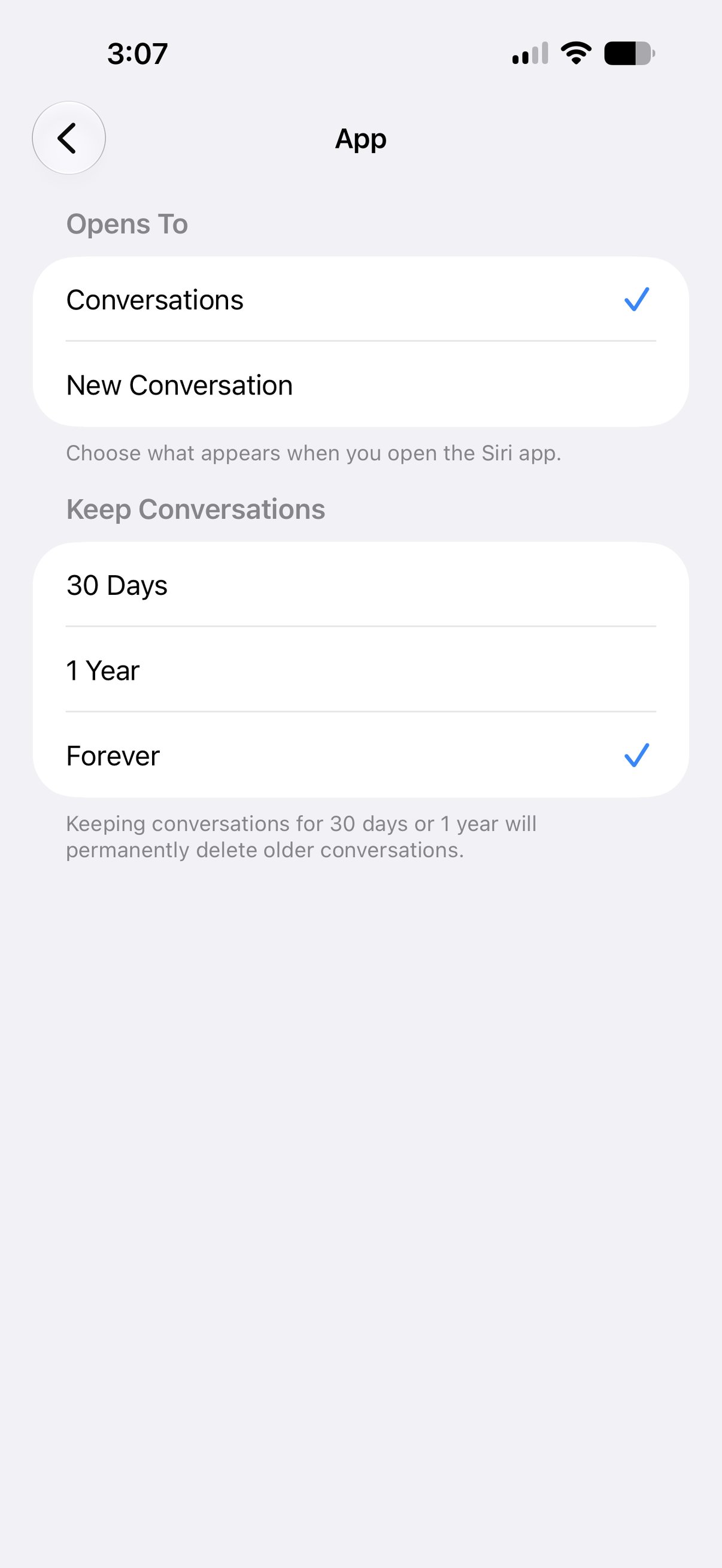
Here is a concrete, useful thing the new Siri gives you: control over its memory. Because Siri is now a threaded conversation with history, that history has to live somewhere, and iOS 27 lets you decide how long it sticks around, 30 days, one year, or forever. If you are privacy minded, this is the setting to find. Keeping less history means there is less to expose if your account is ever compromised, and it is a one-tap way to make the assistant more forgetful by design.
Consent is opt-in, which is the right call
Credit where it is due: the new Siri is opt-in. You join a waitlist and switch it on deliberately, rather than waking up one day to find a cloud model wired into your most personal assistant. That gives you a moment to decide, and it means the people most worried about the cloud half can simply keep the old, fully on-device Siri behavior for now.
How to think about it
My take, as someone who builds privacy-first apps for a living, is that the caution is fair and the product is still the best Siri has ever been. The thing I am watching is whether the private half is private by construction or private by branding, whether the boundaries between on-device, Private Cloud Compute, and Google's model are something you can see and trust, or just something you are asked to take on faith. Until that is clearer, a sensible habit is the old one: do not hand any assistant, Apple's or anyone's, information it does not need. Set the memory short, keep the genuinely sensitive stuff out of the chat, and enjoy a Siri that, for once, is worth talking to.
For the hands-on take on what the new Siri can do, see one week with the new Siri. This studio builds privacy-first apps with on-device AI, at jcmobileappstudio.com.
— JC Mobile App Studio